Saturday, February 21, 2015

Morven Museum's Schoolgirl Needlework Exhibit

Today I joined the Central New Jersey region of the Jane Austen Society of North America to tour the "Hail Specimen of Female Art! New Jersey Schoolgirl Needlework, 1726-1860" temporary exhibit at the Morven Museum in Princeton, NJ. Luckily one of the region's members read The New York Times review of the exhibit and suggested we visit or I would have completely missed out on this gem. To be entirely truthful, I wasn't sure exactly how much interest this exhibit would hold for me, but happily I ended up absolutely loving it. The exhibit displays embroideries in silk and wool that were completed by young, relatively wealthy girls as part of their formal education during the 18th and 19th centuries. All of the pieces reflect the work of girls from New Jersey, although in some cases the girls were sent to nearby Pennsylvania and Delaware to be taught at a prestigious girls' schools. These needlework samplers were generally meant to be displays of how privileged and talented these girls were.
“It is amazing to me, how young ladies can have patience to be so very accomplished as they all are. ... They all paint tables, cover screens, and net purses.” - Charles Bingley in Jane Austen's Pride and Prejudice. 
As we had a relatively large group and made plans some time in advance, we were able to secure a special PowerPoint presentation by two of the exhibit's co-curators as well as a semi-guided tour of the exhibit with them. The presentation helped a great deal in putting the exhibit into context. The co-curators described how there were regional differences evident in the needlework. Some counties had heavy influences from their Quaker founders, for instance. They also noted how even though there were distinct variations that could be largely attributed to one area or county, there was definitely cross-over as teachers moved from one school to another and brought their knowledge to a new set of schoolgirls. Another neat fact I learned from the presentation that I might not have gleaned readily from the exhibit was that not only did the exhibit cover more than 100 years of works, it also reflected needlework pieces from girls as young as 5 and as old as 29. Seeing the impressive needlework of 5- and 7-year-old girls was kind of mind blowing!

The needlework pieces themselves are astounding. Some show their wear while others have stood the test of time pretty well, still showing off bright colors and clearly legible text. Designs vary but are often of a similar nature: animals (particularly birds and deer), simple buildings, landscapes with a person or two, and alphabets and verses abound. Some pieces were used as a way to delineated a family tree/family historical record. Other more complicated works presented maps of the state or country. One sample contains the poem whose first line inspired the exhibit's title:
“Hail specimen of female art / The needle’s magic power to show / To canvas various hues impart / And make a mimic world to grow / A sampler then with care peruse / An emblem sage you may find there / The canvas takes what forms you choose / So education forms the mind.” - Anne Rickey
A few of the exhibit pieces also mixed media by having the needlework sent out for painting by an artist. Usually this done with silk-embroidered pieces rather than wool. After the schoolgirl completed her embroidering of the piece, then a painter would add in details or a landscape background to complete the piece. Finally, the piece would be framed, which was unusual for many of these samplers. The effect was stunning, and one of my favorite pieces in the whole exhibit was one of these samplers.

The talent and patience that went in to stitching these elaborate pieces are clearly evident. One thing I really appreciated about this exhibit is how it's elevated to the level of art something that was essentially homework and hung up only in the way that a proud parent posts an A-plus paper on the family fridge in our time. Nowadays, needlework is generally considered more in the line of a hobby than anything else. Viewing these works reminded me of all the embroideries my grandmother so lovingly made as something 'to keep her hands busy' when she had some down time, so this exhibit gave me a happy feeling of nostalgia as well as history lesson. At any rate, these pieces were certainly not items that were planned to be part of a museum exhibit originally! While museums by and large highlight the history of men (for better or worse), this exhibit gives a voice (metaphorically speaking) to a population that is traditionally in the background of history.


A companion catalog book available at the museum's gift shop provides more details about the exhibit and its historical background for those interested in learning even more. As it is, the exhibit's plaques contain more information than I could completely absorb in one relatively short visit, so this is a gallery worth re-visiting.

Speaking of re-visiting, I'd love to return to the Morven again some other time to spend additional time with the permanent collection and participate in one of their usual hourly guided tours to learn more about the history of the place. I did learn in my brief walkthrough on my own that the museum was originally a mansion whose celebrated residents include the president of the Continental Congress from 1782-1783. The building later became the state Governor's Mansion and was home to five governors. It is now a National Historic Landmark. And to think that I've driven past this place numerous, numerous times before and never once even gave it a second glance.

Another trip to the Morven Museum is definitely in my future and I hope in yours as well. The "Hail Specimen of Female Art! New Jersey Schoolgirl Needlework, 1726-1860" is only on display for roughly another month, closing on March 29, so don't delay in checking it out!

Sunday, February 1, 2015

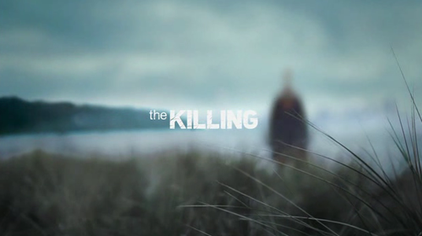
The Killing's Intensely Focused, Dark Drama

Some time ago, a member of my book club recommended the show The Killing to me, guessing that I would like it given its slower pace and psychological focus after I talked about how much I enjoyed the first season of BBC's The Fall. On her suggestion, I began watching the show and was immediately absorbed in its world.


Rather than the usual procedural TV show wherein a new case is tackled each week, The Killing's first two seasons are focused on a single mystery: the murder of 17-year-old Rosie Larsen. The daughter of a working-class family, Rosie's drowning death doesn't seem like a high-profile case but various leads soon (possibly) connect her murder to terrorism, city politics, and organized crime. As the investigation delves deeper, Rosie's death incites family tension, hate-based racial violence, and political corruption. This one case certainly has more than enough to grip the viewer for week after week with a total of 26 episodes devoted to the Larsen files.

While the case itself is plenty interesting, it's not the only thing holding the viewer's attention: that task falls on our leads. The Larsen case first appears on the desk of Sarah Linden, a veteran homicide detective who is about to retire when some of Rosie's effects show up in an empty field, and the police force must begin looking for a missing girl. Linden is joined by Stephen Holder, her soon-to-be replacement, who has just been promoted from County Narcotics to City Homicide. Holder, a former undercover cop who ended up getting hooked on meth, is willing to play hard and fast a little with the regular police rules and protocols, having no problem with roughing up a suspect or witness some or using rather indelicate language (to put it lightly) during interrogations. Detective Holder also seems to be channeling Breaking Bad's Jesse Pinkman to some degree, slumming about in hoodies and jeans, employing colorful ghettoized speech patterns, and in general belying his intelligence behind the charade of a stereotypical junkie.

Linden herself is another minefield of emotional and psychological depth. She's a single mother who is willing to do anything for her 13-year-old son Jack ... except put his well-being above her relentless pursuit of solving her latest case. In general, Linden seems to be hellbent on getting in the way of her own happiness. When the show opens, it is her last day of work before she heads down to Sonoma, where she and Jack will meet up with her fiance and presumably have a "happily ever after" life in sunny California. Rosie Larsen's murder changes her plans a little bit when her boss asks her to stay on an extra 24 hours to help Holder jump start the case. But soon it is Linden who is repeatedly missing her flights to California and choosing to stay for just a few more hours or days so that she can wrap up the case, despite her fiance's repeated protestations that there will always be another case, so she needs to learn to let go already. There are repeated hints from the fiance and others that a past case slammed Linden hard, and she suffered a huge emotional toll as a result. The unraveling of that mystery is another piece that keeps the viewer entirely absorbed in the show and wondering if Linden will get too involved in this case as well.

While Linden isn't the feminist icon that many see in The Fall's Stella Gibson, I found her to be an exceptional female lead in a crime drama. Linden's presence is so unlike characters in some TV shows where it feels like the female detective there is only to be a looker or simply to fill a quota (even though she does appear to be the only woman in the Seattle police force, though luckily not the only woman of substance on the show). She doesn't fall into traditional depictions of she's a good detective because she uses her female intuition and/or because she's more in tune with the emotions of the victims. Nor do the creators/writers swing to the other extreme and make her such a badass, almost despite her femininity (e.g., Ziva David on CBS's NCIS). Linden's characterization does fall a little bit into the stereotypical trap of she's a career woman so she doesn't have any other life, but to be honest this seems to be largely true of Holder as well. At any rate, Linden is not in any way one-dimensional nor does anything about her seem to be a reflection of her gender, any more than anything about Holder is a reflection of his gender. They come across as complex characters with complicated backstories and motivations trying to do their best in a troubling world.

Holder and Linden are both interesting characters in their own right but adding them together makes for an infinitely more compelling show. The pair in many ways seem like opposites to being with - beyond obvious physicalities (e.g., female v. male, short v. tall), Sarah is quiet and withdrawn while Holder is nonstop with the verbal diarrhea and seems to open up pretty quickly; Linden seems to initially have her life in order while Holder is a little more in flux; and so on. But these somewhat superficial details hide what the two do have in common: painful secrets in their past, abandonment issues, and feelings of inferiority and worthlessness. It's these deeper selves that allow Linden and Holder to find kindred spirits in each other, even if they butt heads often and occasionally lose sight of the trust they have in each other. In many respects, the two have a Scully and Mulder-type relationship that is endearing, with the way they look out for one another and each puts their trust fully in the other when no one else can be trusted. To go back to physicalities for a moment, they even look a little like Scully and Mulder with a short, red-headed female officer paired with a lanky male officer. And, of course, there's enough tension around the main characters to give plenty of fodder for shippers, who just can't have a man and a woman both be in a show without wanting something romantic to come out of it.

Besides the two leads, the show spends a lot of time focusing in on Rosie's family as they deal with the painful reality of losing a daughter/sister/niece. In your typical crime procedural, there's a maybe a minute or two where you get to see the family react to hearing the news of their loss. They cry, they wonder who would want to hurt their wife/child/aunt/brother/father/etc., and they provide one useful clue that the fearless crime fighters use to track down the killer. With The Killing, the Larsens are fully developed characters in their own right, who are layered with complex backstories and emotional epiphanies. While the Larsens aren't perfect, I really enjoyed getting to know all the family members and seeing how each chose to deal with their grief. This could change alternately from person to person (and day to day) from abandoning everything, expressing rage and violence, bargaining, revenge-seeking, questioning, and overcompensating trying to make everything wonderful for Rosie's younger brothers. Seeing the Larsens and how they tried to move forward with their lives from the day the teenaged Rosie disappeared was a huge part of what made The Killing's first two seasons such a success for me.

In addition to the police and the family, The Killing also spends a lot of time with the first good suspect that the police have. Rosie's body is found in the trunk of a car belonging to the mayoral campaign of Seattle City Council's president Darren Richmond. Even though it's quickly ascertained that the car was previously reported stolen, from this point on, we become intimately involved with Richmond and close members of his campaign staff. The politics of the race for Seattle's next mayor become inextricably interwoven into the fabric of the show and become one more reason to be invested in the series. These campaign characters are also given involved back stories and complex motivations, which are constantly causing the viewers to re-evaluate their opinions about them.

Although many were unhappy that the murder of Rosie Lawson was not solved by the end of the first season, I for one thought it was appropriate to extend that mystery and let the writers fully delve the deep of all those characters and the various plotlines that were presented throughout the course of the case. When the mystery was finally solved, I have to admit to being entirely shocked at finding out the identity of Rosie's killer. It was such an emotional rollercoaster all along and the ultimate reveal was like a gut punch on top of that all. A few loose ends are tied up with the remaining characters as we see everyone move forward after this traumatic murder. The show could have ended there on a high note and been a short-lived but fantastic drama.

But unfortunately, it didn't do that. Sometimes quitting while you're ahead is not understood by TV creators/writers/execs. The Killing went on for another two seasons, with each worse than the previous one. Season 3 starts out reasonably enough, with a year having past between Rosie's murder and the current events, giving Linden and Holder enough time to get a handle on their lives. Holder is in a serious relationship and doing well in the homicide department paired with a new partner. Linden has left the force and settled into a quiet job, has a new home, and is in a romantic relationship of her own. This all changes when a series of murders start occurring with links to a past homicide investigated by Linden. Of course, she has to get involved and once again becomes completely absorbed in her work to the point of losing everything she gained in the last year.

Season 3 lost a lot of the charm of the previous two seasons. The Larsens are gone as are all the members of the Richmond campaign. While this makes sense, I had been so invested in these characters and come to enjoy their part of the show so much that it was disappointing to hear nothing of them again. (We do have one brief cameo of Richmond eventually, but it would have been nice to have been given a few more Easter eggs, like a Larsen moving van in the background on the street somewhere at the very least.) This season presented new characters, but I didn't find them as compelling, complex, or interesting. For starters, there's the significant others of Linden and Holder, although Linden's would-be lover is hardly even given the time of day in terms of characterization. Holder's girlfriend is a little more involved in terms of characterization, although it's hard to see the attraction between the two of them without fully exploring her past. On the police home front, we meet Holder's new partner, the seemingly chump-like Carl Reddick who has manages to have quite the nose for investigations once his suspicions are aroused, as well as a new boss in James Skinner, who Linden apparently had an affair with years ago, although it's somewhat hard to buy the supposed chemistry between them.

Meanwhile, the original similar case that Linden had worked on had resulted in a conviction with a death row sentence, which seems a rather unlikely result to a case of spousal murder. The show spends a long time lingering on the wrongly convicted man's time in jail on the death row watch, including spiraling off to learn more about the prison wardens and their personal lives. It was interesting to see how the show could go off on these divergent storylines again and still keep the viewer gripped. However, it once again didn't work as well. While well played by Peter Sarsgaard, the character of Ray Seward, the man accused of brutally murdering his wife, was such an arrogant bastard in jail that you could only rarely sympathize with him. This may have been an effort to keep the viewer guessing as to whether his wife's death was truly part of the serial murders occurring now or not, but the end result was spending a lot of time with a character that just wasn't as compelling as those we had seen in the first two seasons. In addition, some je ne sais quoi about these long prison sequences often felt like they belonged to an entirely different show.

The serial murders are largely of young teenagers living on the streets, so we start to meet a number of homeless youth in this season, including characters with names like Bullet, Lyric, and Twitch. While it would seem like this would be a fertile ground for creating characters even more complex than those we saw in the first two seasons, this turned out not to be the case. Lyric and Twitch were largely one-note characters caught up in their personal teenaged angst dramas and occasionally remembering to be afraid of the serial killer prowling in their area. Bullet was more developed than the others and yet still somehow lacking. For myself, I think it would have been more interesting to learn more about how and why these kids ended up in the streets to begin with than in, say, needlessly having Bullet raped and seeing her react to that only briefly before acting like nothing happened.

By following the lives of these teens, the show took on an even darker underbelly of the city than that seen in the first season, introducing us to abusive/neglectful parents, drug dens, and child pornographers/rapists. While it was certainly disconcerting, there was nothing surprising about this. Youth with no support systems are taken advantage of in horrible ways; we see this play out across the globe in the real world every day. It's doesn't have the unexpected twists that the Rosie Larsen case took and it's just a reminder of how awful the world can be toward those that are considered easy prey. When the murderer was revealed for this mystery, not only was I not surprised, but I had pretty much predicted it early on in the season.

Season 4 picks up with the fallout of Linden shooting the unarmed murderer of the homeless teenagers and Holder deciding to help her cover it up. This was probably the weakest of the storylines as I just couldn't buy it. It seemed to me like they could have explained away the shooting (i.e., claimed that the murderer was in fact armed at the time) and moved on without it becoming a huge thing they needed to hide. The cover-up resulted in the two characters becoming so paranoid that they started mistrusting one another and turning their backs on each other. As the relationship between the two of them was such a vital part of the show previously, this development was incredibly frustrating. At this point, the show was becoming like the proverbial train wreck - horrible to see but somehow you just had to keep looking at it to see how it all plays out.

Even with all this going on, the creators/writers decided to also introduce yet another mystery - that of the murder of a wealthy family in which only the teenaged son survives. This story was so half-baked that it really was not only uninteresting, but it was also entirely bizarre, and yet the conclusion was so obvious that it was hardly worth calling it a mystery. This would not be a bad thing if the characters were interesting, but all of the new characters introduced were so lacking in any depth that they're wasn't anything worth noting about them. Add in that Holder and Linden were a mess, and there really wasn't anything redeemable about this season.

And, now that the show moved off of cable and on to a streaming format solely, the creators/writers decided to let lose with the language. As I've said before, I'm not a fan of when shows decide that the best way to push the envelope is to throw in a bunch of choice four-letter words. I'm not a prude, I'm not a saint, and I certainly don't have any beef with the occasional foul language. The Killing presents a dark world that is constantly full of abandonment and brutality, so it's reasonable that Linden, Holder, and others would spew out invectives some of the time. But when your finely tuned writing turns into scenes in which literally the two main characters just hurl "f--- you"s at each other, it's hard to argue that the quality of the show has improved by the lack of inhibition.

After everything shakes out with the season four cases, we get a flash forward to five years in the future, and the show ends with a tacked-on happy ending, which is so out of touch with the rest of the series that it's almost comical. Sure, it's nice to have the characters you've come to care about have a ending has some uplifting potential. But that would have been appropriate at the end of season 2 when there was more hope to spread around amongst the various characters. But by this time, so much more has gone on and happened between the lead characters that it doesn't seem in the least bit realistic, a damning charge for a show that was built on being tough, gritty, and no holds barred. It's almost like an element of magical realism being added in at the last minute.

In conclusion, watch the first two seasons of The Killing if you're interested in a tightly wound mystery packed into divergent storylines, replete with complicated, compelling, and deeply human characters. Then do yourself a favor and leave well enough alone but not wasting your time with the latter two seasons. You'll thank me later.

A Look at the Darkest Side of Humanity with BBC's The Fall

The Fall is a powerful, intense, challenging, and disturbing show that is most definitely worth the watch. In a world where there seems to be a police procedural and/or crime drama on every night on every station, it may seem redundant to have yet another show about a serial killer and the police search to capture him. And while boiled down this is exactly what The Fall is about, the show is far more artistic and serious than the many more sensationalist cookie cutter criminal-based programs out there already.


To step back a moment, The Fall is a BBC-produced drama taking place in recent years in Belfast, Northern Ireland. When the daughter of a prominent (and wealthy) businessman is brutally murdered, the local police launch a ramped-up investigation to catch her killer. To head up this task force, they bring in Stella Gibson, a detective inspector from London with a stellar (couldn't resist the pun!) track record for understanding and thus bringing in criminals. Gibson almost immediately sees a link between this murder and those of other women in Belfast who share similar characteristics (although, alas, the rest don't have the moneyed fame so their deaths weren't originally given the same high status treatment). Behavioral profiling of the murderer, painstakingly intensive forensic studies, and round-the-clock monitoring of tip lines and potential suspects' movements consume the task force's time as they pursue the serial killings.

Meanwhile, the viewers are given the position of knowing far more than the police as we soon enter into the world of the killer himself. A grief counselor with a wife and two young children, Paul Spector is mundane enough for most people to not notice him or suspect him of being guilty of anything more egregious than perhaps a speeding ticket. But underneath this calm demeanor lies a troubled psyche that finds fulfillment in others' misery and feels powerful only by destroying lives. Besides his unrepentant need to stalk and murder pretty women, Spector has a host of various other problems to deal with in his life, ranging from fairly typical parenting issues to a teenaged babysitter who is infatuated with him to a client case in which an extremely violent man is abusing his wife.

This last issue brings up an important part about what makes The Fall such a fascinating show. The cat-and-mouse between the police and the killer makes for plot-driven suspense and, as always for me, well-developed characters finish the job of sucking the viewer into the drama. But The Fall goes a step further by looking into a major cultural issue of times - and one that is sadly, often rather divisive - that of gender roles and gender equality/inequality. The issue of violence against women in particular is a large part of The Fall, and the show explores it in a number of ways, while also examining women's implicit and explicit roles in combating both crime and cultural stereotypes about their gender.

The Fall starts with presenting a female main character that is a wonderful example of a feminist hero. Stella Gibson is certainly not perfect and she's not necessarily "kick ass" in a superhero sort of way (although you wouldn't want to get on her wrong side either), but she's tough, smart, and confident. Her personality at first appears a bit cold because she isn't passionate in terms of raising up a fuss or otherwise getting bowled over by her emotions. But it's soon obvious that Gibson does indeed feel strongly at appropriate moments and while she is guided mainly by her intellect and sense of morality, her emotions also play a role in why she does what she does. She feels deep empathy for the victims and their families and is remorseful when she fears she's made a mistake that comprises a woman's safety.

Just like she is not devoid of emotion, she is also not a nun despite not being in a traditional relationship. Gibson has no problem clearly and plainly putting out her intentions when she finds someone of sexual interest - and when she does not. No part of Gibson's personality is tied up in any particular man or even in proving herself in a workplace historically populated by men. The show thankfully does not fall into the trap of turning Gibson into a "bitch" because she is a woman in a supervisory capacity or of making strong assertions about how Gibson has chosen being a career woman rather than a wife or mother, as thought it always needs to be an either/or choice. Clearly, the creators/writers here were not interested in presenting a stereotypical "women's intuition" type of female police detective who will inevitably end up in a long-term romantic relationship with her male partner. Gibson is simply living her life - sometimes making mistakes, sometimes shining (again, can't resist the puns based on her first name!) with insights not picked up by anyone else.

While The Fall certainly isn't alone in presenting a female lead - or even a strong female lead at that, the show doesn't just stop there. Gibson isn't a lone voice in the wilderness; the Belfast police and their attendant associates have a fairly equal amount of male and female employees. Even though she has a previous relationship with Assistant Chief Constable Jim Burns, on reaching Belfast, Gibson quickly aligns herself with two other women in particular - Dani Ferrington, a beat cop who becomes the right-hand woman to Gibson, and Professor Reed Smith, a pathologist who reports various insights to Gibson. In the world outside of the police force, we also get to know an array of female characters of various importance (and ensuing screen time) from Spector's wife to his victims to victims' family members and so on. The Fall presents women of all kinds: from the fiercely tough and professional detective constable Gail McNally to the busy and rather clueless (and thus, in a way, very sympathetic) Sally-Ann Spector to the clearly emotionally needy/disturbed young babysitter for the Spectors. With the exception of the babysitter Katie, who is a little one-note in terms of her motivations, all of the women - and indeed, all of the characters - are believable, well-rounded characters who have their individuals highs and lows.

But The Fall does more than simply present strong and believable female characters (not to say that isn't an accomplishment enough in a world where plenty of other shows and films struggle to have even a fair number of women in prominent roles). It also delves deep into a variety of issues surrounding women and how our culture treats women. It touches on how women are objectified, thus dehumanizing them to predators, specifically stating this through Gibson's words, but also showing it in other ways (i.e., using the visual medium of TV well to make the point). At one point when Spector tapes the torture of a victim, he ends his homemade video by asking why it's being watched. It's an uncomfortable moment of pointing out the viewer's own voyeurism and implicit role in this cultural problem of allowing women's rapes and murders to become lazy plot points to propel forward male heroes.

Nevertheless, the show is not without its detractors who criticize it for being misogynistic because of the female murder victims and for seeing from the killer's point of view. While I see their point about how displaying the corpses of dead women is troubling (it's something I felt with other crime shows), I don't find that to be the case here. Even though we see from the killer's eyes frequently, at no point are his actions condoned or held up as something to model/mimic. Meanwhile, there is so much empathy put out for the victims, the families, and even the community at large, that I don't feel like the dead women are simply props held up for their shocking entertainment value.

(Speaking of sensationalist shock value entertainment, I could not help thinking about the upcoming Fifty Shades of Grey movie, which stars Jamie Dornan as the BDSM-loving protagonist Christian Grey. I'm not sure how anyone could watch Jamie Dornan as Paul Spector subjecting a teenaged girl to bondage and other "grooming" acts, stalking women in his neighborhood, holding a woman hostage, violently murdering women, etc. and still come away thinking that a book series/movie about a dominant wealthy businessman introducing a young, naïve college student to sadomasochism is romantic.)

The Fall also has gained some critics because of its pacing; the show is certainly slow moving and lingers where other shows rush full speed ahead. Unlike the myriad of procedural shows on the air that fill up 20-plus episodes a year with largely one-off mysteries with sometimes poorly explained motivations, The Fall has chosen to focus the first two seasons (a total of 11 episodes) to this one case. Viewers come to intimately know all the characters and see the continuing effects of the crime on the police members tracking the killer, the killer's family, the surviving victims, and the victims' families. While there are still some motivations that could be more fully explored (e.g., the babysitter), it's a good change of pace to be reminded of the humanity (and lack of it in the killer's case) behind crimes rather than just the next thrilling plot move. For me (and many other viewers), the slower pace was not an impairment to appreciating in the show; in fact, it in many ways made it a more suspenseful watch. As a viewer, you care much more about the fate of a character once you've become invested in that person's life.

The breadcrumbs thrown out about whether nature or nurture created the psychopathic killer is another interesting component to the show. As the story develops and we learn more about Spector's troubled past, there are plenty of opportunities to reflect on how and why this man became a narcissistic sociopath turned violent offender, even if the script doesn't always explicitly state his motivations. And while there are certainly many references to Spector and his deeds as monstrous, the show through Gibson often reminds viewers how life exists on a continuum and everyone has elements of good and bad in them. In one scene I found particularly poignant in this regard, Gibson takes Burns to task for trying to weasel his way into her bed after she repeatedly says no. While she does make certain to maintain a distinction between him and the killer, she still manages to remind Burns (and the audience) that the treatment of women as mere sex objects is an easy trap to fall into that quickly becomes a slippery slope.

Like any TV show or other artistic expression, The Fall is of course not perfect. There is a secondary plot about police corruption that almost entirely fades in the background of the serial killing storyline. At times, there are scenes that feel unnecessary or not fully explained. On occasion, the police seem woefully behind the serial killer despite the tremendous amount of money and effort being spent on this case, including some scenes that just seemed ridiculous in how slow the police were responding, which hurt some of the credibility of the show. But overall, I found the first two seasons of the show to be fully engaging and thought-provoking in terms of plot and themes. They were also all extremely well acted, with an array of interesting, complex characters being presented and explored. The end of the season two finale was a bit bizarre in my opinion (and I am not alone), but I'm hoping that the third season slated for release in fall 2015 will help to smooth over those ragged edges and provide a satisfying conclusion to this thoroughly captivating show.

Saturday, January 10, 2015

Way Behind the Curve: Partying with the Folks from Party Down

This post comes to you rather belatedly so I apologize in advanced for any mistakes in my memory. If I get my act together more in 2015, you'll be seeing some posts that really should be written sometime over the past two years or so instead of now. I'm hoping that it's, as the saying goes, "better late than never." With that said, let's proceed in to this post proper.

Some of you may know that I was a huge fan of the cult classic TV show Veronica Mars; it remains one of my go-to shows for when I've had a bad day and/or want something familiar. So when I heard that Veronica Mars creator Rob Thomas also had a short-lived Starz TV show titled Party Down, I knew I would sooner or later need to watch this show as well. Sooner arrived when I scored an incredible Black Friday steal on both seasons of the show on DVD and proceeded to watch the show (note: this was several years ago now and hence where memory issues may arise).

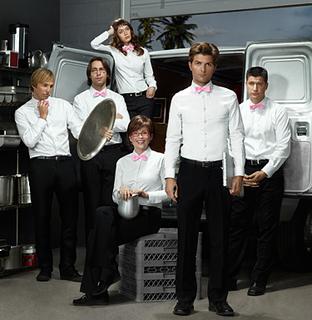
Party Down focuses on a catering business that employs a number of wannabe actors and, in one case, a burned out actor. Steering the helm - or more, accurately trying to steer the helm, is Ron, who desperately wants to do well in the food service industry after his recovery from drugs and alcohol. In addition to Rob Thomas, Party Down reunites Veronica Mars writers/producers John Enbom and Dan Etheridge on the creative team along with Paul Rudd, who once guest starred on Veronica Mars. The cast (encompassing for this purpose series regular, recurring guests, and one-time guests) also includes a veritable who's who of Veronica Mars alum: Ryan Hansen, Adam Scott, Jane Lynch, Ken Marino, Jason Dohring, Steve Guttenberg, Enrico Colantoni, Ed Begley, Ryan Devlin, and Kristen Bell herself. 


All this seems to be pointing in the direction of Party Down plus me really hitting it off, right? Wrong. Despite soldiering through both full seasons (albeit only 20 episodes in total between the two of them), I found I could not really get into Party Down. For starters, it's essentially a sitcom. Strike one. Sitcoms and I rarely do well together, as I ranted about in length in a previous post. Granted, Party Down is a somewhat atypical sitcom going to places that most network sitcoms wouldn't touch. But still, you can't really change a leopard's spots and Party Down is what it is: a sitcom. And unfortunately, Party Down's very absurdity was sometimes its downfall for me. The more ridiculous and, frankly, downright slapstick the situations became, the less invested I became. The show could occasionally make me chuckle, but more often it left me shaking my head in wonderment - and not the good kind.

The second strike against the show was its characters. In my opinion, characters make or break a show. They don't necessarily have to be identifiable and/or likable characters, but they definitely have to be interesting. The characters in Party Down were quirky, but not necessarily that interesting considering that most of them were fairly one note. And they certainly weren't likable - self-absorbed, narcissistic, downright nasty, immature, and irresponsible are more fitting adjectives to describe the majority of them. Sure, I could feel moments of sympathy certainly for Ron who is hampered down by such reckless team members. Henry, the faded out actor who is still occasionally getting recognized for his past fame as the speaker of a catchphrase in a beer ad, also could have times where he was relatable and sympathetic, although as the series progressed he seemed to be further sucked into the dysfunction of his co-workers. The rest of the characters were really a pretty dismal lot and it was difficult to root for them - or even care about them - for much of the action. And, sadly, there was little growth or change for these characters. Yes, specific events - whether big or small - did make an impact on their lives in terms of things like getting a new job or ending a relationship. But in terms of their character traits, they showed little difference from the pilot to the final episode for the most part and even less in terms of positive moves. While the characters were generally unpleasant, lots of kudos go to the actors who were all magnificent at being awful characters, totally embodying these people for the duration.

Strike three was what seems to be my usual complaint for premium cable TV shows: just because you don't have censors and can do whatever doesn't always mean you should do whatever. While Veronica Mars was smart, witty, and frequently said more with less, Party Down was foul, crude, and often gratuitous. Characters curse at the drop of a pin, nudity for no particular reason abounds, and situations occur that probably wouldn't show up on network TV (like the group catering an orgy party on one occasion and an adult entertainment party on another). I certainly don't mind shows that manage to escape from unnecessary sanitation, but I also think that the rules of good writing still apply. Simply throwing in a dick joke when you could have been clever, relevant, and funny isn't going to suffice. And I hoped for more from the creators of something so genuinely brilliant as Veronica Mars, which succeeded at being clever, relevant, and funny as well as engaging and populated with interesting, layered characters and compelling story lines. Meanwhile, Party Down had the barest of story lines, with it often feeling like there was little carryover from one seemingly self-contained episode to another. 

One thing that the writers did do an excellent job at, however, was creating a show where we looked at only one aspect of the characters' lives - their time at work - and yet managing to covering a lot of ground despite the self handicap. Granted, they did have two things going in their favor:
1) Most of us do spend a great deal of our time at work so it is something that focuses a lot of our energy as well as the place where we do end up talking about everything else going on in our lives. For better or worse, our co-workers become our de facto family members. 
2) While we don't see the cast outside of their workplace, given the nature of their catering job, we aren't stuck with the same physical set over and over again. The characters travel to different parties in a variety of locales where we get to meet new (albeit, equally dislikable) characters all the time. Still, that's not a compelling enough reason to make this show great.

In case the point wasn't obvious yet, this is not a show I would recommend, which is sad because I do really believe that this team of writers/producers/creators can do fabulous work. But this show just didn't do it for me. Part of that was undoubtedly the disappointment created by hoping for another Veronica Mars and getting something so remarkably different from it. But part of it is also because this show was never going to be my "thing." My limited research on the show found that it received some positive critical praise but had low ratings, leading to it be cancelled after two seasons. Let me know hear your thoughts about the show below. Did you watch all 20 episodes? What were your thoughts on the crew at Party Down?

Wednesday, December 31, 2014

Drum-roll Please, Here They Are ... The Best Books of the Year!

Well, it's that time of year again! Everyone is making their "best of" year-end review lists, and I am no exception. As I've done for the past few years, I'm rounding up here the best books of 2014.

The list is once again broken up into two categories - children's books and books for adults. Although it seems like ages ago already, I was working in a day care for the first half of this year so the list is rather heavy on board books and picture books this year. These are all great reads to share with your children, grandchildren, nieces and nephews, etc.

On this list, graphic novels are indicated by this symbol ^ after the title, and nonfiction titles are noted with a ** after the name. Any books that were re-reads for me have a (2) after the title. As these books are all great, I did not further rank them; the list order is not be taken as such a representation. Rather, it is organized alphabetically for ease of use. All the books are linked to my LibraryThing reviews of them so you can find out more information about that book and why I've chosen to place it on this list.

Please note, as always, this list does not necessarily represent books published in 2014 but rather books that I read throughout the year. These are the books I enjoyed the most and/or lingered in my mind the longest after finishing them. Hopefully this list will prompt you to pick up some books gathering dust on your shelf or give you some new recommendations for great reads - for you or for the children in your life!

Miss JJ's Best Books of 2014

Adult

Before Watchmen: Nite Owl/Dr. Manhattan^ by J. Michael Straczynski
The Big Sleep by Raymond Chandler
The Biting Solution: The Expert's No-Biting Guide for Parents, Caregivers, and Early Childhood Educators** by Lisa Poelle
The Bridge by Iain Banks
Dr. Seuss from Then to Now** by the San Diego Museum of Art
The Guy Not Taken: Stories by Jennifer Weiner
Let's Pretend This Never Happened** by Jenny Lawson
The Limpopo Academy of Private Detection by Alexander McCall Smith
The Man Who Invented Christmas: How Charles Dickens's "A Christmas Carol" Rescued His Career and Revived Our Holiday Spirits** by Les Standiford
The Oscar Wilde Collection by Oscar Wilde
Player Piano by Kurt Vonnegut
These Few Precious Days: The Final Year of Jack with Jackie** by Christopher Andersen
The Thin Man by Dashiell Hammett
Twelve Years a Slave** by Solomon Northup
Unbroken** by Lauren Hillenbrand
Watchmen as Literature** by Sara J. Van Ness
The Wordy Shipmates** by Sarah Vowell
The Year of the Flood by Margaret Atwood


Children's

10 Little Rubber Ducks by Eric Carle
The 500 Hats of Bartholomew Cubbins by Dr. Seuss
Are You My Mother? (2) by P.D. Eastman
Big Dog, Little Dog by P.D. Eastman
The Birthday Box/Mi Caja de Cumpleanos by Leslie Patricelli
Bringing in the New Year by Grace Lin
Bugs Galore by Peter Stein
The Cat in the Hat (2) by Dr. Seuss
Circle, Square, Moose by Kelly L. Bingham
Colors versus Shapes by Mike Boldt
Dear Zoo (2) by Rod Campbell
D Is for Dragon Dance by Ying Chang Compestine
Do You Know Pippi Longstocking? (2) by Astrid Lindgren
A Drop of Rain by Wong Herbert Lee
The Dark by Lemony Snicket
Fancy Nancy: Bonjour, Butterfly by Jane O'Connor
Fancy Nancy's Marvelous Mother's Day Brunch by Jane O'Connor
A Fish Out of Water by Helen Palmer
Five Green and Speckled Frogs by Priscilla Burris
Five Little Ducks by Raffi
Frog and Toad Are Friends (2) by Arnold Lobel
Geoffrey Groundhog Predicts the Weather by Bruce Koscielniak
Gerald McBoing Boing by Dr. Seuss
Go to Sleep, Groundhog by Judy Cox
Happy St. Patrick's Day, Curious George! by H.A. Rey
Help! We Need a Title! by Herve Tullet
Honk! Honk! by Mick Manning
Honk, Honk, Goose! by April Pulley Sayre
Huggy Kissy by Leslie Patricelli
I Can Lick Thirty Tigers Today! by Dr. Seuss
I Love My Daddy Because ... (2) by Laurel Porter-Gaylord
I Took the Moon for a Walk (2) by Carolyn Curtis
I Was Kissed by a Seal at the Zoo by Helen Palmer
The Journey by Sarah Stewart
Just Say Boo! by Susan Hood
Katie and the Spanish Princess by James Mayhew
Katie and the Starry Night (2) by James Mayhew
Katie and the Sunflowers by James Mayhew
Katie Meets the Impressionists by James Mayhew
Katy Duck Is a Caterpillar by Alyssa Satin Capucilli
The Legend of Ninja Cowboy Bear by David Bruins
The Library by Sarah Stewart
L'il Rabbit's Kwanzaa by Donna L. Washington
Look, Listen, Taste, Touch, and Smell: Learning about Your Five Senses** by Pamela Hill Nettleton
Mix It Up! by Herve Tullet
Mr. Brown Can Moo! Can You? (2) by Dr. Seuss
My Many Colored Days (2) by Dr. Seuss
No Biting! by Karen Katz
No More Biting for Billy Goat! by Bernadette Ford
No More Hitting for Little Hamster! by Bernadette Ford
No No Yes Yes by Leslie Patricelli
The Number 2 (Numbers in My World) by Ella Hawley
The Number 3 (Numbers in My World) by Ella Hawley
The Number 4 (Numbers in My World) by Ella Hawley
Oh, The Places He Went: A Story about Dr. Seuss** by Maryann N. Weidt
One Moose, Twenty Mice by Clare Beaton
One Smart Goose by Caroline Jayne Church
Papa, Please Get the Moon For Me by Eric Carle
Press Here (2) by Herve Tullet
Purple Sock, Pink Sock by Jonathan Allen
Quiet Loud by Leslie Patricelli
Scratch and Sniff Shopping by DK Publishing
A Stick Is an Excellent Thing: Poems Celebrating Outdoor Play by Marilyn Singer
Teeth Are Not for Biting by Elizabeth Verdick
Ten Black Dots by Donald Crews
Ten Grouchy Groundhogs by Kathryn Heling
Touch the Art: Brush Mona Lisa's Hair by Julie Appel
Touch the Art: Feed Matisse's Fish by Julie Appel
Touch the Art: Make Van Gogh's Bed by Julie Appel
Up the Steps, Down the Slide by Jonathan Allen
Visit to the Dentist by Eve Marleau
Whatever After: Fairest of All by Sarah Mlynowski
Yummy Yucky by Leslie Patricelli
Zero the Hero by Joan Holub
Z Is for Moose by Kelly L. Bingham


Happy reading my friends and best wishes for a wonderful New Year!!


Key:
^ = Graphic novel
** = Nonfiction title
(2) = A book I re-read

Thursday, August 21, 2014

Dear Old Daddy Longlegs

It may not be super obvious based on my past posts here, but I have a penchant for old movies made in the 1950s or roughly around then. Sadly, it's an age fraught with a variety of problems around representations of women and racial minorities, but I still look on it as a golden age of film in many respects (and I'm not alone). This time period saw the heyday of iconic actors including but not limited to Audrey Hepburn, Grace Kelly, Humphrey Bogart, Lauren Bacall, Marilyn Monroe, and so many others that I love. It's also a time filled with spectacular directors such as the great Billy Wilder, whose movies are all worth watching for one reason or another. And it's also the era of the big studio musicals, movies designed to show off the various singing and dancing talents of the main stars and churned out with some regularity. Think of such classics as White Christmas, Easter Parade, and Singin' in the Rain multiplied several times a year per studio, and you've got the idea. Nowadays, musicals seem mostly relegated to the realm of children, specifically for Disney movies. There are still some musical movies for adults hitting it big today (Les Miserables being a recent example), but these tend to be few and far between, nothing like the days of old when you couldn't swing a dead cat without hitting into another musical.

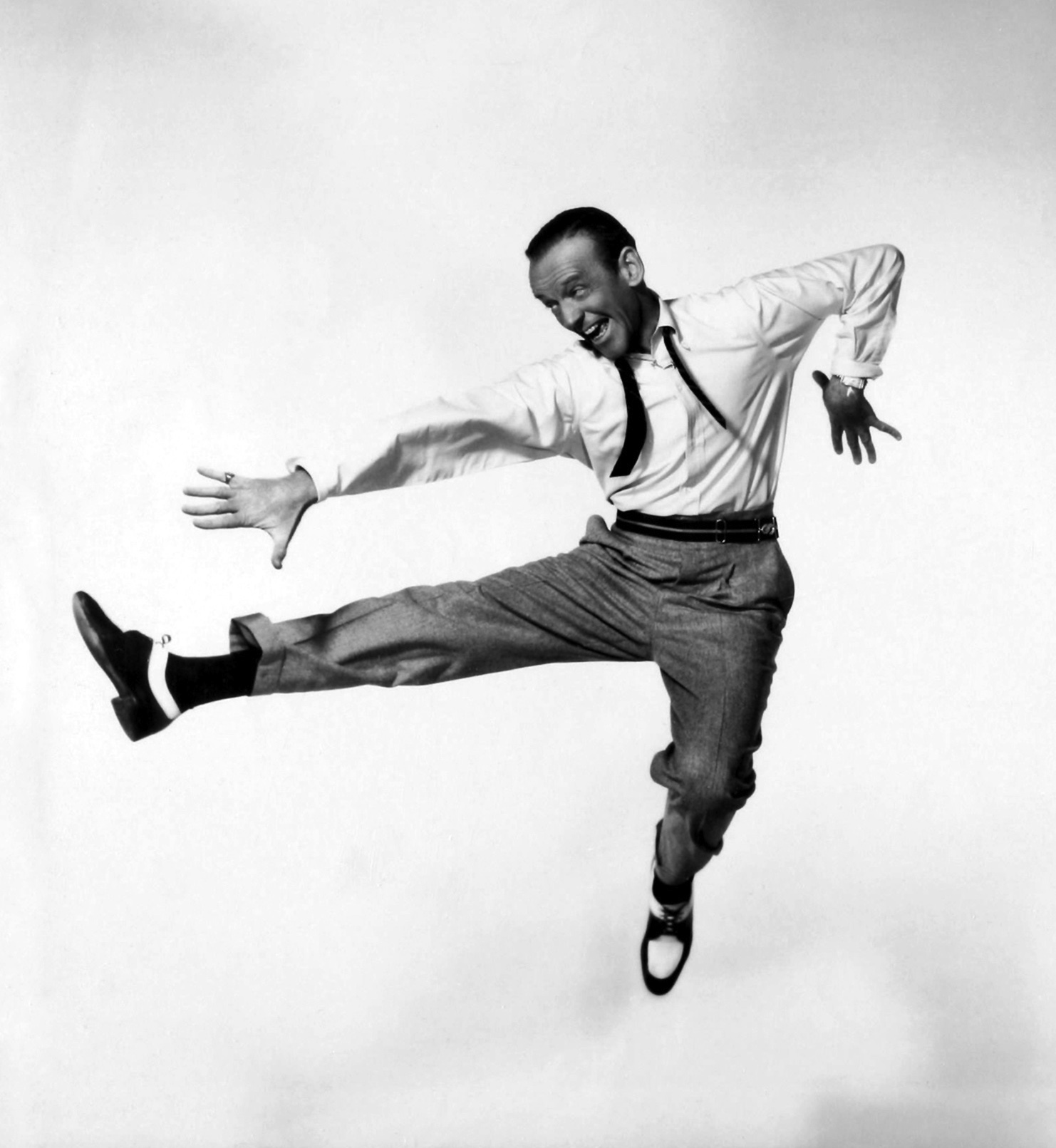
All that long introduction is to say that when Netflix recommended I watch Daddy Long Legs, a musical starring Fred Astaire that I hadn't seen yet, I jumped on the opportunity. Fred Astaire isn't a name I feel like I have to explain, but I will note that he starred in some of my favorite old movies to watch over and over again - 1957's Funny Face in which he co-starred with Audrey Hepburn (and the movie that first got me into watching older movies) and 1951's Royal Wedding where he shared the spotlight with Jane Powell, Sarah Churchill (daughter of Winston), and Peter Lawford (brother-in-law to JFK). As an interesting aside, it's worth noting the latter movie contains the famous scene of Astaire "dancing on the ceiling" because he is so in love with Churchill's character. Daddy Long Legs co-stars a young Leslie Caron, better known for her title role in 1958's Gigi as well as her breakout role in the 1951 musical An American in Paris.

Original movie poster for Daddy Long Legs
Like many of Astaire's films (and indeed 1950s musicals in general), the movie Daddy Long Legs seems to be built up around the musical numbers with the plot following as secondary, almost becoming a vehicle in place merely to hold together the singing and dancing in one handy location. This method is successful at times ... and other times, you end up with something like Daddy Long Legs. There are so many long song and dance numbers that they seem to crowd out the development of the characters into fully actualized beings who change over time in a way that at least slightly resembles realism. Meanwhile, literally years pass by in the movie without being explored in terms of characters or plot. If the movie were something scrapped together by hack screenwriters looking to expand upon some musical numbers by a big composer like Irving Berlin or George Gershwin, this would be more understandable. But there is actually a source material that the screenwriters could have used for a more fully fleshed out story. (Incidentally, the screenwriters in question were the husband-and-wife team Henry and Phoebe Ephron who wrote such classics as Desk Set and There's No Business Like Show Business. The pair also produced four daughters who turned to writing careers, including screenwriters Delia and Nora Ephron, who in turn wrote more modern romantic comedy standards such as Sleepless in Seattle and You've Got Mail.)

Daddy Long Legs is evidently based on a book published in 1912 by Jean Webster (great-niece of Mark Twain), written in the epistolary style, and designed for an audience of young women in high school and college. Hence the protagonist - Jerusha "Judy" Abbott in the novel and re-branded as Julie Andre in the movie - is a teen-aged girl entering into college at the beginning of the story. While I've never read the book, from what I can gather the novel Daddy-Long-Legs (note the hyphens in the book's title) and the movie Daddy Long Legs (sans hyphens) share a very similar plot but vary greatly in presentation and exploration of themes. As Astaire is the bigger star here, the perspective of the story of Daddy Long Legs shifts dramatically from that of Daddy-Long-Legs. Here the focus is largely on Astaire's character of Jervis Pendleton and we actually see very little from Julie, as opposed to the book being almost entirely from Judy's point of view and voice as she writes letters. Therefore, Webster's exploration of a young woman coming to age and learning about herself is nearly entirely obliterated. Apparently Webster was greatly interested in women's suffrage and chose to explore themes related to women's issues in her books - something that becomes completely irrelevant and untouched upon when the movie switches the narrative perspective to that of the middle-aged male Pendleton.

Before I get too much further ahead of myself, I'd like to take a step back and give you a brief overview of the plot of Daddy Long Legs before analyzing it in the terms of an entirely different movie's title, The Good, The Bad, and The Ugly. Daddy Long Legs opens with an irresponsible Jervis Pendleton III being far more interested in playing on his drums all day (literally) than in working for his family's company, which rakes in millions of dollars for him. Later on a trip to France, a mishap with the car leads Pendleton to an orphanage where he espies a pretty young girl working with the younger children. The matron of the orphanage explains that the 18-year-old woman, Miss Julie Andre, was herself raised in the orphanage and now has no where else to go. Although he doesn't meet her, Pendleton is struck by the grace of Julie and decides he wants to "adopt" her. When he approaches officials by this, they are shocked at the suggestion and presume that Pendleton is looking for a young mistress or some other nefarious purpose. When Pendleton says he merely wants to give her a chance at a college education in the United States (apparently there are no colleges for women in France?) and declares that he will be an anonymous donor who will not contact Miss Andre, a deal is struck. Miss Andre is packed off to a small all-girls college in Massachusetts and writes updates to her anonymous donor who she has dubbed "Daddy Long Legs" based on the orphanage children telling her that he was very tall when they caught a glimpse of his shadow retreating from the orphanage. Meanwhile, Pendleton is happy to go on living his carefree life until his business manager Griggs and his secretary Miss Prichard insist he read the letters written by Miss Andre that have been piling up in a filing cabinet. He does so and is touched by the young woman's desire to meet him, but he still remains aloof. As his niece attends the same college as Julie (and Griggs has arranged for them to be roommates), Pendleton decides to visit the school just in time for a dance, at which he woos Julie before almost immediately afterwards ditching her because of his continued concerns about appearances. Julie spends the rest of her college days ruing over her lost love of "Uncle Jervis." But eventually all's well that ends well ... Hey, I have to leave a little bit of mystery for anyone who actually wants to watch this movie after my not-so-glowing review of it. Now onwards to my interpretation of the movie's merits and demerits.

The Good

Publicity still from Daddy Long Legs
The movie succeeds best at delivering on its star quality. Astaire and Caron make for an interesting duo, with his talent lying more in tap and hers in ballet. There are a few notable sequences in Daddy Long Legs, particularly of interest for their exploration of dream-like states, which makes for a rather logical break from relative realism into a song/dance routine. (It is frequently a criticism of musicals that no one breaks out into song and dance during real-life day-to-day activities. Clearly these people never have any fun and don't "whistle while they work," so to speak. Also, I'm not sure if these people then only watch super-gritty and realistic movies and avoid all romantic comedies, superhero, science fiction, fantasy, and action movies altogether. If so, well, bully for them, but I think the rest of us prefer a little bit of entertaining escapism now and then. And some of us like that escapism to occasionally be expressed with song and dance.) These dream-like routines are a rather fascinating departure from many studio musicals and are rather avant-garde in that respect. They remind me of a musical version of Dali's dream sequence, which also seemed like an unusual - but fitting - inclusion in a classic Hollywood film. But back to the musical numbers of Daddy Long Legs. Namely, these sequences stand out amongst the pack:

- A long daydream sequence based on the fantasy musings of Andre regarding the personality of her anonymous patron. This is composed of three shorter sequences - "Texas Millionaire," a feisty tap dance sequence with a solo Astaire all fluid motion and making it look easy; "International Playboy," a brief sequence based more in the world of ballroom dance, in which Astaire dances about and with numerous amorous female partners (this is, however, the weakest part of this sequence as Astaire does very little dancing in here); and "Guardian Angel," a lengthier sequence with ballet influences featuring both Astaire and Caron together. This last one is especially interesting for introducing the stage-like scenery of storefronts, an art direction that will emerge again later in the movie as a secondary dream-like dance sequence also makes uses of stage scenery. These sets are beautifully done throughout the movie, showcasing various artistic styles with panache. Also, Caron's en pointe dancing here does the unthinkable in stealing the limelight away from Astaire for a change. As she twirls about, it is impossible not to watch her and Astaire seems to fade into the background with just a few swooshes of his own for good measure.

- The trendy new dance at Julie's college known as "Sluefoot." It starts off as a just so-so choreographed piece that turns into a thing of beauty when Astaire steps in and he and Caron end up as the only two left on the floor. Granted, it's packaged in a whole lot of cheesiness (not least of all the ending with everyone carrying the two dancers atop their shoulders), but this one also gets some bonus points for trying to make a logical insertion of a dance routine - into a college dance, of course! The Sluefoot never took off as a real dance craze and that's probably for the best, but Astaire and Caron do show off some seriously sweet steps here.

- Andre and Pendleton's somewhat accidental New York City trip leads to the introduction of the song "Something's Gotta Give," written by Johnny Mercer expressly for Fred Astaire to sing in this movie, although is now a love song standard covered by so many iconic artists. The initial blocking of the scene as Astaire sings is perhaps not the greatest, as it's always difficult in cinema to have a few minutes dedicated to just watching someone sing, but at least they try here to make it interesting. But the dance routine that follows is delightful and deceptively simple. Astaire and Caron are both so light on their feet that they appear weightless as they twirl and swirl about the hotel's balcony and out into the streets of New York. Apparently this final montage dance was never actually rehearsed, but it came out just fine nonetheless.

- The second lengthy dream sequence when Andre falls asleep to thoughts of how unhappy she is that Pendleton is traveling all over the world without her. In the first, known as "Nightmare Ballet," Caron is given a solo opportunity to show off her dancing skills in a fairly traditional ballet number, which is beautifully rendered and like a mini-trip to the ballet, giving just enough of a taste to whet the appetite for more. The second number is the "Hong Kong Cafe," a sultry and risque dance routine that is fully engaging to the eyes and ears, even if a little out of place with the rest of the movie. The final part, "Rio," is the weakest link in terms of the dance number itself, although it does illuminate Andre's state of mind and feelings regarding Pendleton even more so than the previous two segments. Part of that includes Julie dressed in the role of the sad clown Pierrot, a common trope I discussed in detail in a previous post. Apparently this three-part sequence, totaling to 12 minutes of purely dance routines, was not widely regarded as useful to the film's plotting or pace. I have to disagree as I think this part gives us more insight into Julie's mind than most of the rest of the movie! That may be a bit of hyperbole, but it certainly does lend itself to character development, which I enjoy. The surreal feel of this section of the movie is a bold move (although fitting with the other dream-like parts of the movie) that I personally loved as Surrealism is one of my favorite artistic styles. For the critics to this sequence, I'd also like to note that if watching 12 minutes of music and dance is too much for you, then maybe musicals aren't the genre for you.

- The brief sequence to the reprisal of the song "Dream" (also by Johnny Mercer) that closes out the movie. While it's a short piece with a relatively simple dance, it's again the graceful weightlessness of Astaire and Caron that steals the show.

Beyond the musical and dancing abilities of the two leads, this movie also brilliantly cast the roles of Pendleton's associates, Griggs and Miss Prichard. Played by character actors Fred Clark and Thelma Ritter respectively, these two characters breathe a little more life into the movie and serve as foils to Astaire's character. While they may seem stuffier at the movie's opening, they remind Pendleton of what it means to care for another human being. As Miss Prichard puts it (and later Griggs repeats), "a person is NOT a corporation! A person is flesh and blood ... and feelings!" It's a surprisingly modern quote as we are currently stuck in a political debate in which the idea of personhood is constantly being negotiated and corporations seemingly have it, even if they don't have flesh and blood and feelings.

The Bad

Despite actually owning copies of Gigi and An American in Paris, this is the first movie that I've seen starring Leslie Caron. I found that I'm rather surprised her name is often included in the same breath with some of Hollywood's elite classic actors, as I was disappointed with her performance. Her dancing was incredible in the finished product, as I've noted above, although rumor is that Astaire noted he had difficulty dancing with her. Her acting was only so-so at best, with her mostly wearing this placid "dumb" face (for lack of better terminology) throughout the movie. Think Kristen Stewart throughout the majority of the Twilight movies and you have the general idea. She also goes from playing the naive ingenue to throwing out saucy hints of innuendo far too quickly and then back again rapidly to innocence, although this may be a fault more of the script then of Caron's acting. At this stage in the game, it's hard to know. But what bothered me most about her was the awful accent. Perhaps the director asked her to ham up her accent, but Caron - a native Frenchwoman, mind you - has one of the worse overly dramatic nasally French accents I've ever heard. It was painful to listen to at times.

Caron's French girl is pretty much the only "other" character we see in the movie, which is jam packed solely with Caucasian characters. The movie is a product of the 1950s, so it's pretty much unsurprising that we don't see a single person of African, Latino, or Asian backgrounds, even when we enter a dream state taking place in Hong Kong. Given how badly 1950s movies could mess up depictions of racial minorities, it may end up being a good thing that Daddy Long Legs didn't even attempt to add in a character of color. The movie already struggles with troubling depictions of women, so why give it any more fodder for things we have to dismiss with a shrug and say, well, it's a product of its time? If you want to watch something with actual diversity in it, don't expect to find it here.

While most of the movie's song and dance numbers are the highlights of the film, there are some sequences that just seemed to drag to me. The first number is "History of the Beat," and it occurs early on in the film. Pendleton is right away introduced as a character who doesn't seem to have a lot of discipline and isn't particularly interested in making business decisions; he's much more fascinated with listening to music and playing the drums. Only thing is, we never again see this hobby again - sure, he dances a bunch later and sings a little because it's a musical, but it's no longer a key component of his personality that he plays the drums instead of working or that he has a large record collection. The dance routine here is in itself perfectly fine and Astaire once again shows off his amazing skills, but the song isn't that compelling. Moreover, the placement of this number early on in the movie when so little has been explained yet (and Julie hasn't even been on screen once at this point) leads to the feeling of this just being a fluff piece that does little to add to the movie. It did, however, add to my feeling of this being a dragging number. If a movie, even a musical, is going to lead early on with a song and dance number, it has to be a really compelling one that pushes the plot forward or does a lot to explain the characterization of a particular person or persons that isn't already explained through the dialogue or action. It can't just be a song that someone liked and couldn't seem to fit in elsewhere. There are a couple of other songs sung by Caron and others when her character is still in the orphanage and when she first enters college that also seem to be there for little purpose and seem to slow down the pacing of the movie.

The Ugly

While these complaints above are not exactly gold stars for the film, they are not enough to sink it either. But there is a much bigger problem with this film that is very difficult to overcome. And that's the fact that the movie's basic premise is just kind of creepy. Pendleton's age is never openly stated but Astaire was in his mid-fifties at the time this movie was filmed, and we can gather that his character is meant to be roughly his own age. Likewise, Caron was in her early 20s while making this film and is meant to play a character of college age, beginning the film at age 18 (specifically stated in the movie's dialogue) and ending roughly around age 22 (doing simple math gets us here). So we're talking about a 30-year age gap here. This kind of age gap in a romantic film can be done, and indeed has been done, without being as disquieting. In Funny Face, the movie I mentioned earlier as one of my favorite old movies, the age gap between Astaire and Hepburn is nearly 30 years as well; another of my favorite movies, Sabrina, pairs Hepburn with Humphrey Bogart, then several decades her senior. Those films manage to negotiate the age difference without giving the feeling that there are paedophiles just hanging all about old Hollywood. Many other films of this era also feature large age gaps between the male and female protagonists; indeed, this continues to be true today.

But there's something about this film that just adds such an ick factor to the romance. Pendleton being the guardian to Julie - even with it being done anonymously - definitely makes for an eerie incestuous vibe, especially when she addresses her letters to "Dear Daddy Long Legs." Her misconceptions of who her guardian is (since she has nothing to base her ideas of him on but her own imagination) add to this feeling as well. She describes an old, frail, bald man who she is going to care for when she gets out of college. Maybe this is meant to highlight that Pendleton is not as decrepit as all that and therefore it's okay for him and Julie to end up together, but for me it just lead to an ugly picture of a decade down the road when Julie is in her prime and Pendleton is ready for retirement. Given that Pendleton acts like a child most of the time and needs to have his feet held to the fire (metaphorically of course) by Griggs and Miss Prichard in order to accomplish anything, I can certainly picture an image of domestic life in which Julie is running about attending to all of Pendleton's needs and helping him to function like a normal person while she gets very little in return but his money. In essence, she is the definition of a trophy wife - young, pretty, and in this case, willing to do anything for her sponsor.

Another original movie poster

I feel like the movie does try to address the age differential in a meaningful way but in doing so, it just makes the situation worse. As one reviewer puts it, "Confronting the age problem head on, well, that's honest, but confronting the problem isn't quite the same as solving it. Fred's still old, and Leslie's still young." There just seems to be no fixing that. In fact, that Pendleton's initial attempt to "adopt" Julie is treated with disgust and disdain, with the idea that he could only want to do so for some sick purpose, ends up planting the idea in the viewer's head that Pendleton's intentions are perhaps less than honorable. After all, he has no interest in doing anything for any other child at the orphanage, though no doubt they are also in need just like Julie - or will be in the same boat as her a few years down the line. Pendleton may go on to forget completely about her for several years but once he reads her letters (again, remember these are written to a person she regards as a father figure), he finds himself fascinated by her. He has no qualms about visiting her at school under the guise of visiting his niece. Another creep factor is that Pendleton seems to have no problem - or even need to acknowledge - that his niece and his would-be lover are the same age and friends with each other. Indeed, no one else seems to be bothered by this either. It'd be one thing if there wasn't a large age gap between uncle and niece, but we've already established there's a roughly three decade difference between them.

One could argue that the disturbing factor is lessened by Julie falling in love with Pendleton unawares that he is her guardian, making the decision more hers than his, but I think that would be a weak argument. Pendleton is pretty relentless is pursuing her at the school dance, making overtures toward her under the nominal auspice of just wanting to learn more about his protegee. He even goes so far as to hire a rival boy from a local men's college so that he may employ him in another country and thus keep him far away from Julie. It's pretty hard to make an argument that Julie had much of choice but being interested in Pendleton when he put in extra effort to make sure any competition for the art of wooing was out of sight.

Eventually, Pendleton goes away after he realizes that his wooing of Julie is perhaps inappropriate. Of course, rather than address her like a fellow adult and explain the situation, he simply drops out of sight for months on end and has no contact with her as he globe trots instead, once again showing that despite his age, he really has zero maturity. Meanwhile, Julie becomes this rather annoying character who begins to sit around moping all day and collecting newspaper clippings of Pendleton's gallivants. She seems to have no plans for her future life once she graduates college (which is now an impending deadline), whether it be a job or even a place to live. Yes, the movie was made in the 1950s, based on novel written in the earliest decades of the 20th century, but one still desires a slightly more interesting female lead than this. And again, it doesn't help with the yuck factor that Pendleton returns into Julie's life just when she's at a point in which she has no where else to go and no one else to turn to as she looks to the future. One reviewer (who actually read the original source material, unlike me) notes that the creep factor can be somewhat lessened by the Judy character (here known as Julie) because of her ability to be "awesome" and purportedly hold her own against Pendleton. We see none of that here as Julie does virtually nothing to propel her own life forward, but just sits around waiting for things to happen to her. So there's absolutely nothing to offset the feeling of perverseness surrounding a love affair between a middle-aged man and his young guardian.

All of the actions taken by Pendleton, and the relative inaction from Julie, definitely leads to the overall feeling that this romance is anything but romantic. The fact that there is basically zero chemistry between Astaire and Caron doesn't help to sell it. At the time of this movie's making, Astaire had very recently lost his wife to lung cancer and had tried to back out of making this film, so that could certainly be an element at play here. Astaire reportedly went into his trailer between takes to cry, so this is obviously not him at his happiest or most cheerful, to say the least. (He was apparently also considering a retirement from musical pictures at this point in this life, but fortunately for us decided to move on from this film to co-starring with Hepburn in Funny Face just a year after this one.) It's really hard to have a successful romantic musical in which the romance is a hard sell.

While my modern sensibilities (and especially my strong feminist streak) may be influencing me here, it's worth noting that while this movie was not necessarily a flop, it was not a huge success at the time of its release either. Whether that was due to the lack of a romance that didn't leave viewers feeling kind of grossed out or another factor all together is now probably difficult to tell. The film did manage to garner three Academy Award nominations, proving once again that the Academy doesn't always know what it's doing. However, those nominations were for art direction, score, and original song, which are pretty much the highlights of this film. Nevertheless, this is one old movie that doesn't lend itself to the title "classic" at all and one that I think you're better off missing. Check out the dance sequences linked to above in "the good" section to get the highlights and save yourself from spending a full two hours on a movie not worth it.

Monday, May 26, 2014

Don't Trust Your Safety in the Hands of The Lifeguard

Memorial Day weekend is the traditional unofficial start of summer, replete with barbeques and other outdoor soirees. Having been rushing from place to place all weekend, when I woke up early this morning, I just wanted to relax and sit back to watch something unexpected. I chose The Lifeguard, a 2013 film starring Kristen Bell. When this movie initially came out, I was excited to see Bell in a feature film that wasn't a B-level comedy and thus something very different for her that might show off the fabulous dramatic acting chops all we Veronica Mars fans know she has in her. But when I heard more about the film's premise, I wasn't sure if I'd want to watch if after all. In the end, when the movie showed up on Netflix, I decided to add it to my queue and today it seemed like the best candidate for my mood.

The Lifeguard is a slow moving but engrossing film about Leigh London, an almost 30-year-old ("29 and 10 months" as her mother points out early on) Associated Press journalist living in New York City and having an affair with her supervisor. When the latter gets engaged to someone else and seems to be dismissing what Leigh considers an important story by relegating it to a lesser section, she has a bit of crisis and decides to take a leave of absence. Leigh grabs up a duffle bag and her cat Moose before returning to her parents' house in Connecticut, where she picks up right where she left off. She gets a job as a summer lifeguard at the community pool and starts socializing with her former high school chums Mel and Todd. The trio end up spending a lot of their free time hanging out with a trio of current high school students, wannabe drop-outs who join the older crew in drinking and smoking weed out in the woods. And that's when things start to heat up between Leigh and 16-year-old "Little Jason," in a situation that every viewer knows will never end well.

It's hard to know where to even begin with discussing The Lifeguard. As I mentioned above, it definitely held my attention despite being a movie without any big special effects or honestly even a huge amount of backstory (the short time frame of an hour and an half meant that a lot of the past lives of these characters was mentioned in passing only or not fully explained). There is, however, a decent amount of time invested in exploring these characters right now and trying to elucidate their complicated feelings. The Lifeguard is one of those rare pieces of art in which you can enjoy the product without actually liking a single character. For instance, Leigh is the film's main focus and she's hardly someone you can root for, especially as her actions take her down more and more twisted paths. As the movie unfolds, you learn more about Leigh's past as the perpetual "good girl" - the school valedictorian who made all the right choices and never once before questioned where she was going. You can feel a little bit of sympathy for her as she starts to unravel and wonders what's next for her life; for instance, you can really see her conflicted feelings as she tries to council Jason about staying in high school and getting a college degree as she herself is back in her high school job making barely above minimum wage after years of pushing herself to do her best in school. At the same time, however, the rushed introduction to the movie leaves you wondering what exactly caused Leigh to have this un-epiphany that left her feeling so unfocused. The story that she wrote was certainly something to bother and unnerve her, but it was hardly something to make her abandon everything on seemingly a whim. As for her relationship with her supervisor, it should hardly have come to a shock to anyone that a person who is cheating is going to eventually disappoint. Meanwhile, Leigh seemingly doesn't use any of her time in Connecticut to reflect or mature. Instead, she reverts to becoming a rebellious teen, spending her time being completely inconsiderate to her parents, working in a dead-end job, drinking and smoking in the woods, and literally hanging out with teenagers. As someone roughly the same age as Leigh and her friends, I honestly can't see the appeal of many of their actions even if I can understand some of their philosophical concerns. Things finally hit bottom in terms of the viewer's ability to empathize with Leigh when she becomes involved statutory rape. She may be lost and confused, but that doesn't make it even remotely right for her to take up a sexual relationship with a 16-year-old boy. The fact that nearly ever other character is unfazed by this turn of events may tamp down the outrage factor a bit, but no viewer is giving Leigh the person of the year award by the end of the movie.

The other characters are similarly unlikeable, if not quite at the same level. Leigh's father is the only exception to the rule in the movie; he seems like a genuinely jovial guy that anyone would like to spend time with for a friendly brunch or something. However, he's so little seen in the movie that his presence is negligible. Leigh's mother is so wrapped up in her own affairs that she can provide absolutely no anchor or guidance for Leigh as she flounders about pathetically. Again, there's a little bit of sympathy as her mother tries to explain how for years she felt like her existence was tied up with Leigh's and now is the time in her life to do something for herself, but she is so cold and harsh throughout that it's not hard to see how Leigh could turn out the way she did. Mel is a hot mess - she was apparently the one who was the antithesis of the "good girl" in high school but now she's turned her life around and seems to have all the markers of success - she's married and holds a good, steady job as the high school vice principal. But with Leigh back in her life and her own fears about not getting pregnant - or about getting pregnant and not being a good mother - rearing their ugly head, Mel backslides and becomes involved in these stupid delinquent behaviors. Her relationship with her husband seems anything but happy for the majority of the movie, and Mel just seems to be floundering as well. Todd is unhappy with his small-town life but doesn't want to take the initiative to change anything about his life, hiding behind thin excuses and choosing to forget his troubles by drowning them in alcohol and drugs. Jason and his friends are typical conflicted teenagers but are arguably more on the "bad kid" side than most; they all appear to have a lot of baggage in their lives but most of that is explored only peripherally. For example, "Big Jason," the father of the teen, refers obliquely to some rough things that happened in his son's life but doesn't expand on this at all. Big Jason, although playing but a small part in the movie, is also a character you can't get behind. He seems to pay little to no attention to his son, despite professing that the child has had major challenges to get through, and doesn't have the slightest concern about a woman nearly twice Jason's age striking up a relationship with him.

One thing I could definitely say was of interest about the movie is that it certainly makes you think. You could argue after watching this movie that the film isn't just about a generation (specifically, my generation) of unfocused and confused people - those who are adults in name and age but haven't quite figured out what that really means yet. It's also about exposing this myth that small towns are full of wholesome goodness while big cities are where the filth lives. Leigh finds something horrific in her story at the beginning of the movie (and let's not even go in the symbolism of that story, as the movie does expound on this pretty well on its own) and leaves the city, but she doesn't find solace in her hometown. There is tragedy awaiting her in the small town, and no one there seems to be completely free of baggage or fears of some sort. Everyone seems to be in some sort of crisis, whether it's the agony of being a teenager and hating everything in your life, the confusion of being a young adult who is trying to figure out where life goes next, or the disappointment of being a middle-aged person having to re-invent yourself after a big chunk of your life has changed. It's like someone was illustrating Erik Erikson's stages of psychosocial development by showing only the negative crises.

The movie can also be seen as a commentary of gender roles and inequality in so many different aspects. While a small part of the movie, the crisis that Leigh's mother seems to be having after her daughter grows up and arguably doesn't need her any more is contrasted by her father being perfectly okay with her coming or going. Motherhood is an all-encompassing identity in a way that fatherhood isn't. This is reflected in the younger generation with Mel reacting extremely - and poorly - to the theoretical idea of becoming a parent while her husband seems completely unfazed by it. There's also the relationship between Leigh and Little Jason to consider. Early on, it's hinted that Todd is gay and Mel suggests that he may be interested in one of the boys. This seems to be condoned far more than her initial suspicions of Leigh and Little Jason's attraction to one another. Combine this with Big Jason's reaction upon hearing the news, and it's really not a pretty picture. It reflects real-life courts of opinion where older men having sex with teen-aged girls are consider perverts at best and rapists at worst while older women having sex with teen-aged boys is sadly brushed off by many as a sort of great achievement for the boys. It's a scary example of cognitive dissonance in which an age differential between sexual partners is both damaging and enviable, depending on the gender reversal. It was interesting to learn that this movie was written and directed by a woman; as I've noted before and many more articulate people than I have stated, when women get a voice in the arena everyone benefits from hearing their stories. In Hollywood, this means we get more than the standard fare of "chick flicks" that are simply romantic fantasies just as much about the leading man as the woman nominally at the heart of it. We get thought-provoking stories about all kinds of things beyond just romantic relationships and true female leads - sometimes strong and independent ones who we'd love to emulate, sometimes messy and confused ones who we vow never to become like.

Some final bits and pieces about the movie include a compelling soundtrack that meshed nicely with the cinematography and the overt themes. The cinematography was overall done very well, although there were a few scenes here and there with shaky camera work. I know this is a darling technique of filmmaker to symbolize any number of things including the characters' confused and hence shaken states of mind, but it's a pet peeve that I find distracting. When it's used too much, I feel like reprimanding the cameraperson with a stern "Just focus already!" With the pool and water being used as background - and symbols - a great deal, there's also a few times where we get the water on the camera lens issue also; this is another pet peeve of mine as I feel it serves to remind you of the fourth wall and thus takes you out of the experience of the movie's actions and into the experience of being a viewer. As I mentioned earlier, the beginning with Leigh's life in New York City was a little rushed with short clips of different situations all being sliced together in rapid succession. Perhaps the argument could be made that this was to give the viewer a sense of Leigh's confusion during this time period but I think it ended up providing a very incomplete view of what was going on at this point.

With all that mind, I'd recommend The Lifeguard for people who enjoy movies that make them think and provide slice-of-life portrayals of characters who resemble real people more than stock stereotypes. If you want action and characters you can love, don't even think about checking out this movie. But if you don't mind a messy set of characters struggling with life choices, you might just get pulled in to the pool alongside The Lifeguard.