Showing posts with label foreign films. Show all posts

Saturday, September 21, 2013

"Great Expectations, We Had the Greatest Expectations"

For a week now, I've not been feeling particularly well so I've been spending my spare time resting as much as possible. Mostly, this has meant laying down and watching something or other that I've already seen so that I'll fall asleep sooner rather than later. But last night I was getting a little bored of just re-watching TV episodes I'd had seen once or twice already. So I scrolled through my Netflix queue looking for something to lift my spirits a little and ended up choosing the most recent TV adaptation of Charles Dickens's classic novel Great Expectations from the BBC and PBS's Masterpiece Theatre - I know, super cheery, right?

Going into viewing the 2011 version of Great Expectations, I didn't have much by way of expectations actually. Somehow, despite my love of costume dramas based on great literature (and in this case, based on a beloved book by one of my favorite authors), I hadn't really heard any buzz about this adaptation. Basically, the only reason it was on my radar at all was because I had heard that Gillian Anderson played the character of the eccentric Miss Havisham. Based on the strength of Ms. Anderson's previous acting chops alone (okay, and my love of Dickens), I decided to check this version out. Almost immediately, I was blown away on how well done this adaptation was and enjoyed this fresh look at the work. Stunning cinematography, haunting music that enhanced the ambiance, authentic settings, and excellent costuming and make-up were just the beginning of great elements brought together for this adaptation.

I'd be the first to admit that Dickens can be melodramatic at times (hey, it was the Victorian era he was writing in), and it seems that previous adaptations of Great Expectations liked to yuk this up. Instantly, the viewer sees that's not going to be the case in this version. Instead, we have a realistic view of Victorian England, the gritty underside to all those beautiful costume dramas to which we've become accustomed. The miniseries opens - as the book does - with Magwitch escaping a prison ship and coming across the young Pip on the marshes on his way back home after visiting his parents' graves in the little churchyard nearby. Dickens describes Magwitch as "A fearful man, all in coarse gray, with a great iron on his leg. A man with no hat, and with broken shoes, and with an old rag tied round his head. A man who had been soaked in water, and smothered in mud, and lamed by stones, and cut by flints, and stung by nettles, and torn by briars; who limped, and shivered, and glared, and growled; and whose teeth chattered in his head as he seized me by the chin." In past versions, Magwitch seems only frightful to a young boy like Pip and perhaps has a smudge of dirt on his face and some unkempt hair. But this Magwitch is terrifying on first sight and shocks the viewer as much as he does Pip. He is covered in mud and blood and is more than menacing (nearly savage) when he happens upon Pip along the dreary and isolated marshes, and that's when the viewer immediately knows this is going to be a different kind of adaptation. Everywhere you look, there is something realistic about the characters and settings, down to the minutest details like the peeling paint on the Gargerys' house and the constant mud holes in the lane leading up to their home. It doesn't matter if some of those attempts for realism involve grit and grime: this is the England that Dickens knew and wrote about and not all of it is pretty.

And it's not just in appearances alone that we have a different take on the classic novel - it's also in the characters. Two of the most iconic characters from Great Expectations are that of Miss Havisham and her adopted daughter Estella. Miss Havisham is perhaps best described as the melodramatic extreme of the scorned spinster. After having been jilted on her wedding day, time just stops for Miss Havisham and she never picks up her life again. When introducing this character for the first time, Dickens describes her as thus:

In an arm-chair, with an elbow resting on the table and her head leaning on that hand, sat the strangest lady I have ever seen, or shall ever see. She was dressed in rich materials,—satins, and lace, and silks,—all of white. Her shoes were white. And she had a long white veil dependent from her hair, and she had bridal flowers in her hair, but her hair was white. Some bright jewels sparkled on her neck and on her hands, and some other jewels lay sparkling on the table. Dresses, less splendid than the dress she wore, and half-packed trunks, were scattered about. She had not quite finished dressing, for she had but one shoe on,—the other was on the table near her hand,—her veil was but half arranged, her watch and chain were not put on, and some lace for her bosom lay with those trinkets, and with her handkerchief, and gloves, and some flowers, and a Prayer-Book all confusedly heaped about the looking-glass. It was not in the first few moments that I saw all these things, though I saw more of them in the first moments than might be supposed. But I saw that everything within my view which ought to be white, had been white long ago, and had lost its lustre and was faded and yellow. I saw that the bride within the bridal dress had withered like the dress, and like the flowers, and had no brightness left but the brightness of her sunken eyes. I saw that the dress had been put upon the rounded figure of a young woman, and that the figure upon which it now hung loose had shrunk to skin and bone. Once, I had been taken to see some ghastly waxwork at the Fair, representing I know not what impossible personage lying in state. Once, I had been taken to one of our old marsh churches to see a skeleton in the ashes of a rich dress that had been dug out of a vault under the church pavement. Now, waxwork and skeleton seemed to have dark eyes that moved and looked at me. I should have cried out, if I could.
...
It was then I began to understand that everything in the room had stopped, like the watch and the clock, a long time ago. I noticed that Miss Havisham put down the jewel exactly on the spot from which she had taken it up. As Estella dealt the cards, I glanced at the dressing-table again, and saw that the shoe upon it, once white, now yellow, had never been worn. I glanced down at the foot from which the shoe was absent, and saw that the silk stocking on it, once white, now yellow, had been trodden ragged. Without this arrest of everything, this standing still of all the pale decayed objects, not even the withered bridal dress on the collapsed form could have looked so like grave-clothes, or the long veil so like a shroud.
So she sat, corpse-like, as we played at cards; the frillings and trimmings on her bridal dress, looking like earthy paper. I knew nothing then of the discoveries that are occasionally made of bodies buried in ancient times, which fall to powder in the moment of being distinctly seen; but, I have often thought since, that she must have looked as if the admission of the natural light of day would have struck her to dust. 
In previous adaptations, Miss Havisham is presented almost as a quaintly eccentric woman who doesn't leave her house much and occasionally dons her would-be wedding dress but otherwise seems to hold it together. In this adaptation, Gillian Anderson plumbs much deeper psychological depths to bring to the screen a truly pathetic - and in turn, frightening - Miss Havisham. This Miss Havisham is fragile both psychologically and physically. She has a deep fear of abandonment - a self-fulfilling complex of abandonment, actually - and hungers desperately for the little companionship she has in Estella. She stands with her head tilted toward her listeners and eagerly awaits to see how her words will impact the listener: 'Am I getting the desired result or not?' she seems to worry.
Anderson as Miss Havisham
Her hair is not brushed and coming more undone and wild over time, her feet are bare and dirty, her lips are severely chapped, and her skin is unearthly in its paleness. Miss Havisham still carries herself as a lady in her posture and gait, but her mental illness manifests itself clearly - and outside of her control when she is nervous - in a self-mutilating tic of picking at her hand in the same spot until it festers. To play Miss Havisham, Anderson adjusted her voice to a breathy falsetto, which serves to reinforce the idea of her being fragile while also giving her an otherworldly eeriness. She is truly an object of pity mixed with a frightful glimpse at what mental illness can do to a person. This Miss Havisham makes you wonder what she was like before being jilted and how stable she would have been even if she had married Compeyson as she wished.

Again, the setting for Miss Havisham doesn't shy away from the grime and it's through this disturbing lens that we gain further insight into Miss Havisham's clouded state of mind. Other adaptations have shown a house that looks more or less pristine with some items related to Miss Havisham's planned wedding remaining untouched like a monument of woe. Not so here. Satis House is crumbling beneath Miss Havisham's feet, and she is doing nothing to fix it. If anything, she is actively working against its upkeep. Everything is covered in a layer of dust, nay, layers of dust. A banquet hall with a set table - complete with a three-tiered wedding cake - falls further into decay as time passes. The house, not terribly far from the damp marshes, suffers other decomposition as well, including moldy, rotten walls and moth-eaten curtains. As the years pass and Miss Havisham increasingly unravels, her mansion follows suit. In this respect, Satis House becomes a character of its own and like its mistress, it is a fascinating train wreck: you can't tear your eyes away from it, but it is terrible to behold.

With her addled mind, Miss Havisham has extrapolated from her experience with Compeyson that all men are evil and must be punished for their eventual betrayal of the women who love them. She plans to enact her revenge through Estella, the little girl she adopted for the purpose of raising up to be a heartbreaker, although her exact means of achieving this are unclear (i.e., she intends for Estella to marry well, which seems an odd means of breaking hearts and manipulating men. This is the Victorian era after all and married women have basically no rights over their husbands; far better for Estella to enter and break engagements if Miss Havisham's goal is to punish men). As such, Miss Havisham sends for Pip to become Estella's occasional playmate when they are both children for Estella to practice on and perfect her skill of making men love her. Poor Pip, an innocent young boy unused to such mind games, is completely unaware of this and his money-grubbing sister and uncle see nothing but dollar signs in the arrangement so they do not stop to consider the motives behind such a request.

With this unhealthy arrangement and upbringing by a such a sad character as Miss Havisham, Estella is generally portrayed as a cold and cruel; in fact, she says as much in the source material: "do you reproach me for being cold? ...  You should know," said Estella. "I am what you have made me." But here both actresses who play Estella (Izzy Meikle-Small as a child and Vanessa Kirby as an adult) add another dimension. This Estella is clearly damaged by her life experiences, emotionally as well as psychologically. When she says the line above, it is not merely a statement of fact as some actors deliver the line, it is also a haughty payback meant to wound Miss Havisham as well as an expression of regret. This is an Estella you can empathize with and one that allows you to see why Pip has loved her for so many years. She is someone who has no concept of how to interact naturally with other human beings, whose manipulations are perhaps just as much a product of not understanding the workings of a sane person as they are an enactment of Miss Havisham's wishes for vengeance.

This new interpretation of Estella made me start really thinking about the female characters of Great Expectations. Perhaps because this was the first full Dickens novel I ever read (after first being exposed to his arguably most famous work, the novella A Christmas Carol), it hadn't occurred to me before how unlike a typical Dickensian heroine Estella is. As much as I love Dickens, he was a product of his era and as such, his female characters - when they aren't throwaway characters of little consequence or evil villains like Madame DeFarge of A Tale of Two Cities - are mostly the Victorian stereotype of "the light of the home." Think of sweet little angel characters with no personality of their own who make a welcoming home that shelters the men in their lives from the cruel outside world, and you've got the main idea. You've got your Lucie Manettes (A Tale of Two Cities), your Agnes Wickfields (David Copperfield), even your Mrs. Micawbers (also David Copperfield), etc. Estella, however, does not fit this mold - she's a far more complex heroine and perhaps that's why she's one of the few female characters in Dickens's novels to have such appeal that even contemporary songwriters are sitting "by my bedside with papers and poetry about Estella" ("Great Expectations" by The Gaslight Anthem; the title for this blog post also comes from this song's lyrics). And, even though she clearly inflicts emotional and psychological damage on both Estella and Pip, Miss Havisham is by no means an unredeemable villain like Madame DeFarge or even Miss Murdstone from David Copperfield. As I explained above, she is at times a pitiable character and when it starts to dawn on her what monsters she has created out of her own unquenchable grief, there is nothing left to do but forgive her for her role in creating turmoil in the young people's lives.

And then there's Mrs. Joe - another complicated character. Mostly she's a character you like to hate, or at least dislike, and that's the quality most picked up in this TV adaptation. Despite being Pip's first guardian and his sister, she's always referred to in reference to her husband, as it is the lovable Joe who cares the most for Pip emotionally. But despite Mrs. Joe's "rampages" against both her husband and Pip and her frequent desire to see herself "raised up" above her station by any means possible (even if it means selling out her younger brother), she is the one who raises young Pips and cares for his physical needs. In this way, she is still a variation of the light of the home stereotype. When she is later bludgeoned and turned into a vegetable, there is nothing left but pity for her unenviable life. Meanwhile, because there apparently needs to be the obligatory light of the home stereotype from Mr. Dickens, we also have here some perfect examples of that character. We occasional hear of and see the perfectly amiable, lovely, and complete forgettable character of Clara, the fiancĂ© of Pip's friend Herbert Pocket. Not seen in this TV adaptation (because even with a three-hour miniseries, Dickens needs to be condensed) is the character of Miss Skiffins who also exemplifies this stereotype.
 
Having thoroughly examined the female characters, now it's time to explore the men of Great Expectations. Of course, we have to start with the hero - and narrator, in the book - of our story, young Philip Pirrip, known to all simply as Pip. I absolutely loved Oscar Kennedy, the actor who played Pip as a child. He so perfectly captured Pip's many emotions from fear of the escaped convicts to enraptures with Estella. His tour de force is most likely in the scene in which he and Joe travel on special request to Miss Havisham's estate to discuss his future. Pip is all smiles as he listens to Miss Havisham's praise of his exceptionalism, expecting to be given something to make him a gentleman worthy of Estella. Instead she offers to pay for his apprenticeship to become a blacksmith like Joe. Instantly, the light goes out of Pip's eyes and the smile fades as he realizes that Miss Havisham means for him to be shamed with this proposal, that she is reminding him of his place as a tradesman. Still, Pip realizes that this is gift should be recognized as generous and one that will please Joe especially. So he holds his tongue and tries to show appreciation for Miss Havisham's deed. But it is indeed a struggle to do so, and we see this in a look he gives Miss Havisham that seems to convey that he could murder her in that moment. It is a magnificent, albeit heartbreaking, scene.

Booth as Pip
Compare this to the rather emotionless expression we see on the older Pip's face when he reacts to the news that he has a benefactor and will receive a fortune. As you might gather then, I was less endeared to Douglas Booth as the older Pip, who seemed miscast to me. Something about him - perhaps his "pretty boy" looks - did not seem fitting with the "boy from the forge," even if most of adult years on screen are part of his life after he receives a gift from an anonymous donor (who he presumes to be Miss Havisham come around on the idea that he and Estella are meant for one another) to make a gentleman of him and send him off to London. Nonetheless, there is nothing I can say that was technically wrong with Booth's performance in the final two episodes of the series in which he stars. He did a fine job of conveying all of Pip's emotions during his roller-coaster London years, which include such scenes as: embarrassment at Joe's arrival to Pip's fancy club in London; jealousy of Mr. Drummle's attention to Estella; betrayal and anger on so many occasions; and many others bundled up together over the course of a dramatic denouement.

Rounding out the male cast is Shaun Dooley as Joe, who does an excellent job portraying the long-suffering blacksmith married to a woman who is first argumentative and then severely disabled while being guardian to her rather ungrateful brother. Dooley's portrayal makes your heart say "aww, poor Joe" or "yeah, good old Joe" every time he is on screen, depending on the situation. Joe is the linchpin in Pip's life and he is undoubtedly one of the most endearing characters in Great Expectations. Another very likable character is Herbert Pocket, who becomes Pip's mentor in gentlemanly ways and closest friend in London. Herbert is ever cheerful and optimistic, with a smile on his face whether he's talking about how his family cut him off financially or an escaped convict is literally holding a knife to his throat. Herbert is played expertly by Harry Lloyd, who is apparently a direct descendent of Dickens (an interesting turn of events given that the character was most likely originally based at least in part on Dickens's son Charley).

Pip's other notable London acquaintances include his solicitor Mr. Jaggers (a slippery character of questionable morals who holds nearly all the secrets of Great Expectations close to his vest); Jaggers's chief clerk Wemmick (outwardly rough but with a kind heart); and Mr. Drummle (a cretinous son of a baronet who is attracted to Estella). And, of course, we have the two escaped convicts - Magwitch and Compeyson. Magwitch is well played by Ray Winstone, who does excellent work convincingly changing Magwitch from savagely aggressive to fatherly compassionate at a moment's notice. Compeyson's bit role is played by Paul Rhys, who perfectly embodies the stereotypical Victorian gentleman villain. I leave it up to the viewer to decide whether that it is a good thing or something irksome. Back home, we have Uncle Pumblechook who is always looking for an angle to increase his stature or wallet and Orlick, Joe's assistant at the forge who stops at nothing to bring down those who he feels threaten him - namely, Mrs. Joe and Pip. For the most part, these characters are all well cast in this adaptation, although I felt that Orlick was perhaps over the top in looking the role of a villainous character. (That being said though, I think that if he were cleaned up a little bit, he would make a really great Uriah Heep if someone were to adapt that classic Dickens novel.) Wemmick also seemed perhaps a bit older than I expected for that role and sadly, his part was so condensed in this version that we saw little of the great friendship that ended up existing between him and Pip.

Indeed, as I've mentioned already, this adaptation did take some liberties with the original text. Because in the book we are told the story through Pip's narration, we never see anything outside of his perspective. The TV adaptation is not tied to this literary device, however, and occasionally makes use of seeing things outside of Pip's limited view. More than once, we see shared moments between Miss Havisham and Estella, which further reinforces how twisted Estella's upbringing is. (However, these seemed to come at the expense of seeing more scenes between young Pip and young Estella, which was regrettable. I felt their childhood spent together was rushed over and thus the roots of Pip's unshakable obsession with Estella were not given a great foundation, to mix metaphors a bit.) A later scene shows Miss Havisham writing yet another letter to a now distant Estella asking why she is so silent only to receive at that moment a stack of returned, unopened letters. In her grief Miss Havisham screams Estella's name and in the process ruins that scene for me. As the camera panned to the outside of Satis House with us hearing Miss Havisham belting "Estella!" from inside, my mind immediately went to A Streetcar Named Desire and I was pulled out of the moment into an entirely different literary work.

Although having to condense the lengthy novel into a three-hour miniseries probably plays a part, other changes are not merely a question of eliminating some "extraneous" scenes or reducing some characters' time on screen. The fire at Satis House becomes a far more dramatic - one might even say, melodramatic - moment in this version, although it seems to be fitting with the entirety of Miss Havisham's self-absorbed and ever-grieving persona. Likewise, Magwitch and Compeyson's fights are far more extreme and gritty on screen than in the book. I think changes like these ones work well actually, but the purists will not be pleased with them. There are other times when this modern production seems to think that sexing things up a little bit will make this series more of a hit with today's audience. (I will never understand why producers and/or writers think that fans of Austen, Dickens, Gaskell, etc. will want their classic literature to become more like the sex-filled stories that already everywhere else on TV and in movies.) So here we end up with a very awkward scene in which Drummle takes Pip to a brothel and offers him a pick amongst several women of various ethnic backgrounds. (Sidebar: Drummle is far more antagonistic toward Pip in this version than I recall him being in the book. One can only presume this was to make him an even more an unlikeable character - and I do believe Dickens did not want us to like him - but perhaps this was a bit over the top at times in this production.) There's also a more touching but still out of place scene in which Estella and Pip engage in a Victorian version of skinny-dipping. The ending is rushed along much faster than the decades that drag on in the novel, but I find it difficult to think of any screen adaptation that would not try to speed along that conclusion.

Besides characters and/or events being rushed over or bypassed altogether, there is one other key thing missing from this adaptation: humor. Dickens was a master wordsmith who could write a witty remark into just about any scene (except, of course, for apparently the entirety of the novel A Tale of Two Cities) and he himself noted of Great Expectations, "You will not have to complain of the want of humour as in the Tale of Two Cities." But as most of that comedy comes from narration (although sometimes it's present in dialogue), there's little room left for it on the screen. And this adaptation seemed to like to highlight the more macabre and dark moments of the novel, creating suspense and drama to pull viewers in to the story. But this is not a problem with this adaptation only; indeed, I find it sad that anyone who only watches adaptations of Dickens's work will never know how funny he was, for it seems that none of that ever translates to the screen. Hopefully this adaptation will be intriguing enough to draw in new readers to the original novel and perhaps other works by Dickens; I know that I for one am now eager to re-read Great Expectations yet again after watching this production.

Sunday, February 24, 2013

Holding Court with Marie-Antoniette

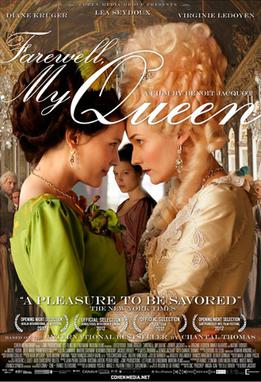
I'm not even sure of the context anymore, but I recently learned of a movie called Farewell, My Queen, which is set during the French revolution. The basic synopsis sounded interesting (though in retrospective, somewhat misleading), and I'm sucker for anything set at Versailles so I decided to give it a try.

Farewell, My Queen (Les Adieux a la Reine originally) is a French film based on a popular novel of the same name. Starring Lea Seydoux, Diane Kruger, and Virginie Ledoyen, the film picked up several prestigious awards when it was released last year. The movie tells the story of Sidonie Laborde, who is the official reader to the queen. Essentially, she is only a servant, but one of a slightly higher caste than, say, a chamber maid. Because of this, she holds some more privileges than her peers (notably a lavish gold clock that sits in her otherwise bare room) and shares a bit of intimacy with the queen, in that she gets to sit near her in the queen's private quarters while reading aloud to her.

The movie starts out on July 14, 1789, a day of infamy in French history for the Bastille was stormed that day, officially starting the revolution in France and years of bloodshed. Because news traveled slowly at that time, everything on this day is as normal. But by the following day, rumors are spreading about what has happened in Paris and fears are being stoked. The movie covers only a few days' time, so we don't see the Reign of Terror or anything more extreme than the dawning realizations of those at Versailles that their lives are about to be irrevocably changed. But the movie is not so much about history or its often attendant misery; indeed, The Independent's review of the movie notes that the director "doesn’t have any grand political statements to make. He is not trying to make a sweeping melodrama either. His approach is more like that of an anthropologist, studying a tribe in its death throes. The result is quietly fascinating." But perhaps most glaringly, the movie is rather the story of a love triangle. For Sidonie is in love with Marie-Antoinette, Marie-Antoinette is in love with the courtier Gabrielle (the Duchess of Polignac), and Gabrielle ... well, nobody really knows her feelings but let's just say she intends to curry favor with the queen for as long as possible.

We see all of this through the eyes of Sidonie, who gives us quite an insider's view of the palace of Versailles. Holding the position in the hierarchy that she does, she allows us to see the servants' quarters, with their rather drab existence and petty squabbles often based on things they've overheard from their masters and mistresses, as well as the inner chambers of the queen and her court, with their opulence, frippery, vanity, and still more rumors (although usually more substantiated at this point). Sidonie's place in the latter is certainly more uneasy though, and we frequently see her view of things from a position of eavesdropping while hiding in an opportune place. This dual perspective gives off a Upstairs, Downstairs sort of vibe, although the movie also reminded me a bit of The Girl with the Pearl Earring in terms of ambiance. Of course, the movie this one is more frequently compared to is Sofia Coppola's Marie Antoinette, and it should be noted this is a very different film. I don't want to pit one against the other as they both have their highlights, but they vary much in terms of style and substance.

Despite being a rather slim movie in terms of plot points, I found that I was totally engrossed in this film from beginning to end. Others have referred to it as a character study, but I think that explanation is a bit misleading also. As one of Sidonie's fellow servants notes at one point, Sidonie's life is mystery as she's held back all kinds of information about herself, including where she's from, who her parents are, etc. - and the viewer suddenly comes to realize the same thing. We know nothing about Sidonie beyond her love of books and her loyalty to Marie-Antoinette. The duchess is given comparatively so little screen time that we learn few details about her also and must surmise all of her motivations. Marie-Antoinette gives us a bit more, divulging some of her secret feelings to Sidonie at one point, and sharing knowing looks here and there that seem to indicate her frame of mind. But how much the queen really feels for Sidonie seems variable at a moment's notice and how much she's aware of Sidonie's love for her is something we're left guessing about, wondering if she's milked Sidonie's feelings for her own gain or if she is just completely unaware of them. If the former, this adds to the feeling that the movie left (for me at least) that the queen was a rather nasty person. History has been unkind to Marie-Antoinette, a woman who - no matter what her faults - was given an unfair amount of the blame for an entire country's myriad problems. Modern historians and others have been more sympathetic to the queen, and she did have her supporters even back in the 18th century, such as the artist Louise-Elisabeth Vigee-Lebrun. Vigee-Lebrun tells one of the most touching stories about Marie-Antoinette, in which the queen insisted on picking up Vigee-Lebrun's dropped paintbrushes for her, something quite unexpected for the lavish monarchy of 18th century France and not what you'd imagine for the Marie-Antoinette depicted here. This movie instead portrayed her as quite incapable of doing anything for herself and as rather self-absorbed, although admittedly she does have some slightly sympathetic moments.

Beyond the three main leads, there are numerous other characters who come in and out of the film from both the occupants of the royal court and the people who serve them. It was a bit tough at times to remember who all everyone was and how they related to one another, but it was manageable. One of the more notable side characters was Madame Campan, the head lady-in-waiting to Marie-Antoinette, who probably sees the most (both literally and metaphorically) of what is happening between the queen and those around her. She's a complicated woman who can seem both harsh and sympathetic to Sidonie at turns, but ultimately appears to be one of the most honest and moral people at Versailles. The mob of angry French people, although hardly seen, is a character in itself, causing all the other characters to worry and despair from a distance. Of course, the benefit of hindsight makes everything all the more ironic for the viewer who knows the fate of the royalty depicted here and all their court.

With such a female-heavy cast and focus, this movie is a rather interesting one to dissect in terms of its portrayal of women. We see three very different women here - one who appears to be obsessed with power and privilege (Gabrielle); another with love and loyalty (Sidonie); and another who is perhaps a mix of both (Marie-Antoinette). None of them seem to be sad stereotypes of frail and fragile women, but then again none of them seems to stand out as a particularly tough and independent woman. In a way, I rather like that for there is already no end of historical fiction out there in which someone tries to re-write history with a 21st-century ideal of a strong woman at the helm. These women seemed more realistic with a mix of good and bad about them. It's suggested that all of these women have at least some element of same-sex attraction within them, and it's worth noting that even in the 18th century Marie-Antoinette and the Duchess de Polignac were rumored to be lovers, despite no evidence supporting that beyond the queen's obvious fondness for the duchess, which very well may have been entirely platonic. For the most part in this movie, the erotic undercurrent of homosexuality isn't played too heavily or for the benefit of the male view, even if the (male) director told the press that he chose Lea Seydoux to play Sidonie because she "has incontrovertible sex appeal" and "brought this carnal dimension" to the film or if one reviewer thought the director took "a completely gratuitous interlude to let the camera ogle Ledoyen, lying in bed as God made her." I personally didn't find this scene gratuitous as it told us something about Sidonie's character and her envy, but there were other scenes where the director seemed to linger unnaturally long on a woman's body part - it wasn't just Sidonie's heaving bosom in a scene when she sits dangerously close to the queen as they take turns reading lines from a romantic play, but other odd choices like Marie-Antoinette's bare feet in a very serious scene that seals Sidonie's fate.

Otherwise, the cinematography of the film is excellently done without being overstated. Set in Versailles and filmed mainly on location, the palace feels like a character in itself -- or perhaps it just felt that way because I could recognize some of the areas, such as the Hall of Mirrors, from my visit there several years ago. Either way, the palace of Versailles leaves for stunning visuals with all its gold gilding, marble floors and columns, sparkling chandeliers and mirrors, and well-manicured extensive grounds. Of course, we also see the seedier side of Versailles (if you can call it that) with the tiny and sparsely decorated servants' quarters. The musical score was perfectly fitting to the tone of the movie, the period costumes were gorgeously lavish, and the acting was all top-notch, even in the minor characters. The ending of the movie was perhaps a bit "huh" rather than conclusive but as another blogger points out, "Because the film is a character study and not one of the climactic biopics to which some of us are accustomed, the story feels unfinished in the end, if only because the action ends where the action of most of these types of films begins." This was not necessarily the best movie I've seen regarding unrequited love or the French revolution or whatever element you want to pull out as the most relevant in this film, but I quite enjoyed it overall and would recommend it for those who are Francophiles, enjoy historical costume dramas, or who just like an understated movie that's more about characters interacting with one another than about non-stop action.

Sunday, February 17, 2013

Following the Red Balloon

Unintentionally color-themed, I'm following up my post on The Yellow Handkerchief with this post on the classic French film The Red Balloon. Arguably a children's movie, The Red Balloon is a 1956 film featuring the director's son Pascal Lamorisse in the lead as a young boy (around age 6) who encounters a red balloon on his way to school one day. He happily scurries off to the school with the balloon in tow, finding out soon afterwards that this is no ordinary balloon. The mischievous balloon has a mind of its own, so to speak, and definitely moves of its own accord. It becomes a constant companion to the young boy, following him about the streets of Paris on everyday adventures. Later, the two try to escape from the boy's mean classmates/peers who are clearly overwrought with envy about the balloon.

Besides that it is considered an iconic piece of work, I had absolutely no idea what this film was about before I watched it. Add that to the stereotype of French films being depressing, I was delightfully surprised to find this movie sweet and whimsical. There was a moment toward the end I was afraid this wouldn't be so, but everything righted itself onto a uplifting course (pun intended). However, I'm not sure how much children really delight in this short movie, especially given that modern audiences of youngsters are used to fast-paced, brightly colored movies that are usually animated and often peopled with outrageous characters.

The Red Balloon is almost entirely wordless, with only a few lines of dialogue given from the boy to the balloon, generally an admonishment to stay put. It is not, however, an entirely silent film. There is of course the requisite soundtrack but there are also numerous other sound effects heard like a doorbell ringing, cars whirring by, and quite frequently the sound of pounding feet hitting the pavement. These all serve to add to the film's ambiance and heighten the comedy or drama of any particular scene.

But mostly the film's story and atmosphere are captured with the cinematography. Of course, we see a lot of the boy in his gray outfits (and adorable school book bag that looks like a miniature briefcase in my mind, making him seem so grown up) and the balloon, which is vividly red and quite large. Throughout the film, there the cityscape of Paris, with its gray buildings, narrow alleyways, numerous stone steps, balconied apartment buildings, and blue street signs. It certainly carries one right into the city - not the tourist's city, with the Eiffel Tower glimpsed only once in the very far distance and no other major monuments featured, but the city of everyday life, with the boy stepping into a boulangerie and passing by outdoor fruit and vegetable stands. Most people on the streets are minding their own business, worried about their own concerns and hardly noticing the boy and his balloon. The cityscape scenery is a reminder that parts of Paris can be quite gray, which serves as a fitting backdrop for the brightly colored balloons that enter the scene in this film.

With hardly any words and a rather bizarre plot line, The Red Balloon allows for a myriad of interpretations of its appealing visuals. The original New York Times review said of it, "It is a thoroughly simple story of something incredible that could not occur except in the bright imagination of an artist such as Albert Lamorisse, the young Frenchman who made the memorable short 'White Mane' and who wrote, produced and directed this. Yet with the sensitive cooperation of his own beguiling son and with the gray-blue atmosphere of an old Paris quarter as the background for the shiny balloon, he has got here a tender, humorous drama of the ingenuousness of a child and, indeed, a poignant symbolization of dreams and the cruelty of those who puncture them." A more recent look by The New York Times of this movie and White Mane acknowledged, "The stories are simple, fablelike; the heroes are boys; the subject in each case is the purity and power of a child’s imagination; and the tone of both films is that of open-mouthed wonder. Yet these movies are also shot through with a very adult melancholy, an awareness that life tends not to measure up to the glorious pictures in our minds." Slant Magazine has a slightly different view, pointing out that, "The honeymoon is short-lived, but Lamorisse suggests that kids are always keenly attuned to the objects of the world around them: After the boy loses his red friend, a montage of balloons across the city shows them flying to his side and, in the final shot, launching him into the sky. For Lamorisse, then, the pleasures of childhood are as fleeting as they are ecstatic." Thus, a key debate to this film could be whether children are unaware of the bitter ironies of life or whether they are just more resilient than adults in getting back up after life delivers them a blow.

Meanwhile, Brian Gibson of Vue Weekly eschews the idea of capturing childhood innocence being the only goal of this movie or its counterpart White Mane, explaining, "These are post-war stories of innocence threatened—by arrogant, selfish gangs bent on proving their superiority. ... [T]his seems a post-Occupation France happy to forget the blood and death of Hitler’s war a decade earlier. But soon people’s occasional, playful efforts to grab the floating, carefree balloon become grasping and destructive. In a gorgeous sequence, light streaming down alleys as children’s shoes clack and clatter on the cobblestones, the red globe bouncing between the walls, Pascal is hunted down for his floating pet. The film’s ballooning sense of hope and freedom is deflated by a fierce, squabbling mass. Then, fortunately, Lamorisse’s film floats off, with the breeze of magic-realism, into a feeling of escape and peace, The Red Balloon taking hold of Pascal, lifting him out of this rigid, petty, earthbound life." Given the film's date, it is not absurd to read it as, at least in part, a reaction to the horrible war that the film's director undoubtedly lived through - though his son in the starring role obviously did not. Battered but cautiously optimistic and healing is probably a fitting description of Europe a decade after the horrors of World War II and Hitler's cruelties, and the film's young lead follows a similar path when his happiness is shattered by the balloon's bursting but is soon replaced with unimaginable joy when the other balloons of Paris come to his rescue. This final scene of vindication could be seen as symbolic of the dream of Europe ascending to even greater heights than before the war. (Decades later, this is arguably the goal of the European Union.)

After its musings on childhood purity versus adult melancholy, the 2007 New York Times article goes on to note, "When the film is over, you realize that although you’ve been entirely enveloped in little Pascal’s fantasy world, you’ve learned next to nothing about the boy himself. His parents are not in evidence. He lives with a stout, black-clad, rather fearsome-looking old woman who may or may not be his grandmother. We’re given no idea whether he’s a good, bad or indifferent student, or who his friends are. The intensity of his attachment to the balloon suggests that he’s a lonely, dreamy child, living in his own head, but we can’t be sure; the movie gives us nothing solid to go on." It is true that this movie is not a character-driven one like I usually enjoy, or at least it is not so in the traditional understanding of that terminology. Still, the young boy has a somewhat universal characterization about him - he is in some ways the epitome of the underdog that we can all sympathize with and root for through his (albeit brief) journey.

At any rate, this is not your standard classic Hollywood fare! Being so very different than all those rather formulaic 1950s movie gives this film the feeling of being a more modern movie that just happens to be set in the past. The special effects are particularly surprising given the film's date. If you haven't seen this short film yet, I suggest you do. It will delight you and cause you to think about its deeper meanings and themes for some time.

Saturday, February 2, 2013

He Knew He Was Right, Except that He May Have Been Wrong …

After watching two BBC miniseries based on Jane Austen novels, you might think I'd be tired of literary-inspired period dramas. But you'd severely underestimate my love of literature and also period pieces. So I followed up the 1980s versions of Pride and Prejudice and Mansfield Park with a more modern look at an English novel with He Knew He Was Right, the 2004 BBC miniseries based on the novel of the same name by Anthony Trollope. Like the 1995 version of Pride and Prejudice, this novel was adopted for the screen by Andrew Davies.

One of the original book illustrations
He Knew He Was Right tells the story of Louis (the titular he) and Emily Trevelyan, a young married couple in 19th century London. They initially met in the tropics, where Emily's father is a governor, and fell madly in love. To the delight of Emily's parents Sir Marmaduke (yes, that's really his name) and Lady Rowley, Louis even offers to take Emily's sister Nora to live in London with them because of the close relationship the sisters share. But as Sir Marmaduke and Lady Rowley note (hint: use of foreshadowing!) Louis is a man used to getting his own way, while Emily's upbringing on the islands means she is far more independent than the demure women of proper London society. Still, things go well for the young couple for a few years as they enjoy their honeymoon period and have a son. The bulk of the action takes place when Sir Marmaduke's old friend Colonel Osborne, a man with a history of being something of a ladies' man, begins visiting Emily every day. Louis, enraged by the idea that people are talking about him and increasingly convinced that Emily and Osborne are up to no good, demands that Emily stop allowing these visits. But Emily maintains that there is nothing improper in receiving her father's oldest friend and refuses to do so. The tension between Louis's insistence and Emily's stubborn increasingly escalates, to the detriment of both.

At the same time as Louis and Emily's woes are unfolding, a number of subplots are occurring based on the lives of friends and family of the Trevelyans, radiating out to extended family and friends of friends, and so on. Emily's sister Nora Rowley is being courted by the wealthy Mr. Glascock (yes, that's really his name), but she is in love with Louis's good friend Hugh Stanbury, who is a struggling journalist for a radical newspaper. Hugh's work has lead to a riff with his dowager Aunt Jemima, who decides to bestow her favor on his sister Dorothy instead, asking Dorothy to move in with her. Dorothy leaves behind her mother and sister Priscilla to live with Aunt Stanbury, who has plans to play matchmaker between Dorothy and the local vicar, Mr. Gibson. Mr. Gibson already has love troubles his own, with both of Mrs. French's daughters, Camilla and Arabella, vying for his affections. At Aunt Stanbury's Dorothy also meets the lively Brooke Burgess, nephew to Jemima's fiancee from her youth, and the two develop a close friendship. Meanwhile, Mr. Glascock is called away to Italy to tend to his sick father, and en route he meets the beautiful American sisters, Caroline and Olivia Spalding.

I'll admit that for the beginning of the first episode in this miniseries, I was a little bit lost with so many different characters being introduced and me trying to keep a handle on all that was going on right off the bat. Besides the tons of characters being introduced, there were a few years going by and a continent change in the first 10 minutes or so. But by about half way through that first episode, I had all the major characters sorted and was really interested in them and their stories. By the end of that first episode, I was completely hooked. Each episode ended with such a cliff-hanger type moment that I really wanted to do nothing more than follow the series all the way through in one sitting, but alas sleep and work called. Still, I did end up watching the whole series (only four episodes after all) in just two sittings.

After watching the whole series, I have to say, wow, I did not expect it to be this good! I hadn't read the book previously - or for that matter, anything by Trollope - so I didn't really have much in terms of expectations, just hope that it would be interesting. Now that I know Trollope created such wonderful characters, I'm inclined to read his books - starting with this one because I want to spend more time with these characters. In particular, I really loved the Stanbury family, even the family members we didn't get to see as much (i.e., Priscilla). It was great how the Stanburys and their various relationships served as foils to the Trevelyans. Spoilers alert! For instance, Nora and Hugh's courtship does not have the ease that Louis and Emily's did (Sir Marmaduke and Lady Rowley were more than happy to give Emily away to Louis and send Nora along with them, but they disapprove of Hugh), but you as the viewer get the sense that it will last. And Aunt Stanbury's initial stubbornness and flat out refusal to accept the relationship between Dorothy and Brooke because of her concerns about what people will think and say is eventually softened by her love for Dorothy - and Brooke - and her realization that she is standing in the way of their happiness. If only Louis (or for that matter Emily) would have such a realization and stop obsessing about rumors and just be happy.

Speaking of the main characters, it was very frustrating to watch the dance that Louis and Emily kept repeating where they would realize how much they both loved each other and seemed like they would reconcile - only to have Louis ask once again for Emily's promise never to see Colonel Osborne from this moment forward and Emily to refuse to do so on the grounds that she has done nothing wrong. Especially in the beginning, it seemed as though all this heartbreak could be so easily fixed with a few minutes' open and honest conversation in which they (mostly he) actually let each other talk and explain. Over time though, Louis's descent in madness, becoming more and more depressed and paranoid, makes it obvious that no happy ending can be in store for them. (Apparently Trollope based this part of the novel loosely on Shakespeare's Othello, so that gives you a hint right there.) And Louis's final condition leads to the feeling that many characters - and indeed, viewers - have that if not Colonel Osborne, then some other man with whom Emily was not having an affair would become the target of Louis's obsession. That being said though, Osborne really does appear to be a cad though, and his insistence on visiting Emily no matter where she goes and what the consequences might be is incredibly maddening for the viewer (let alone Louis!). I was happy that other characters eventually began to see his nefarious role in the whole plot, with Lady Rowley noting that while he may not actually be a philanderer, he enjoys being thought of as one. Sir Marmaduke later confronts him at the club but fails to really admonish Osborne the way he should.

Anyway, back to the subplots, which apparently even Trollope thought were the more engaging part of the story. (To be fair, I found the Trevelyans' story equally interesting, but I was glad they lived in a much richer world in which other characters also tried to find their place in society, fell in love, etc.) Although a bit of a cad himself, the bumbling Mr. Gibson was a fun character who brought some humor to the story. His interactions with the French family and Aunt Stanbury were just great. Nora, unfortunately, felt a little flat for most of series, coming to her own only towards the end. There simply was not enough time to explore her character. Indeed, in some ways, these subplots didn't get as much treatment as they deserved. Characters like Mr. Glascock and his interactions with the Spalding sisters seemed to be brushed over pretty quickly. Even Mr. Brooke Burgess was given little screen time, and his friendship with Dorothy proceeded far too speedily for my taste. Since I haven't read the book, this may be true of the source material but a quick glance at the table of contents suggests otherwise. (For instance, there are two chapters with titles regarding Hugh Stanbury and his habit of smoking a pipe. That seems to be a lot more of Hugh than we see in this miniseries.) Also, translating a book that is some 800 pages long into four hours on the screen inevitably means that some things will get cut. This was the only downside to this miniseries - that, and I found the decision to have the characters occasionally address the camera directly, usually to explain away something untoward they've just done, to be a bit odd. I don't mind breaking down the fourth wall in some productions, but it didn't seem fitting in this one.

One thing I really enjoyed about the characters was that despite being set - and written - in the 19th century, He Knew He Was Right features a large female cast, all with interesting and varied characteristics. Emily and Nora are strong and independent, refusing to have their lives dictated by the whims of others - that is, as much as can be helped given their situations. These characteristics are most likely derived from their mother, Lady Rowley, who also has the great attributes of being clear-headed in tough situations and able to read people's characters quickly and accurately. Aunt Stanbury is a figure of power, for her wealth and consequence allows her to make decisions that affect others' lives. Priscilla, who I really wish we saw more of, is witty and always ready with a retort - or a rational comment - as need be. Dorothy at first seems naiver than her sister and arguably too gentle, but she shows great strength - and willingness to sacrifice - as her character develops. Mrs. Bozzle is a woman ahead of her times, repeatedly telling her husband how Trevelyan's desire to kidnap his own son may not be illegal but it is certainly not moral, defying Victorian standards that a man had more right to his children than a woman. Arabella and Camilla are more of the silly, ridiculous characters who are just obsessed with getting married, but in Arabella's defense she appears to actually be in love with Mr. Gibson while Camilla seems more in love with the idea of marrying well. Mrs. French meanwhile is smart enough to know how to manage sticky situations and bring them to her favor. Even Caroline Spalding, who we see very little of, is traveling through Europe with only her sister as a companion and is willing to speak her mind no matter what the occasion. Interestingly enough, I found this quote from Andrew Davies on Masterpiece Theatre's website: "This novel has a lot of confident women discovering themselves and making their own choices. Trollope seems to have preferred women who were gentle, like his docile, dutiful wife. However, in his middle years he traveled a lot and fell in love with a very vivacious, emancipated young American girl called Kate Field. He lost his heart to her, although they only had a sentimental, platonic friendship. These fiery women with strong opinions who'd argue like a man were very attractive to him, if also a little bit daunting." These tidbits about Trollope's life and attitudes toward women help inform the characterizations in He Knew He Was Right.

Speaking of the characters, I would be remiss if I didn't add that it is not just Trollope's inputs that make these characters so great - it's also the great output from the fine folks who played these roles. Everyone seemed perfect for the roles they played (again, noting that I haven't read the source material yet), but some stand out even more so than others. I absolutely loved David Tennant as Mr. Gibson and thought Anna Massey as Aunt Stanbury was spectacular. (Incidentally, Anna Massey had also played Aunt Norris in the 1983 version of Mansfield Park. In addition, Austen fans might recognize Christina Cole, who plays Nora Rowley here, as Mrs. Elton in the 2009 version of Emma and Caroline Bingley in the 2008 minseries Lost in Austen.) Oliver Dimsdale and Laura Fraser as Louis and Emily, respectively, were great in showing how these characters evolved - and devolved - over time.

All and all, this was a fabulous production that I really enjoyed. I highly recommend it for anyone interested in costume dramas - or just good dramas in general. I second The Hollywood Reporter's assertion that this series is "television of the highest order: intelligent drama, well acted with crisp dialogue and all the ingredients required for a period piece."

Monday, January 28, 2013

Jane Austen, Meet the 80s

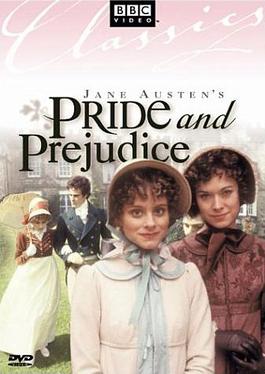
As many of you may know, today marks the 200th anniversary of the publication of Jane Austen's classic novel Pride and Prejudice. Therefore, it only seems fitting to write up today a post I've been thinking about for some time. If you guessed that this post would be about Pride and Prejudice, you would be right. But you'd also be wrong. For this post is going to address two BBC miniseries that came in the 1980s - the first one is 1980's Pride and Prejudice and the second is 1983's Mansfield Park.

The BBC's 1980 miniseries of Pride and Prejudice seems to be one adaptation of the novel that has been largely forgotten. I hardly ever hear about it, for Austen fans seem to flock either to a feature film version - generally more watered down but also an easier thing to digest, especially in one sitting - or to A&E's 1995 miniseries, which seems to have positioned itself as the screen version of the Pride and Prejudice story. However, this miniseries does a pretty good job at adapting the novel, even if it is now overshadowed by the one starring Jennifer Ehle and Colin Firth.

If you don't know the story of Pride and Prejudice, that can only be because you haven't read the book and you should do so immediately! :) But here are the basics for those of you who aren't well-versed in Austen's novel: In Regency England, there lives a family consisting of Mr. and Mrs. Bennet and their five daughters. Because the law at the time would not leave estates to women and working was an unheard of thing for gentrified ladies, the five young women will be hard off, to put it lightly, when their father dies. That is, unless they can marry well. Enter their village's latest resident, the wealthy Mr. Bingley who comes accompanied by his good friend, the even wealthier Mr. Darcy. Bingley is immediately charmed by the eldest Bennet daughter, Jane, while Darcy snubs his nose at her sister Elizabeth. But as Shakespeare says, the course true love never did run smooth, and these first impressions aren't everything. We're taken on a roller coaster year as the Bennet sisters search for happiness and love.

The casting of the 1980 Pride and Prejudice miniseries is for the most part quite spectacular. In particular, Sabina Franklyn as Jane Bennet looks and acts exactly like the darling sweetheart you except her to be, and it may be heretical for me to say, but I actually preferred David Rintoul as Mr. Darcy over Colin Firth in the role. Some criticize Rintoul as too wooden and stiff in this miniseries but quite frankly, that's who Mr. Darcy is. He is someone who has a tough time letting his hair down, so to speak, and enjoy himself in the society of others, especially at large gatherings. (Come to think of it, Mr. Darcy is pretty much the definition of an introvert, even though everyone else around him decides his manners show an air of superiority and too much pride in himself.)  I really enjoyed that the actor playing Lady Catherine de Bourgh was much younger than ones I've seen in the role previously; I think that helped to make her feel less like a bitter old maid and more like the ridiculously snobbish person who she is.

When Elizabeth Garvie first appeared on the screen as Elizabeth Bennet, I wasn't so sure I would like her, but she grew on me pretty quickly and I came to enjoy her performance, with a few exceptions (more about that later). The rest of the Bennet sisters looked and played their parts quite well, but I was somewhat disappointed in their parents. This particular rendition of Mrs. Bennet was a little too over the top for me at times while Mr. Bennet came across as rather cold. Some of that may be more in the scripting than the acting, but I'm inclined to think it was a combination of both. I was a bit disappointed in the casting of George Wickham, as I generally am, for most versions don't seem to find someone so very attractive and dashing as to woo the whole town as Wickham does. Some of the seductive qualities might have been lost in the scripting as well as the acting, but I'm once again inclined to think both are at work here, if not more so the latter. Nearly all the rest of the characters, including Mr. Bingley, Miss Bingley, Charlotte Lucas, Mr. Collins, and so on, were very convincing in their roles.

Because it was 1980 and this was a made-for-TV production, this miniseries doesn't have the fine veneer of polish that we're accustomed to these days. Sometimes the production quality is quite low, with overwhelming lighting that washes people out and the outdoor noises of feet crunching on gravel or birds chirping that are overly loud. Better editing could have been used to tighten up some scenes, such as the opening one in which we watch Mary run from the front door to the path and back again in what seems like an interminably long time to be watching something so dull and out of focus. There were also sometimes quick cuts from scene to scene, seemingly popping the viewer out of one conversation into an entirely different one with no warning. Most likely due to the poor production values, whenever there was a large party scene, characters that were not the main focus only pretend spoke (i.e., you could see them moving their lips and acting like they were very interested in one another but no words were actually being spoken), which was actually rather distracting at times. Only going through the motions like this gave the feeling the viewer was watching a high school theater performance rather than a professionally done television show.

The adaptation of the novel to screen format itself was for the most part successfully done. With a long miniseries rather than a shorter feature film length, the screenwriters did not have to cut any major parts of the story out, forced to reduce it to just main highlights. Instead, we get all the balls and trips and so on that we see in the novel. The dialogue is largely straight out the book, although occasionally lines were given to different characters in the miniseries than in the novel, which seemed rather odd. This sometimes lead to rather awkward seeming conversations, where the actor seemed to be just reading the line rather than really getting into it. (This could also just be a result of me knowing these lines so well myself now that they don't sound fresh and unrehearsed.) There seemed to be few new lines of dialogue given in this production so if Jane Austen didn't supply a suitable next line word for word, we just jumped to the next scene in that rather quick and jerky way that I mentioned above. At times though, newly introduced monologues for Elizabeth were given as voice-overs, which became rather tedious as the series progressed. Her thoughts seemed rather dithering instead of the lively ones we would come to imagine from the feisty Lizzie. Of all of Austen's female protagonists, Elizabeth seems the least suited for long internal monologues as she is the most outspoken, excepting maybe Marianne Dashwood or possibly Emma Woodhouse. These bouts of introspection seem far more suited to Fanny Price, Anne Eliot, or even Elinor Dashwood.

One good point I will give this adaptation is that it seemed to grasp the humor of Austen's novel a little more than others, which seem to focus more on the dramatic aspects of the book. It was also nice, as always with these adaptations, to see these characters come to life and in particular to see their costumes, dancing, and fine manor houses with lovely grounds. All in all, I enjoyed this adaptation and could even be induced to watch it again. But like many others, I'm still considering the 1995 A&E version of Pride and Prejudice to be favorite my screen adaptation.

Now on to Mansfield Park, which was aired by the BBC just three years later in 1983 (a very good year). This Austen novel is generally not a fan favorite (although I love it), nor is its heroine (but I feel sympathetic toward her). So it has not been adapted near as many times as Pride and Prejudice, with just this miniseries and two movie versions in 1999 and 2007, neither of which I find entirely satisfactory. (Okay, I'll admit it, I basically detest the 1999 version; I'm pretty partial to the 2007 one, but it has a fair share of faults also, including the greatly condensed timeline.) So when this one came up in conversation recently, I thought I had to find it and watch it. When I found it on Netflix, I saw that I had rated this movie and then realized that I had already seen it before. I'm not sure the most glowing recommendation of a miniseries is to discover that one had invested five or six hours to it and didn't recall its existence, even when prompted. But I decided to watch it again and see what I thought of it (again).

To back up, here's the brief description of Mansfield Park for anyone who hasn't read the novel. Young Fanny Price, one of many children in a family of limited means, is sent to live with her wealthy aunt and uncle at their estate, the titular Mansfield Park. Sir and Lady Bertram, her uncle and aunt, have four children of their own - Tom, Edmund, Maria and Julia - who are mainly standoffish toward their young cousin, except Edmund who is always sweet and kind to her. As they grow, Fanny comes to love Edmund as more than a cousin, but he is completely oblivious to this. Meanwhile, Maria is courted by the wealthy but bumbling Mr. Rushworth and Tom spends his life rather frivolously wasting money. Their little world is rather shaken by the introduction into their society of Mr. Henry Crawford and his sister Mary Crawford. Edmund's heart is almost immediately captured by Mary, to Fanny's dismay, and Henry manages to enamor himself to Julia - and the engaged Maria. It's a recipe for a disaster, and hijinks do indeed ensue at Mansfield Park.

Like the 1980 version of Pride and Prejudice, the miniseries of Mansfield Park allows for all the ins and outs of the novel, rather than completely neglecting some parts to force a nearly 500-page novel to fit into an hour and a half long movie. So this version wins points for allowing us to see all that. But while it remains true to the action of the book, we see so little of Fanny's inner thoughts that it loses something. It occurs to me now that while I was well aware of Fanny's feelings the whole time because of my knowledge of Mansfield Park, to the uninitiated it was probably unclear that Fanny was in love with Edmund and felt Mary Crawford was not good enough for him. Unlike Elizabeth Bennet, Fanny so rarely gets to speak her mind that a little narration would be helpful to understand her character and her emotions. It is worth noting that her underlying motivations were so unclear in this film because Sylvestra Le Touzel actually played Fanny the way she was meant to be played - quiet and gentle and meek. So I leave no fault at Ms. Le Touzel's feet but wish that those internal monologues that were so popular in the BBC production of Pride and Prejudice were employed here instead.

In addition to Le Touzel, the rest of the casting was very well done with a few notable exceptions. I had not recalled that the Honourable Mr. Yates was meant to be such a fop, so he seemed over the top to me but perhaps I am remembering his character incorrectly. I was not particularly fond of Nicholas Farrell as Edmund Bertram for he came across as far too smug and self-righteous for my taste. And Jackie Smith-Wood was a travesty as Mary Crawford. For starters, in every scene she was in, I was completely distracted by her short, short hair, which seemed counter to every picture of Regency hairstyles I've ever seen, although apparently some rather daringly fashionable women did have cropped bobs. As Miss Crawford is meant to sporting the latest fashions from London, I could perhaps think the hair and costume department were going for this, but her clothes in many scenes were duller and plainer than those of Maria and Julia. And, the actor herself is not particular attractive and seems a bit old for the part. I know these complaints sound rather superficial and in other circumstances, I would not make them. But recall the source material! Mary Crawford is meant to be so stunningly beautiful and charming that she nearly makes Edmund abandon his high moral ground (and arguably is successful in this on some fronts, such as the play acting or hogging Fanny's pony) and that she is looked up to by Maria and Julia because of her London fashion and air. Ms. Smith-Wood is not capable of fulfilling that role, plain and simple. She does do a pretty decent job at having a lively and pert manner, but I can hardly believe the BBC couldn't find another person who could do that also. Or at the very least give Smith-Wood a more interesting hairstyle and wardrobe.

Despite these few objections (although Edmund and Mary are large parts so not liking these actors was a big deal), I did enjoy the casting choices, as I've mentioned. In particular, I thought Lady Bertram, Tom Bertram, Henry Crawford, Mr. Rushworth, and Susan Price were particularly well suited to their roles. These actors seemed born to play these parts and I'll probably picture them in these roles the next time I read the novel. The Bertram sisters, along with their father and their aunt Norris, also were played by fitting actors. (I do have to note that I found Sir Bertram's badly adjusted wig distracting also, but not as much so as Miss Crawford super short hairdo.) A fun fact is that Jonny Lee Miller has a small part as one of Fanny's younger siblings - not only do I adore Jonny Lee Miller as an actor, but he went on to star as Edmund Bertram in the 1999 film version of Mansfield Park. However, while the casting and acting was overall well done, there were a few moments when the characterizations were a bit overblown. In particular, I'm thinking of the scene in which Fanny Price works herself up into complete hysterics over the idea of marrying Henry Crawford and the one or two scenes where Lady Bertram is not only dozing stupidly on her couch but also sucking her thumb while doing so. Both mannerisms were taking the characters a bit too far into the extreme possibilities for their personalities.

Also similar to the Pride and Prejudice miniseries from the 80s, the production values in 1983's Mansfield Park leave something to be desired. The shaky camera for the conversations within carriages particularly bothered me, although the microphones picking up some sounds more so than dialogue was also irritating at times. This was more of an issue to me here in Mansfield Park than in Pride and Prejudice because for some reason, BBC did not feel the need to include closed captioning for this miniseries. If I really couldn't catch a line of dialogue in Pride and Prejudice, I could rewind and hastily slap on the captions feature to get it but there was no such recourse here. (As I grow harder of hearing all the time, the lack of closed captioning on certain films and TV shows displeases more and more.) At least in this movie, however, they managed to figure out how to allow some background noise in larger party scenes so the actors off to the side could actually murmur to one another rather than doing the peculiar silent lip movement thing they did in Pride and Prejudice. The abrupt scene shift was not really an issue here, except when a particular episode ended. The working model seemed to be to cut the episode off at exactly 52 minutes regardless of where the story might be at that point. There were no good "hooks" so to speak to keep the viewer wanting to come back for the next episode, let alone any sort of satisfying conclusion. One episode ended so abruptly in the middle of a conversation between Henry and Mary Crawford that for a moment I thought the picture froze ... until of course I saw the credits start to roll. I suppose many Austen fans didn't need the extra something to compel them to come back for another episode, but other viewers might have and an episode conclusion that felt at least like the end of a conversation instead of the middle of it wouldn't be an absurd request.

While this version of Mansfield Park is adept at presenting the book in a fairly complete and favorable adaptation and I did enjoy it this time around as well as the first time, I still prefer the 2007 movie as the best available version at this time.

To all those Janeites out there celebrating Pride and Prejudice's big 2-0-0 today, I wish you joy! And I leave you with some questions: What do you think about the BBC's 1980s versions of Austen's novels? Which are your favorite adaptations of Austen's works?

Tuesday, July 3, 2012

Laila’s Birthday: A Celebration of Absurdity?

Laila’s Birthday is a 2008 film set in Palestine that follows one day in the life of Abu Laila, a former judge who now drives a taxi cab for a living. This particular day is no ordinary day though – it is the seventh birthday of his only child, his daughter Laila. All Abu Laila wants to do is put in a day’s work, pick up a present and cake for his daughter, and arrive back home by 8 pm. But fate is not on Abu Laila’s side. After starting his day off with his usual Kafka-esque exercise in absurdity by visiting the Ministry of Justice in a feeble attempt to bring his judicial nomination up sooner, Abu Laila’s day gets worse when a customer leaves behind his cell phone in the taxi cab’s backseat. In a classic turn of “no good deed goes unpunished,” Abu Laila finds himself getting into all kinds of situations, as he puts it, in his attempt to return the cell phone to its rightful owner. Will he be able to make it back home in one piece in time for Laila’s birthday?

I’m not sure now how it is that I heard about Laila’s Birthday, but somehow its existence came into my knowledge in the past few weeks. I immediately watched the trailer for the movie and decided I had to watch the whole movie. The trailer seemed to promise a film filled with absurdly comic scenarios – just the kind of situational comedy that I find particularly funny. While this is certainly true at many points, the movie is also profoundly sad at times. Consider Abu Laila’s words when he snaps at one point and yells out in helpless frustration at the helicopters overhead: “And you…! Leave us alone!!! Leave us in peace!!! Leave us our breath!!! Leave us our rest!!! We know you have planes, tanks and very smart missiles.  You are the toughest occupiers in the world!!! But we, we want to live. We want to raise our children. We want to sleep. … We just want to live. Simply that. Just that.” But the beat marches on, and wars and occupiers continue to exist the world over, ad infinitum.

As the quote above suggests, the movie is of course laden with political overtones scattered throughout. No doubt it is difficult to write and produce a film set in present-day Palestine without doing so. As Abu Laila’s drives his taxi throughout the city, we hear political news on the radio and see protestors out in the streets. Some of these political situations are particularly poignant. For instance, one couple nearly jumps out of Abu Laila’s taxi when they see a line forming because, they reason, a line must mean someone is giving away some food or other necessary items. Later, a missile drops across the street from where Abu Laila is, and the aftermath is chaotic.

On the other hand, one moment that had me chuckle aloud was when a group of men in the cafĂ©, eager to condemn what a mess the occupation is making off their country, argue over whether the military officers they are watching on a newsreel are Israeli or Palestinian before someone shouts out: “It’s Iraq. And the army is American.”

Abu Laila’s politics also shine through as the movie progresses, and he refuses to bring passengers to checkpoints or take riders who are armed. He is persnickety in other ways also and, as a former judge, is a stickler for the law. He argues with one passenger about wearing a seat belt and asks another not to smoke, citing legal foundations for both requests.

As a slice of life kind of movie, we unfortunately don’t get a lot of Abu Laila’s back story, although we get enough to understand his frustration and sense of both righteous indignation and helplessness as he tries to navigate this new life he has. Another serious pitfall, in my opinion, is that the roles of Abu Laila’s wife and daughter are sidelined. Their appearances bookend the movie, but they have few lines or compelling characterizations. Instead, they function as the Victorian model of females as “the light of the home” – a home where men go to escape the hustle and bustle of the manly world of business and instead relax in the innocence of this womanly world of domesticity. This is perhaps somewhat hyperbolic in this particular situation as we are at least informed that Laila goes to school and his wife goes to work, although no further details are given about either’s daily routines.

What we do get to see a lot of, however, are city scenes as Abu Laila is out and about driving his taxi. The various landscapes show us a beautiful country (occupied territory) that has been battered by numerous problems, including military occupation and economic hardship, and is worse for the wear.

Still, despite all the chaos, the movie manages to end on a somewhat hopeful note, although its final line can also be interpreted as defeatist. I suppose how you take it all depends on whether you are glass half-empty or glass half-full kind of person (or what kind of day you’ve had). For better or worse, the feeling you leave with is that people are people everywhere, all of us with hopes and concerns that face us each day.

Laila’s Birthday was not a big blockbuster hit like all the summer movies recently out or on the horizon, but it’s certainly not a film to be missed. It is an absorbing movie, and you will be enriched by seeing it.

Thursday, May 24, 2012

A Dangerous Method: A Look at Jung’s Perhaps-Not-So-Dangerous World


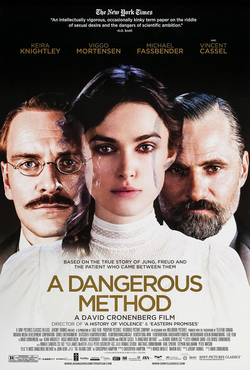
Hello all! Once again, I’ve fallen behind on updating this post, largely from working too much followed by quickly doing too many arts and entertainment-related things to have time to write about them! I’m hoping to catch you all up shortly on what’s been going on A&E wise (because work-wise would just be dull J). To that end, here’s the first of several overdue posts, this one about the 2011 film, A Dangerous Mind, starring Michael Fassbender, Keira Knightley, and Viggo Mortensen.

Set in the early 1900s, A Dangerous Method begins with a relatively young C.G. Jung (Fassbender) studying Sabina Spielrein (Knightley), a patient suffering from hysteria. Over time, Jung and Sabina move from the doctor-patient relationship to that of lovers. Already a relationship set up for disaster, it is further taut by Jung’s marriage with children on the way and Spielrein’s sporadic healing and studying to become a psychiatrist herself but not necessarily always embracing Jung’s methods.

Concurrent with all this drama, Jung is also developing – and struggling in – a relationship with renown psychoanalyst Sigmund Freud (Mortensen). Freud clearly wants to pass the mantle down to the younger doctor, but Jung does not buy all the emphasis Freud puts on sexuality as the base of so many psychological problems. Freud, meanwhile, begins to mistrust Jung’s interest in mysticism.

Some time back, I had seen one trailer for A Dangerous Method, didn’t think much of it either way, and then never heard anything about it again. That is, until on a recent flight home from vacation when it was an option to watch. There wasn’t anything else that sounded even remotely appealing on the plane’s menu, and the psychological aspect of this film intrigued me, having once been a psychology major.

That being said, I was a bit disappointed with the film from a psychological angle. The story between Freud and Jung did seem to be grounded in fact (i.e., Jung was indeed doubtful about Freud’s obsession with the sexual aspects of psychoanalysis and was critical of Freud for refusing to ever be analyzed himself), and I noted somewhere in the credits that the film referenced actual letters between the psychoanalysts where possible. In addition, the film is based on a play, which is in turn based on a nonfiction book, so somebody did their homework somewhere along the line. I knew nothing about Sabina before this film, despite having studied about both Freud and Jung in numerous classes, so her character was a welcome introduction, which allows me to do some more research on her on my own. However, I felt like the movie did not explain her psychological problems in depth and very much glossed over her (somewhat spotty) recovery. This included quickly brushing over Jung’s psychoanalytic methods, which had seemed to me to be at the heart of the film’s premise as I understood it going into the movie (not so much, it would appear).

Part of this may be due to the disjointed nature of the film. Frequently, several years would pass by from one scene to the next. I found this very disorienting, particularly with a character like Sabina who could go from stark raving mad in one scene to a perfectly polished young lady in the next. (It is possible that some of this may be due to the airline’s formatting and editing of the film, although I should point out I watched Sherlock Holmes: A Game of Shadows on the same airline a week earlier and didn’t note any appreciable differences between the airline’s version and the one I had seen in theaters. Also, I doubt the airline would remove any substantive scenes, although it is possible that they removed/limited some of the sex scenes from this particular title.) These jumps made it difficult to really ever feel like the movie was telling a logical story or for me as the viewer to become fully immersed in the story. That is not to say that I didn’t find the movie engrossing, it’s just that it never took away the feeling that this was a movie. Does that make sense? What I’m trying to say is that the movie was indeed riveting, but it didn’t sweep me up so fully in its world that I forgot I was watching something purposely built up to be viewed by outsiders, namely moviegoers.

It is also possible that other viewers got the exact opposite feeling – perhaps there was too much psychoanalytic history and terminology for a lay audience. (One reviewer refers to it as being full of “shop talk.”) Having studied psychology in an academic setting for more than four years and on my own for even longer, I can’t really say at this point. To me, it could have delved much further into the psychoanalytic methods used by Freud and Jung, but then again, I could see how this could alienate many viewers.

The movie ended on a peculiar note, which is about as much as I’m going to say on that so I don’t give anything away. I felt very much like I have at the end of some other quirky, independent movies (i.e., Lost in Translation) where I’m not really sure what to make of the ending or indeed anything that came before it. As I alluded to earlier, there wasn’t really an overarching story throughout that would culminate in a conclusion of some sort, so it just sort of felt more like it ended because two hours had passed. Like with many biopic or historical films, the viewer is given a brief synopsis of what happened to these characters later in life. Sabina’s life story ended so tragically as to leave a distinctly odd and futile feeling to the whole film.

A high note of the film was the superb acting by all, but particularly by Fassbender and Knightley. I’ve yet to see Fassbender disappoint in any role, and he plays the complicated Jung well and with nuance. Knightley throws her all into playing the insanity stricken young Sabina and then transforms perfectly into the studious, well-mannered older Sabina. Her Russian accent is perhaps not pitch perfect, but it suffices (and is more than either Fassbender or Mortensen put into their roles, as oddly enough they both do not attempt at an accent). The settings were sumptuous, the score is haunting and an absolutely perfect fit, and the cinematography was excellent. But none of this makes up for a plot that felt a bit watery. I might recommend A Dangerous Method to a handful of people that I think would enjoy this type of movie more than most, but I’m not leaping over the moon about it. I'm still kind of scratching my head about it, trying to figure out what to make of the film.

Monday, December 5, 2011

Creating a Fashion Icon: Coco Before Chanel

I only recently heard about the 2009 film Coco Before Chanel and decided to check it out, not least of all because it stars Amelie’s Audrey Tatou. This biopic of the famous fashion designer Gabrielle “Coco” Chanel looks at her early life, as perhaps implied by the title. It focuses mainly on the years in which she is the mistress first of Etienne Balsan and later Arthur “Boy” Capel, brushing over her childhood years in an orphanage and dedicating only a montage to the many, many years of her successful career. If there was one thing I did not like very much about the movie, it was that we saw so little of her actual success. However, as I already mentioned, the title of the movie should provide a clue that the movie is more about her life before coming a household name.

Due to the movie’s focus on Chanel’s years as a “kept woman,” another downside was the men’s treatment of Coco, particularly in a cringe-worthy scene in which Capel asks and receives permission to “borrow” Chanel from Balsan for a couple of days. There’s probably an element of truth-telling at work here (particularly keeping in mind the time period), but it doesn’t stop the feminist ire that boils up in me at the treatment of women as property – or worse than property, as most people aren’t willing to lend out their homes for a weekend with no questions asked. Still, throughout all this, we see Chanel becoming the person she will be. She chafes at having to ride sidesaddle, refuses to wear a corset at the sacrifice of comfort, and mocks the elaborate ornamentation on the pretentious women she sees around her.

Before seeing this movie, my entire knowledge of Chanel’s life was based on a slim picture book for children. Like with any biopic, it’s unclear how much is 100 percent true and how much is poetic license. For instance, some quick web searches tell me that Chanel had two brothers and two sisters, rather than only the one sister who is featured in the film (who, by the way, is named Adrienne – which was not the name of either of Chanel’s actual sisters). Interestingly, the movie created as many questions as it answered about Coco, including the origin of her unique nickname. In part, we are left puzzled by what’s actual true because Coco is constantly changing the story she tells – which is apparently something the real-life Chanel was known to do.

The movie also portrays Coco as witty and sarcastic, again characteristics of the actual woman. This captivating side of Coco is portrayed by the winsome Audrey Tatou who is always a delightful actor to see at work, and she even looks a bit like Chanel as an added bonus. (Tatou is also currently a spokesperson for Chanel perfumes.) All of the other players do fine jobs in their roles as well.

In addition, Coco Before Chanel is a movie well-aware of the visual aspect of the medium and contains many stunning shots. Cinematically speaking, there is never a dull moment, whether we are looking at a lush French chateau and estate, the simple and perpetual beauty of the sea, or the finery of fashion models descending a staircase. Overall, I’m not sure I would call Coco Before Chanel a “must-see” movie, but it certainly has its charms.