Showing posts with label British films. Show all posts

Monday, September 30, 2019

Dear Reader, I Watched Them All

In this post I'll be taking a brief break from my reviews of AFI Top 100 movies to discuss some other films I saw this year. Specifically, I finally got around to watching the various screen adaptations that exist of Charlotte Bronte's famous novel Jane Eyre. Many moons ago when I was still an undergrad, I took a course on Victorian literature and read Jane Eyre (alas, with the big reveal having been already spoiled for me by a too chatty classmate; I will be kind enough to tell you all that this post will indeed contain spoilers for the plot, so proceed at your own risk). After that I meant to watch some of the movie adaptations; I even recall seeing a trailer for one of them when it was new! But me being me, this kept getting pushed off to some later date when I would 'have free time' (cue laughter here).

Fast forward to the beginning of this year when I was trying to catch up on some podcasts and listened to Can I Just Say's episodes on Jane Eyre, both the novel and some of its adaptations. Of course, I couldn't simply listen to these episodes with no context though! While I didn't re-read Jane Eyre (too little time to read all the books I want to read as it is), I did make a point to finally watch the film adaptations -- the three discussed on the podcast before listening to it and then just to round everything out, I finally finished this little 'project' of mine but watching one more, which is where I'll start my reviews, as it's freshest in my mind.

Jane Eyre (1944)

This little 'project' of mine ended with the earliest of all these adaptations, which perhaps wasn't entirely fair to save for last, but that is what happened. This wasn't my favorite of all the adaptations; indeed, I found the pacing a bit slow at times. But it was certainly a solid addition to the list of Jane Eyre films and must have been so even more when it first came out to viewers who hadn't seen many previous screen adaptations of the novel, particularly as a "talkie."

The film opens with a young Jane Eyre being interviewed by Mr. Brocklehurst concerning her so-called bad behavior. Peggy Ann Gardner was the most spirited of all the young Janes I saw and was delightful as a result. Agnes Moorhead, best known for her role as Samantha's mother on Bewitched, was absolutely fantastic as Jane's Aunt Reed. She manage to convey in a few facial expressions just how awful this character was, which was necessary for this adaptation as we don't see any of her earlier abominable treatment of Jane. Young Jane's hope of a wonderful new life at school is quickly tamped out when she arrives at the dour Lowood School. But here she makes a friend in Helen, another school child who is played by a shockingly uncredited young Elizabeth Taylor!

Jane quickly ages into a young woman and the role is taken over by Joan Fontaine; I cannot recall having seen Fontaine in any other movie before, but I was immediately struck by how much she looked and sounded like her sister, the actor Olivia de Havilland, probably best known for her role as Melanie in Gone with the Wind. The role of adult Jane is incredibly difficult because she is quiet and deferential while having a very vivid interiority; the reader of Jane Eyre knows this, but the viewer isn't always as lucky. Fontaine certainly does show at times that something else is going on in the character's mind, but other times her face is just too placid to read anything more into it. This movie does have a gimmick in which lines of the book are shown and Fontaine reads them in a voice-over, but this felt like it took the viewer further out of the narrative as opposed to deeper into it, which I think was what the screenwriters were going for with this device. (Side note: A fun fact with this movie is that one of the screenwriters was none other than Aldous Huxley, author of Brave New World.)

Jane moves on from the Lowood School to become a governess at a private estate. Her charge is the young Adele, played by Margaret O'Brien; it is my understanding that O'Brien was a popular child actor in Hollywood at the time but if this movie is any evidence, I cannot understand why. Her French accent was atrocious and the rest of her performance didn't make up the difference. The lord of the estate is Mr. Rochester, played by Orson Welles, whose interpretation of Rochester seems to be more grumpy and stern than brooding and mysterious, but it works well enough. Sadly, I don't think Fontaine and Welles had particularly good chemistry, which is such an essential part to this story. I think that is partially to blame for some of the movie seeming to drag a bit.

The estate itself, Thornfield, is presented here as a perfect setting for the more Gothic elements of this tale; the black-and-white filming and the gloomy shadows are appropriate. However, the exterior shots are all so clearly sound stages, and that takes away a bit from the effect they have. Other characters come and go at Thornfield, but the only actor who stands out is Hillary Brooke, who perfectly captures the haughtiness of Blanche Ingram.

Being as this movie is on the shorter side (only about an hour and a half), it straight up cuts out everything regarding St. John and his sisters, which is just fine with me. All in all, this is a fine-enough adaptation of the book, but it's not the one I would recommend as best.

Jane Eyre (2011)

So this is the one I recall seeing a trailer for before it came out in theaters, and then it languished on the 'I-should-watch-that-one-of-these-days' list for eight more years before I finally did. In keeping with my procrastination tendencies, it's been long enough since I watched it that my review will be perforce shorter and to the point.

This movie started in the middle (really towards the end) with a distraught Jane wandering the moors in hysterics. It then goes backwards through Jane's life from childhood up until this moment, before carrying onwards to St. John and his sisters taking her in off the moors. This device of starting somewhere in the middle can often draw viewers into a movie, but I think it's an odd choice for one based on such a well-known story. Furthermore, I really did not like that Jane was being portrayed as so hysterically emotional as that seems counter to her character; it was probably to draw more of a contrast to how dully placid she was in nearly all the rest of the film. Indeed, on the whole, I did not like Mia Wasikowska's portrayal of Jane as it seem to lack any depth for the character; she is at either extreme of being unreadable or far too passionate for how Jane acts in the novel. Again, Jane is a difficult character to be viewed on screen because so much of her personality is kept hidden to outsiders, but this portrayal seemed so off from how I pictured Jane Eyre to be.

On the flip side, Michael Fassbender was a very compelling Edward Rochester. His interpretation of the character came off as creepy -- not in a horror sense, but in the vibe you get from certain men to stay clear. That is how I feel about the character in the book so I was glad to see it on screen as well! The chemistry between the two leads was missing here as well, which is again unfortunate.

The supporting cast, including an underused Dame Judi Dench as Mrs. Fairfax, do just fine in their roles. The scenery is well done, both exterior and interior. Costumes are equally lovely. Clocking in at just about two hours, the film cuts little of the major points from the book. That all being said, that je ne sais quoi was missing from this film; I wouldn't necessarily recommend it either.

Jane Eyre (1996)

This version was directed by Franco Zeffirelli and also lived on my 'should-get-around-to-watching' list for a very long time. Incidentally, after finally watching this one, I felt there were some cinematographic similarities with the only other Zeffirelli film I've seen, namely Romeo and Juliet (1968), despite the many year gap between the two movies.

Once again, we open with Jane Eyre at her Aunt Reed's house; the young Jane is played by Anna Paquin, who seems a bit overly emotional for the role, but I'll allow it because Jane at this point is more open about her feelings. As Jane grows in to a young woman, Paquin is replaced by Charlotte Gainsbourg. She isn't my favorite Jane Eyre actor and she occasionally slips into her French accent, but I still preferred her to Mia Wasikowska.

Rochester, meanwhile, is played by William Hurt, who gives the character a little more softness and humanity than he has in the book (perhaps a little more than he deserves?). In my opinion, Hurt and Gainsbourg had the best romantic chemistry of any of the Eyre-Rochester pairings. So that's a big bonus point for this particular adaptation. The supporting actors were by-and-large well cast, particularly Joan Plowright as Mrs. Fairfax and Elle Macpherson as Blanche Ingram.

With roughly two hours of film, this movie is comparable to the 2011 version, but it somehow manages to reduce the screen time devoted to the St. John subplot. That works for me! There's lovely outdoors scenery and the interiors are not bad either, although -- credit where credit is due -- I do think the 2011 version has the loveliest interiors and costumes. In the end, this is a decent enough adaptation that I would recommend if you've read the novel and are looking for a screen version (or if you're just looking for a screen version period).

Jane Eyre (2006)

It's perhaps not 100 percent fair to compare this to the others as this is a miniseries version; whereas the others condensed the book to no more than two hours worth of film time, this one devoted four hours to getting the novel from page to screen, thus allowing it to include more scenes from the book or to explore others more deeply. For instance, this was the only one of the adaptations that managed to put in the "gypsy" scene, even if it was altered from the book.

Notably, this was the only one of these four adaptations to be directed by a woman and to have a screenplay written by a woman. And, I hadn't realized when I watched it that this adaptation actually pre-dates the 2011 film; after seeing this one, I wonder why they even bothered with making that one.

As you might guess from that last statement, this was my favorite of all the adaptations. It started out a little rough with a rather strange "red room" scene, and I was prepared to dislike it. Then when I saw Ruth Wilson -- who I knew previously only for playing a homicidal sociopath on Luther -- was playing Jane Eyre, I almost chuckled to myself, convinced this was the absolute wrong choice for the role. But Wilson soon blew me away. She was the absolute best at presenting Jane's many emotions underneath a calm exterior; I swear she even blushed in one scene, which something I have never seen any other actor do in any other movie or TV show (period drama or otherwise).

Toby Stephens, who I had never seen in anything else previously, was an excellent Rochester. Like Hurt, he toned the character's darker side down a bit so that he's not quite as terrible, but he still keeps a slightly sinister edge. (Is sinister too strong a word for Mr. Rochester? Perhaps, but it's one that keeps popping into my head when I think of him.) The romantic chemistry between Rochester and Eyre is more muted here, but their rapport is so much better; they seem like true equals and you can finally get a sense of why the two are attracted to each other.

Christina Cole is a fine actor in many a period film, so it was fun to see her here as Blanche Ingram. The rest of the supporting cast did satisfactory jobs as well. Also, interior and exterior scenery is done well on the whole, although I still find that "red room" scene a bit over the top.

If you're willing to devote the time, this is the adaptation that I think is best worth watching. Wilson cannot be beat as Eyre, and the miniseries as a whole is a good interpretation of the novel.

--

Note: When I say "I watched them all" in my title to this post, that was more for the fun of having something to follow up "Dear Reader;" this comprehensive list shows that there are many, many, many other Jane Eyre adaptations that I haven't seen. However, I think five times around with this story (the book plus the four screen adaptations) is perhaps just as much Mr. Rochester as I can handle.

Saturday, September 21, 2013

"Great Expectations, We Had the Greatest Expectations"

For a week now, I've not been feeling particularly well so I've been spending my spare time resting as much as possible. Mostly, this has meant laying down and watching something or other that I've already seen so that I'll fall asleep sooner rather than later. But last night I was getting a little bored of just re-watching TV episodes I'd had seen once or twice already. So I scrolled through my Netflix queue looking for something to lift my spirits a little and ended up choosing the most recent TV adaptation of Charles Dickens's classic novel Great Expectations from the BBC and PBS's Masterpiece Theatre - I know, super cheery, right?

Going into viewing the 2011 version of Great Expectations, I didn't have much by way of expectations actually. Somehow, despite my love of costume dramas based on great literature (and in this case, based on a beloved book by one of my favorite authors), I hadn't really heard any buzz about this adaptation. Basically, the only reason it was on my radar at all was because I had heard that Gillian Anderson played the character of the eccentric Miss Havisham. Based on the strength of Ms. Anderson's previous acting chops alone (okay, and my love of Dickens), I decided to check this version out. Almost immediately, I was blown away on how well done this adaptation was and enjoyed this fresh look at the work. Stunning cinematography, haunting music that enhanced the ambiance, authentic settings, and excellent costuming and make-up were just the beginning of great elements brought together for this adaptation.

I'd be the first to admit that Dickens can be melodramatic at times (hey, it was the Victorian era he was writing in), and it seems that previous adaptations of Great Expectations liked to yuk this up. Instantly, the viewer sees that's not going to be the case in this version. Instead, we have a realistic view of Victorian England, the gritty underside to all those beautiful costume dramas to which we've become accustomed. The miniseries opens - as the book does - with Magwitch escaping a prison ship and coming across the young Pip on the marshes on his way back home after visiting his parents' graves in the little churchyard nearby. Dickens describes Magwitch as "A fearful man, all in coarse gray, with a great iron on his leg. A man with no hat, and with broken shoes, and with an old rag tied round his head. A man who had been soaked in water, and smothered in mud, and lamed by stones, and cut by flints, and stung by nettles, and torn by briars; who limped, and shivered, and glared, and growled; and whose teeth chattered in his head as he seized me by the chin." In past versions, Magwitch seems only frightful to a young boy like Pip and perhaps has a smudge of dirt on his face and some unkempt hair. But this Magwitch is terrifying on first sight and shocks the viewer as much as he does Pip. He is covered in mud and blood and is more than menacing (nearly savage) when he happens upon Pip along the dreary and isolated marshes, and that's when the viewer immediately knows this is going to be a different kind of adaptation. Everywhere you look, there is something realistic about the characters and settings, down to the minutest details like the peeling paint on the Gargerys' house and the constant mud holes in the lane leading up to their home. It doesn't matter if some of those attempts for realism involve grit and grime: this is the England that Dickens knew and wrote about and not all of it is pretty.

And it's not just in appearances alone that we have a different take on the classic novel - it's also in the characters. Two of the most iconic characters from Great Expectations are that of Miss Havisham and her adopted daughter Estella. Miss Havisham is perhaps best described as the melodramatic extreme of the scorned spinster. After having been jilted on her wedding day, time just stops for Miss Havisham and she never picks up her life again. When introducing this character for the first time, Dickens describes her as thus:

In an arm-chair, with an elbow resting on the table and her head leaning on that hand, sat the strangest lady I have ever seen, or shall ever see. She was dressed in rich materials,—satins, and lace, and silks,—all of white. Her shoes were white. And she had a long white veil dependent from her hair, and she had bridal flowers in her hair, but her hair was white. Some bright jewels sparkled on her neck and on her hands, and some other jewels lay sparkling on the table. Dresses, less splendid than the dress she wore, and half-packed trunks, were scattered about. She had not quite finished dressing, for she had but one shoe on,—the other was on the table near her hand,—her veil was but half arranged, her watch and chain were not put on, and some lace for her bosom lay with those trinkets, and with her handkerchief, and gloves, and some flowers, and a Prayer-Book all confusedly heaped about the looking-glass. It was not in the first few moments that I saw all these things, though I saw more of them in the first moments than might be supposed. But I saw that everything within my view which ought to be white, had been white long ago, and had lost its lustre and was faded and yellow. I saw that the bride within the bridal dress had withered like the dress, and like the flowers, and had no brightness left but the brightness of her sunken eyes. I saw that the dress had been put upon the rounded figure of a young woman, and that the figure upon which it now hung loose had shrunk to skin and bone. Once, I had been taken to see some ghastly waxwork at the Fair, representing I know not what impossible personage lying in state. Once, I had been taken to one of our old marsh churches to see a skeleton in the ashes of a rich dress that had been dug out of a vault under the church pavement. Now, waxwork and skeleton seemed to have dark eyes that moved and looked at me. I should have cried out, if I could.
...
It was then I began to understand that everything in the room had stopped, like the watch and the clock, a long time ago. I noticed that Miss Havisham put down the jewel exactly on the spot from which she had taken it up. As Estella dealt the cards, I glanced at the dressing-table again, and saw that the shoe upon it, once white, now yellow, had never been worn. I glanced down at the foot from which the shoe was absent, and saw that the silk stocking on it, once white, now yellow, had been trodden ragged. Without this arrest of everything, this standing still of all the pale decayed objects, not even the withered bridal dress on the collapsed form could have looked so like grave-clothes, or the long veil so like a shroud.
So she sat, corpse-like, as we played at cards; the frillings and trimmings on her bridal dress, looking like earthy paper. I knew nothing then of the discoveries that are occasionally made of bodies buried in ancient times, which fall to powder in the moment of being distinctly seen; but, I have often thought since, that she must have looked as if the admission of the natural light of day would have struck her to dust. 
In previous adaptations, Miss Havisham is presented almost as a quaintly eccentric woman who doesn't leave her house much and occasionally dons her would-be wedding dress but otherwise seems to hold it together. In this adaptation, Gillian Anderson plumbs much deeper psychological depths to bring to the screen a truly pathetic - and in turn, frightening - Miss Havisham. This Miss Havisham is fragile both psychologically and physically. She has a deep fear of abandonment - a self-fulfilling complex of abandonment, actually - and hungers desperately for the little companionship she has in Estella. She stands with her head tilted toward her listeners and eagerly awaits to see how her words will impact the listener: 'Am I getting the desired result or not?' she seems to worry.
Anderson as Miss Havisham
Her hair is not brushed and coming more undone and wild over time, her feet are bare and dirty, her lips are severely chapped, and her skin is unearthly in its paleness. Miss Havisham still carries herself as a lady in her posture and gait, but her mental illness manifests itself clearly - and outside of her control when she is nervous - in a self-mutilating tic of picking at her hand in the same spot until it festers. To play Miss Havisham, Anderson adjusted her voice to a breathy falsetto, which serves to reinforce the idea of her being fragile while also giving her an otherworldly eeriness. She is truly an object of pity mixed with a frightful glimpse at what mental illness can do to a person. This Miss Havisham makes you wonder what she was like before being jilted and how stable she would have been even if she had married Compeyson as she wished.

Again, the setting for Miss Havisham doesn't shy away from the grime and it's through this disturbing lens that we gain further insight into Miss Havisham's clouded state of mind. Other adaptations have shown a house that looks more or less pristine with some items related to Miss Havisham's planned wedding remaining untouched like a monument of woe. Not so here. Satis House is crumbling beneath Miss Havisham's feet, and she is doing nothing to fix it. If anything, she is actively working against its upkeep. Everything is covered in a layer of dust, nay, layers of dust. A banquet hall with a set table - complete with a three-tiered wedding cake - falls further into decay as time passes. The house, not terribly far from the damp marshes, suffers other decomposition as well, including moldy, rotten walls and moth-eaten curtains. As the years pass and Miss Havisham increasingly unravels, her mansion follows suit. In this respect, Satis House becomes a character of its own and like its mistress, it is a fascinating train wreck: you can't tear your eyes away from it, but it is terrible to behold.

With her addled mind, Miss Havisham has extrapolated from her experience with Compeyson that all men are evil and must be punished for their eventual betrayal of the women who love them. She plans to enact her revenge through Estella, the little girl she adopted for the purpose of raising up to be a heartbreaker, although her exact means of achieving this are unclear (i.e., she intends for Estella to marry well, which seems an odd means of breaking hearts and manipulating men. This is the Victorian era after all and married women have basically no rights over their husbands; far better for Estella to enter and break engagements if Miss Havisham's goal is to punish men). As such, Miss Havisham sends for Pip to become Estella's occasional playmate when they are both children for Estella to practice on and perfect her skill of making men love her. Poor Pip, an innocent young boy unused to such mind games, is completely unaware of this and his money-grubbing sister and uncle see nothing but dollar signs in the arrangement so they do not stop to consider the motives behind such a request.

With this unhealthy arrangement and upbringing by a such a sad character as Miss Havisham, Estella is generally portrayed as a cold and cruel; in fact, she says as much in the source material: "do you reproach me for being cold? ...  You should know," said Estella. "I am what you have made me." But here both actresses who play Estella (Izzy Meikle-Small as a child and Vanessa Kirby as an adult) add another dimension. This Estella is clearly damaged by her life experiences, emotionally as well as psychologically. When she says the line above, it is not merely a statement of fact as some actors deliver the line, it is also a haughty payback meant to wound Miss Havisham as well as an expression of regret. This is an Estella you can empathize with and one that allows you to see why Pip has loved her for so many years. She is someone who has no concept of how to interact naturally with other human beings, whose manipulations are perhaps just as much a product of not understanding the workings of a sane person as they are an enactment of Miss Havisham's wishes for vengeance.

This new interpretation of Estella made me start really thinking about the female characters of Great Expectations. Perhaps because this was the first full Dickens novel I ever read (after first being exposed to his arguably most famous work, the novella A Christmas Carol), it hadn't occurred to me before how unlike a typical Dickensian heroine Estella is. As much as I love Dickens, he was a product of his era and as such, his female characters - when they aren't throwaway characters of little consequence or evil villains like Madame DeFarge of A Tale of Two Cities - are mostly the Victorian stereotype of "the light of the home." Think of sweet little angel characters with no personality of their own who make a welcoming home that shelters the men in their lives from the cruel outside world, and you've got the main idea. You've got your Lucie Manettes (A Tale of Two Cities), your Agnes Wickfields (David Copperfield), even your Mrs. Micawbers (also David Copperfield), etc. Estella, however, does not fit this mold - she's a far more complex heroine and perhaps that's why she's one of the few female characters in Dickens's novels to have such appeal that even contemporary songwriters are sitting "by my bedside with papers and poetry about Estella" ("Great Expectations" by The Gaslight Anthem; the title for this blog post also comes from this song's lyrics). And, even though she clearly inflicts emotional and psychological damage on both Estella and Pip, Miss Havisham is by no means an unredeemable villain like Madame DeFarge or even Miss Murdstone from David Copperfield. As I explained above, she is at times a pitiable character and when it starts to dawn on her what monsters she has created out of her own unquenchable grief, there is nothing left to do but forgive her for her role in creating turmoil in the young people's lives.

And then there's Mrs. Joe - another complicated character. Mostly she's a character you like to hate, or at least dislike, and that's the quality most picked up in this TV adaptation. Despite being Pip's first guardian and his sister, she's always referred to in reference to her husband, as it is the lovable Joe who cares the most for Pip emotionally. But despite Mrs. Joe's "rampages" against both her husband and Pip and her frequent desire to see herself "raised up" above her station by any means possible (even if it means selling out her younger brother), she is the one who raises young Pips and cares for his physical needs. In this way, she is still a variation of the light of the home stereotype. When she is later bludgeoned and turned into a vegetable, there is nothing left but pity for her unenviable life. Meanwhile, because there apparently needs to be the obligatory light of the home stereotype from Mr. Dickens, we also have here some perfect examples of that character. We occasional hear of and see the perfectly amiable, lovely, and complete forgettable character of Clara, the fiancĂ© of Pip's friend Herbert Pocket. Not seen in this TV adaptation (because even with a three-hour miniseries, Dickens needs to be condensed) is the character of Miss Skiffins who also exemplifies this stereotype.
 
Having thoroughly examined the female characters, now it's time to explore the men of Great Expectations. Of course, we have to start with the hero - and narrator, in the book - of our story, young Philip Pirrip, known to all simply as Pip. I absolutely loved Oscar Kennedy, the actor who played Pip as a child. He so perfectly captured Pip's many emotions from fear of the escaped convicts to enraptures with Estella. His tour de force is most likely in the scene in which he and Joe travel on special request to Miss Havisham's estate to discuss his future. Pip is all smiles as he listens to Miss Havisham's praise of his exceptionalism, expecting to be given something to make him a gentleman worthy of Estella. Instead she offers to pay for his apprenticeship to become a blacksmith like Joe. Instantly, the light goes out of Pip's eyes and the smile fades as he realizes that Miss Havisham means for him to be shamed with this proposal, that she is reminding him of his place as a tradesman. Still, Pip realizes that this is gift should be recognized as generous and one that will please Joe especially. So he holds his tongue and tries to show appreciation for Miss Havisham's deed. But it is indeed a struggle to do so, and we see this in a look he gives Miss Havisham that seems to convey that he could murder her in that moment. It is a magnificent, albeit heartbreaking, scene.

Booth as Pip
Compare this to the rather emotionless expression we see on the older Pip's face when he reacts to the news that he has a benefactor and will receive a fortune. As you might gather then, I was less endeared to Douglas Booth as the older Pip, who seemed miscast to me. Something about him - perhaps his "pretty boy" looks - did not seem fitting with the "boy from the forge," even if most of adult years on screen are part of his life after he receives a gift from an anonymous donor (who he presumes to be Miss Havisham come around on the idea that he and Estella are meant for one another) to make a gentleman of him and send him off to London. Nonetheless, there is nothing I can say that was technically wrong with Booth's performance in the final two episodes of the series in which he stars. He did a fine job of conveying all of Pip's emotions during his roller-coaster London years, which include such scenes as: embarrassment at Joe's arrival to Pip's fancy club in London; jealousy of Mr. Drummle's attention to Estella; betrayal and anger on so many occasions; and many others bundled up together over the course of a dramatic denouement.

Rounding out the male cast is Shaun Dooley as Joe, who does an excellent job portraying the long-suffering blacksmith married to a woman who is first argumentative and then severely disabled while being guardian to her rather ungrateful brother. Dooley's portrayal makes your heart say "aww, poor Joe" or "yeah, good old Joe" every time he is on screen, depending on the situation. Joe is the linchpin in Pip's life and he is undoubtedly one of the most endearing characters in Great Expectations. Another very likable character is Herbert Pocket, who becomes Pip's mentor in gentlemanly ways and closest friend in London. Herbert is ever cheerful and optimistic, with a smile on his face whether he's talking about how his family cut him off financially or an escaped convict is literally holding a knife to his throat. Herbert is played expertly by Harry Lloyd, who is apparently a direct descendent of Dickens (an interesting turn of events given that the character was most likely originally based at least in part on Dickens's son Charley).

Pip's other notable London acquaintances include his solicitor Mr. Jaggers (a slippery character of questionable morals who holds nearly all the secrets of Great Expectations close to his vest); Jaggers's chief clerk Wemmick (outwardly rough but with a kind heart); and Mr. Drummle (a cretinous son of a baronet who is attracted to Estella). And, of course, we have the two escaped convicts - Magwitch and Compeyson. Magwitch is well played by Ray Winstone, who does excellent work convincingly changing Magwitch from savagely aggressive to fatherly compassionate at a moment's notice. Compeyson's bit role is played by Paul Rhys, who perfectly embodies the stereotypical Victorian gentleman villain. I leave it up to the viewer to decide whether that it is a good thing or something irksome. Back home, we have Uncle Pumblechook who is always looking for an angle to increase his stature or wallet and Orlick, Joe's assistant at the forge who stops at nothing to bring down those who he feels threaten him - namely, Mrs. Joe and Pip. For the most part, these characters are all well cast in this adaptation, although I felt that Orlick was perhaps over the top in looking the role of a villainous character. (That being said though, I think that if he were cleaned up a little bit, he would make a really great Uriah Heep if someone were to adapt that classic Dickens novel.) Wemmick also seemed perhaps a bit older than I expected for that role and sadly, his part was so condensed in this version that we saw little of the great friendship that ended up existing between him and Pip.

Indeed, as I've mentioned already, this adaptation did take some liberties with the original text. Because in the book we are told the story through Pip's narration, we never see anything outside of his perspective. The TV adaptation is not tied to this literary device, however, and occasionally makes use of seeing things outside of Pip's limited view. More than once, we see shared moments between Miss Havisham and Estella, which further reinforces how twisted Estella's upbringing is. (However, these seemed to come at the expense of seeing more scenes between young Pip and young Estella, which was regrettable. I felt their childhood spent together was rushed over and thus the roots of Pip's unshakable obsession with Estella were not given a great foundation, to mix metaphors a bit.) A later scene shows Miss Havisham writing yet another letter to a now distant Estella asking why she is so silent only to receive at that moment a stack of returned, unopened letters. In her grief Miss Havisham screams Estella's name and in the process ruins that scene for me. As the camera panned to the outside of Satis House with us hearing Miss Havisham belting "Estella!" from inside, my mind immediately went to A Streetcar Named Desire and I was pulled out of the moment into an entirely different literary work.

Although having to condense the lengthy novel into a three-hour miniseries probably plays a part, other changes are not merely a question of eliminating some "extraneous" scenes or reducing some characters' time on screen. The fire at Satis House becomes a far more dramatic - one might even say, melodramatic - moment in this version, although it seems to be fitting with the entirety of Miss Havisham's self-absorbed and ever-grieving persona. Likewise, Magwitch and Compeyson's fights are far more extreme and gritty on screen than in the book. I think changes like these ones work well actually, but the purists will not be pleased with them. There are other times when this modern production seems to think that sexing things up a little bit will make this series more of a hit with today's audience. (I will never understand why producers and/or writers think that fans of Austen, Dickens, Gaskell, etc. will want their classic literature to become more like the sex-filled stories that already everywhere else on TV and in movies.) So here we end up with a very awkward scene in which Drummle takes Pip to a brothel and offers him a pick amongst several women of various ethnic backgrounds. (Sidebar: Drummle is far more antagonistic toward Pip in this version than I recall him being in the book. One can only presume this was to make him an even more an unlikeable character - and I do believe Dickens did not want us to like him - but perhaps this was a bit over the top at times in this production.) There's also a more touching but still out of place scene in which Estella and Pip engage in a Victorian version of skinny-dipping. The ending is rushed along much faster than the decades that drag on in the novel, but I find it difficult to think of any screen adaptation that would not try to speed along that conclusion.

Besides characters and/or events being rushed over or bypassed altogether, there is one other key thing missing from this adaptation: humor. Dickens was a master wordsmith who could write a witty remark into just about any scene (except, of course, for apparently the entirety of the novel A Tale of Two Cities) and he himself noted of Great Expectations, "You will not have to complain of the want of humour as in the Tale of Two Cities." But as most of that comedy comes from narration (although sometimes it's present in dialogue), there's little room left for it on the screen. And this adaptation seemed to like to highlight the more macabre and dark moments of the novel, creating suspense and drama to pull viewers in to the story. But this is not a problem with this adaptation only; indeed, I find it sad that anyone who only watches adaptations of Dickens's work will never know how funny he was, for it seems that none of that ever translates to the screen. Hopefully this adaptation will be intriguing enough to draw in new readers to the original novel and perhaps other works by Dickens; I know that I for one am now eager to re-read Great Expectations yet again after watching this production.

Saturday, February 2, 2013

He Knew He Was Right, Except that He May Have Been Wrong …

After watching two BBC miniseries based on Jane Austen novels, you might think I'd be tired of literary-inspired period dramas. But you'd severely underestimate my love of literature and also period pieces. So I followed up the 1980s versions of Pride and Prejudice and Mansfield Park with a more modern look at an English novel with He Knew He Was Right, the 2004 BBC miniseries based on the novel of the same name by Anthony Trollope. Like the 1995 version of Pride and Prejudice, this novel was adopted for the screen by Andrew Davies.

One of the original book illustrations
He Knew He Was Right tells the story of Louis (the titular he) and Emily Trevelyan, a young married couple in 19th century London. They initially met in the tropics, where Emily's father is a governor, and fell madly in love. To the delight of Emily's parents Sir Marmaduke (yes, that's really his name) and Lady Rowley, Louis even offers to take Emily's sister Nora to live in London with them because of the close relationship the sisters share. But as Sir Marmaduke and Lady Rowley note (hint: use of foreshadowing!) Louis is a man used to getting his own way, while Emily's upbringing on the islands means she is far more independent than the demure women of proper London society. Still, things go well for the young couple for a few years as they enjoy their honeymoon period and have a son. The bulk of the action takes place when Sir Marmaduke's old friend Colonel Osborne, a man with a history of being something of a ladies' man, begins visiting Emily every day. Louis, enraged by the idea that people are talking about him and increasingly convinced that Emily and Osborne are up to no good, demands that Emily stop allowing these visits. But Emily maintains that there is nothing improper in receiving her father's oldest friend and refuses to do so. The tension between Louis's insistence and Emily's stubborn increasingly escalates, to the detriment of both.

At the same time as Louis and Emily's woes are unfolding, a number of subplots are occurring based on the lives of friends and family of the Trevelyans, radiating out to extended family and friends of friends, and so on. Emily's sister Nora Rowley is being courted by the wealthy Mr. Glascock (yes, that's really his name), but she is in love with Louis's good friend Hugh Stanbury, who is a struggling journalist for a radical newspaper. Hugh's work has lead to a riff with his dowager Aunt Jemima, who decides to bestow her favor on his sister Dorothy instead, asking Dorothy to move in with her. Dorothy leaves behind her mother and sister Priscilla to live with Aunt Stanbury, who has plans to play matchmaker between Dorothy and the local vicar, Mr. Gibson. Mr. Gibson already has love troubles his own, with both of Mrs. French's daughters, Camilla and Arabella, vying for his affections. At Aunt Stanbury's Dorothy also meets the lively Brooke Burgess, nephew to Jemima's fiancee from her youth, and the two develop a close friendship. Meanwhile, Mr. Glascock is called away to Italy to tend to his sick father, and en route he meets the beautiful American sisters, Caroline and Olivia Spalding.

I'll admit that for the beginning of the first episode in this miniseries, I was a little bit lost with so many different characters being introduced and me trying to keep a handle on all that was going on right off the bat. Besides the tons of characters being introduced, there were a few years going by and a continent change in the first 10 minutes or so. But by about half way through that first episode, I had all the major characters sorted and was really interested in them and their stories. By the end of that first episode, I was completely hooked. Each episode ended with such a cliff-hanger type moment that I really wanted to do nothing more than follow the series all the way through in one sitting, but alas sleep and work called. Still, I did end up watching the whole series (only four episodes after all) in just two sittings.

After watching the whole series, I have to say, wow, I did not expect it to be this good! I hadn't read the book previously - or for that matter, anything by Trollope - so I didn't really have much in terms of expectations, just hope that it would be interesting. Now that I know Trollope created such wonderful characters, I'm inclined to read his books - starting with this one because I want to spend more time with these characters. In particular, I really loved the Stanbury family, even the family members we didn't get to see as much (i.e., Priscilla). It was great how the Stanburys and their various relationships served as foils to the Trevelyans. Spoilers alert! For instance, Nora and Hugh's courtship does not have the ease that Louis and Emily's did (Sir Marmaduke and Lady Rowley were more than happy to give Emily away to Louis and send Nora along with them, but they disapprove of Hugh), but you as the viewer get the sense that it will last. And Aunt Stanbury's initial stubbornness and flat out refusal to accept the relationship between Dorothy and Brooke because of her concerns about what people will think and say is eventually softened by her love for Dorothy - and Brooke - and her realization that she is standing in the way of their happiness. If only Louis (or for that matter Emily) would have such a realization and stop obsessing about rumors and just be happy.

Speaking of the main characters, it was very frustrating to watch the dance that Louis and Emily kept repeating where they would realize how much they both loved each other and seemed like they would reconcile - only to have Louis ask once again for Emily's promise never to see Colonel Osborne from this moment forward and Emily to refuse to do so on the grounds that she has done nothing wrong. Especially in the beginning, it seemed as though all this heartbreak could be so easily fixed with a few minutes' open and honest conversation in which they (mostly he) actually let each other talk and explain. Over time though, Louis's descent in madness, becoming more and more depressed and paranoid, makes it obvious that no happy ending can be in store for them. (Apparently Trollope based this part of the novel loosely on Shakespeare's Othello, so that gives you a hint right there.) And Louis's final condition leads to the feeling that many characters - and indeed, viewers - have that if not Colonel Osborne, then some other man with whom Emily was not having an affair would become the target of Louis's obsession. That being said though, Osborne really does appear to be a cad though, and his insistence on visiting Emily no matter where she goes and what the consequences might be is incredibly maddening for the viewer (let alone Louis!). I was happy that other characters eventually began to see his nefarious role in the whole plot, with Lady Rowley noting that while he may not actually be a philanderer, he enjoys being thought of as one. Sir Marmaduke later confronts him at the club but fails to really admonish Osborne the way he should.

Anyway, back to the subplots, which apparently even Trollope thought were the more engaging part of the story. (To be fair, I found the Trevelyans' story equally interesting, but I was glad they lived in a much richer world in which other characters also tried to find their place in society, fell in love, etc.) Although a bit of a cad himself, the bumbling Mr. Gibson was a fun character who brought some humor to the story. His interactions with the French family and Aunt Stanbury were just great. Nora, unfortunately, felt a little flat for most of series, coming to her own only towards the end. There simply was not enough time to explore her character. Indeed, in some ways, these subplots didn't get as much treatment as they deserved. Characters like Mr. Glascock and his interactions with the Spalding sisters seemed to be brushed over pretty quickly. Even Mr. Brooke Burgess was given little screen time, and his friendship with Dorothy proceeded far too speedily for my taste. Since I haven't read the book, this may be true of the source material but a quick glance at the table of contents suggests otherwise. (For instance, there are two chapters with titles regarding Hugh Stanbury and his habit of smoking a pipe. That seems to be a lot more of Hugh than we see in this miniseries.) Also, translating a book that is some 800 pages long into four hours on the screen inevitably means that some things will get cut. This was the only downside to this miniseries - that, and I found the decision to have the characters occasionally address the camera directly, usually to explain away something untoward they've just done, to be a bit odd. I don't mind breaking down the fourth wall in some productions, but it didn't seem fitting in this one.

One thing I really enjoyed about the characters was that despite being set - and written - in the 19th century, He Knew He Was Right features a large female cast, all with interesting and varied characteristics. Emily and Nora are strong and independent, refusing to have their lives dictated by the whims of others - that is, as much as can be helped given their situations. These characteristics are most likely derived from their mother, Lady Rowley, who also has the great attributes of being clear-headed in tough situations and able to read people's characters quickly and accurately. Aunt Stanbury is a figure of power, for her wealth and consequence allows her to make decisions that affect others' lives. Priscilla, who I really wish we saw more of, is witty and always ready with a retort - or a rational comment - as need be. Dorothy at first seems naiver than her sister and arguably too gentle, but she shows great strength - and willingness to sacrifice - as her character develops. Mrs. Bozzle is a woman ahead of her times, repeatedly telling her husband how Trevelyan's desire to kidnap his own son may not be illegal but it is certainly not moral, defying Victorian standards that a man had more right to his children than a woman. Arabella and Camilla are more of the silly, ridiculous characters who are just obsessed with getting married, but in Arabella's defense she appears to actually be in love with Mr. Gibson while Camilla seems more in love with the idea of marrying well. Mrs. French meanwhile is smart enough to know how to manage sticky situations and bring them to her favor. Even Caroline Spalding, who we see very little of, is traveling through Europe with only her sister as a companion and is willing to speak her mind no matter what the occasion. Interestingly enough, I found this quote from Andrew Davies on Masterpiece Theatre's website: "This novel has a lot of confident women discovering themselves and making their own choices. Trollope seems to have preferred women who were gentle, like his docile, dutiful wife. However, in his middle years he traveled a lot and fell in love with a very vivacious, emancipated young American girl called Kate Field. He lost his heart to her, although they only had a sentimental, platonic friendship. These fiery women with strong opinions who'd argue like a man were very attractive to him, if also a little bit daunting." These tidbits about Trollope's life and attitudes toward women help inform the characterizations in He Knew He Was Right.

Speaking of the characters, I would be remiss if I didn't add that it is not just Trollope's inputs that make these characters so great - it's also the great output from the fine folks who played these roles. Everyone seemed perfect for the roles they played (again, noting that I haven't read the source material yet), but some stand out even more so than others. I absolutely loved David Tennant as Mr. Gibson and thought Anna Massey as Aunt Stanbury was spectacular. (Incidentally, Anna Massey had also played Aunt Norris in the 1983 version of Mansfield Park. In addition, Austen fans might recognize Christina Cole, who plays Nora Rowley here, as Mrs. Elton in the 2009 version of Emma and Caroline Bingley in the 2008 minseries Lost in Austen.) Oliver Dimsdale and Laura Fraser as Louis and Emily, respectively, were great in showing how these characters evolved - and devolved - over time.

All and all, this was a fabulous production that I really enjoyed. I highly recommend it for anyone interested in costume dramas - or just good dramas in general. I second The Hollywood Reporter's assertion that this series is "television of the highest order: intelligent drama, well acted with crisp dialogue and all the ingredients required for a period piece."

Monday, January 28, 2013

Jane Austen, Meet the 80s

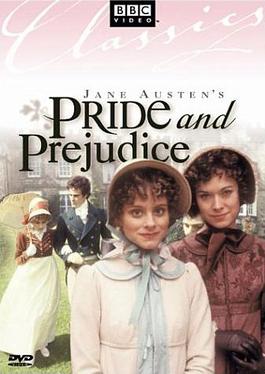
As many of you may know, today marks the 200th anniversary of the publication of Jane Austen's classic novel Pride and Prejudice. Therefore, it only seems fitting to write up today a post I've been thinking about for some time. If you guessed that this post would be about Pride and Prejudice, you would be right. But you'd also be wrong. For this post is going to address two BBC miniseries that came in the 1980s - the first one is 1980's Pride and Prejudice and the second is 1983's Mansfield Park.

The BBC's 1980 miniseries of Pride and Prejudice seems to be one adaptation of the novel that has been largely forgotten. I hardly ever hear about it, for Austen fans seem to flock either to a feature film version - generally more watered down but also an easier thing to digest, especially in one sitting - or to A&E's 1995 miniseries, which seems to have positioned itself as the screen version of the Pride and Prejudice story. However, this miniseries does a pretty good job at adapting the novel, even if it is now overshadowed by the one starring Jennifer Ehle and Colin Firth.

If you don't know the story of Pride and Prejudice, that can only be because you haven't read the book and you should do so immediately! :) But here are the basics for those of you who aren't well-versed in Austen's novel: In Regency England, there lives a family consisting of Mr. and Mrs. Bennet and their five daughters. Because the law at the time would not leave estates to women and working was an unheard of thing for gentrified ladies, the five young women will be hard off, to put it lightly, when their father dies. That is, unless they can marry well. Enter their village's latest resident, the wealthy Mr. Bingley who comes accompanied by his good friend, the even wealthier Mr. Darcy. Bingley is immediately charmed by the eldest Bennet daughter, Jane, while Darcy snubs his nose at her sister Elizabeth. But as Shakespeare says, the course true love never did run smooth, and these first impressions aren't everything. We're taken on a roller coaster year as the Bennet sisters search for happiness and love.

The casting of the 1980 Pride and Prejudice miniseries is for the most part quite spectacular. In particular, Sabina Franklyn as Jane Bennet looks and acts exactly like the darling sweetheart you except her to be, and it may be heretical for me to say, but I actually preferred David Rintoul as Mr. Darcy over Colin Firth in the role. Some criticize Rintoul as too wooden and stiff in this miniseries but quite frankly, that's who Mr. Darcy is. He is someone who has a tough time letting his hair down, so to speak, and enjoy himself in the society of others, especially at large gatherings. (Come to think of it, Mr. Darcy is pretty much the definition of an introvert, even though everyone else around him decides his manners show an air of superiority and too much pride in himself.)  I really enjoyed that the actor playing Lady Catherine de Bourgh was much younger than ones I've seen in the role previously; I think that helped to make her feel less like a bitter old maid and more like the ridiculously snobbish person who she is.

When Elizabeth Garvie first appeared on the screen as Elizabeth Bennet, I wasn't so sure I would like her, but she grew on me pretty quickly and I came to enjoy her performance, with a few exceptions (more about that later). The rest of the Bennet sisters looked and played their parts quite well, but I was somewhat disappointed in their parents. This particular rendition of Mrs. Bennet was a little too over the top for me at times while Mr. Bennet came across as rather cold. Some of that may be more in the scripting than the acting, but I'm inclined to think it was a combination of both. I was a bit disappointed in the casting of George Wickham, as I generally am, for most versions don't seem to find someone so very attractive and dashing as to woo the whole town as Wickham does. Some of the seductive qualities might have been lost in the scripting as well as the acting, but I'm once again inclined to think both are at work here, if not more so the latter. Nearly all the rest of the characters, including Mr. Bingley, Miss Bingley, Charlotte Lucas, Mr. Collins, and so on, were very convincing in their roles.

Because it was 1980 and this was a made-for-TV production, this miniseries doesn't have the fine veneer of polish that we're accustomed to these days. Sometimes the production quality is quite low, with overwhelming lighting that washes people out and the outdoor noises of feet crunching on gravel or birds chirping that are overly loud. Better editing could have been used to tighten up some scenes, such as the opening one in which we watch Mary run from the front door to the path and back again in what seems like an interminably long time to be watching something so dull and out of focus. There were also sometimes quick cuts from scene to scene, seemingly popping the viewer out of one conversation into an entirely different one with no warning. Most likely due to the poor production values, whenever there was a large party scene, characters that were not the main focus only pretend spoke (i.e., you could see them moving their lips and acting like they were very interested in one another but no words were actually being spoken), which was actually rather distracting at times. Only going through the motions like this gave the feeling the viewer was watching a high school theater performance rather than a professionally done television show.

The adaptation of the novel to screen format itself was for the most part successfully done. With a long miniseries rather than a shorter feature film length, the screenwriters did not have to cut any major parts of the story out, forced to reduce it to just main highlights. Instead, we get all the balls and trips and so on that we see in the novel. The dialogue is largely straight out the book, although occasionally lines were given to different characters in the miniseries than in the novel, which seemed rather odd. This sometimes lead to rather awkward seeming conversations, where the actor seemed to be just reading the line rather than really getting into it. (This could also just be a result of me knowing these lines so well myself now that they don't sound fresh and unrehearsed.) There seemed to be few new lines of dialogue given in this production so if Jane Austen didn't supply a suitable next line word for word, we just jumped to the next scene in that rather quick and jerky way that I mentioned above. At times though, newly introduced monologues for Elizabeth were given as voice-overs, which became rather tedious as the series progressed. Her thoughts seemed rather dithering instead of the lively ones we would come to imagine from the feisty Lizzie. Of all of Austen's female protagonists, Elizabeth seems the least suited for long internal monologues as she is the most outspoken, excepting maybe Marianne Dashwood or possibly Emma Woodhouse. These bouts of introspection seem far more suited to Fanny Price, Anne Eliot, or even Elinor Dashwood.

One good point I will give this adaptation is that it seemed to grasp the humor of Austen's novel a little more than others, which seem to focus more on the dramatic aspects of the book. It was also nice, as always with these adaptations, to see these characters come to life and in particular to see their costumes, dancing, and fine manor houses with lovely grounds. All in all, I enjoyed this adaptation and could even be induced to watch it again. But like many others, I'm still considering the 1995 A&E version of Pride and Prejudice to be favorite my screen adaptation.

Now on to Mansfield Park, which was aired by the BBC just three years later in 1983 (a very good year). This Austen novel is generally not a fan favorite (although I love it), nor is its heroine (but I feel sympathetic toward her). So it has not been adapted near as many times as Pride and Prejudice, with just this miniseries and two movie versions in 1999 and 2007, neither of which I find entirely satisfactory. (Okay, I'll admit it, I basically detest the 1999 version; I'm pretty partial to the 2007 one, but it has a fair share of faults also, including the greatly condensed timeline.) So when this one came up in conversation recently, I thought I had to find it and watch it. When I found it on Netflix, I saw that I had rated this movie and then realized that I had already seen it before. I'm not sure the most glowing recommendation of a miniseries is to discover that one had invested five or six hours to it and didn't recall its existence, even when prompted. But I decided to watch it again and see what I thought of it (again).

To back up, here's the brief description of Mansfield Park for anyone who hasn't read the novel. Young Fanny Price, one of many children in a family of limited means, is sent to live with her wealthy aunt and uncle at their estate, the titular Mansfield Park. Sir and Lady Bertram, her uncle and aunt, have four children of their own - Tom, Edmund, Maria and Julia - who are mainly standoffish toward their young cousin, except Edmund who is always sweet and kind to her. As they grow, Fanny comes to love Edmund as more than a cousin, but he is completely oblivious to this. Meanwhile, Maria is courted by the wealthy but bumbling Mr. Rushworth and Tom spends his life rather frivolously wasting money. Their little world is rather shaken by the introduction into their society of Mr. Henry Crawford and his sister Mary Crawford. Edmund's heart is almost immediately captured by Mary, to Fanny's dismay, and Henry manages to enamor himself to Julia - and the engaged Maria. It's a recipe for a disaster, and hijinks do indeed ensue at Mansfield Park.

Like the 1980 version of Pride and Prejudice, the miniseries of Mansfield Park allows for all the ins and outs of the novel, rather than completely neglecting some parts to force a nearly 500-page novel to fit into an hour and a half long movie. So this version wins points for allowing us to see all that. But while it remains true to the action of the book, we see so little of Fanny's inner thoughts that it loses something. It occurs to me now that while I was well aware of Fanny's feelings the whole time because of my knowledge of Mansfield Park, to the uninitiated it was probably unclear that Fanny was in love with Edmund and felt Mary Crawford was not good enough for him. Unlike Elizabeth Bennet, Fanny so rarely gets to speak her mind that a little narration would be helpful to understand her character and her emotions. It is worth noting that her underlying motivations were so unclear in this film because Sylvestra Le Touzel actually played Fanny the way she was meant to be played - quiet and gentle and meek. So I leave no fault at Ms. Le Touzel's feet but wish that those internal monologues that were so popular in the BBC production of Pride and Prejudice were employed here instead.

In addition to Le Touzel, the rest of the casting was very well done with a few notable exceptions. I had not recalled that the Honourable Mr. Yates was meant to be such a fop, so he seemed over the top to me but perhaps I am remembering his character incorrectly. I was not particularly fond of Nicholas Farrell as Edmund Bertram for he came across as far too smug and self-righteous for my taste. And Jackie Smith-Wood was a travesty as Mary Crawford. For starters, in every scene she was in, I was completely distracted by her short, short hair, which seemed counter to every picture of Regency hairstyles I've ever seen, although apparently some rather daringly fashionable women did have cropped bobs. As Miss Crawford is meant to sporting the latest fashions from London, I could perhaps think the hair and costume department were going for this, but her clothes in many scenes were duller and plainer than those of Maria and Julia. And, the actor herself is not particular attractive and seems a bit old for the part. I know these complaints sound rather superficial and in other circumstances, I would not make them. But recall the source material! Mary Crawford is meant to be so stunningly beautiful and charming that she nearly makes Edmund abandon his high moral ground (and arguably is successful in this on some fronts, such as the play acting or hogging Fanny's pony) and that she is looked up to by Maria and Julia because of her London fashion and air. Ms. Smith-Wood is not capable of fulfilling that role, plain and simple. She does do a pretty decent job at having a lively and pert manner, but I can hardly believe the BBC couldn't find another person who could do that also. Or at the very least give Smith-Wood a more interesting hairstyle and wardrobe.

Despite these few objections (although Edmund and Mary are large parts so not liking these actors was a big deal), I did enjoy the casting choices, as I've mentioned. In particular, I thought Lady Bertram, Tom Bertram, Henry Crawford, Mr. Rushworth, and Susan Price were particularly well suited to their roles. These actors seemed born to play these parts and I'll probably picture them in these roles the next time I read the novel. The Bertram sisters, along with their father and their aunt Norris, also were played by fitting actors. (I do have to note that I found Sir Bertram's badly adjusted wig distracting also, but not as much so as Miss Crawford super short hairdo.) A fun fact is that Jonny Lee Miller has a small part as one of Fanny's younger siblings - not only do I adore Jonny Lee Miller as an actor, but he went on to star as Edmund Bertram in the 1999 film version of Mansfield Park. However, while the casting and acting was overall well done, there were a few moments when the characterizations were a bit overblown. In particular, I'm thinking of the scene in which Fanny Price works herself up into complete hysterics over the idea of marrying Henry Crawford and the one or two scenes where Lady Bertram is not only dozing stupidly on her couch but also sucking her thumb while doing so. Both mannerisms were taking the characters a bit too far into the extreme possibilities for their personalities.

Also similar to the Pride and Prejudice miniseries from the 80s, the production values in 1983's Mansfield Park leave something to be desired. The shaky camera for the conversations within carriages particularly bothered me, although the microphones picking up some sounds more so than dialogue was also irritating at times. This was more of an issue to me here in Mansfield Park than in Pride and Prejudice because for some reason, BBC did not feel the need to include closed captioning for this miniseries. If I really couldn't catch a line of dialogue in Pride and Prejudice, I could rewind and hastily slap on the captions feature to get it but there was no such recourse here. (As I grow harder of hearing all the time, the lack of closed captioning on certain films and TV shows displeases more and more.) At least in this movie, however, they managed to figure out how to allow some background noise in larger party scenes so the actors off to the side could actually murmur to one another rather than doing the peculiar silent lip movement thing they did in Pride and Prejudice. The abrupt scene shift was not really an issue here, except when a particular episode ended. The working model seemed to be to cut the episode off at exactly 52 minutes regardless of where the story might be at that point. There were no good "hooks" so to speak to keep the viewer wanting to come back for the next episode, let alone any sort of satisfying conclusion. One episode ended so abruptly in the middle of a conversation between Henry and Mary Crawford that for a moment I thought the picture froze ... until of course I saw the credits start to roll. I suppose many Austen fans didn't need the extra something to compel them to come back for another episode, but other viewers might have and an episode conclusion that felt at least like the end of a conversation instead of the middle of it wouldn't be an absurd request.

While this version of Mansfield Park is adept at presenting the book in a fairly complete and favorable adaptation and I did enjoy it this time around as well as the first time, I still prefer the 2007 movie as the best available version at this time.

To all those Janeites out there celebrating Pride and Prejudice's big 2-0-0 today, I wish you joy! And I leave you with some questions: What do you think about the BBC's 1980s versions of Austen's novels? Which are your favorite adaptations of Austen's works?

Saturday, May 26, 2012

A Farcical Romp: Miss Pettigrew Lives for a Day


Back in 2008, a friend and I went to see the movie Miss Pettigrew Lives for a Day, based on the 1938 novel of the same name. (Fun fact: The novel was so instantly popular that Hollywood was going to make a movie version of it back in the 30s but WWII beginning put an end to that plan.) Recently, I bought a copy of the DVD as a gift and lo and behold, Amazon.com also then told me I could have access to an instant copy online for a limited time. So, I almost immediately capitalized on that gift from Amazon by watching the movie again today.

Set in the late 1930s, Miss Pettigrew Lives for a Day follows the eponymous character over two days of her life. On the first day, Miss Pettigrew, a middle-aged governess with high morals, is fired from her job and reduced to getting food from a soup kitchen and spending the night on the London streets. The next day, Miss Pettigrew tries to secure yet another governess job from an agency but is refused due to her past record. Out of desperation, she pilfers the business card of Delysia Lafosse, a woman seeking assistance, and shows up at Delysia Lafosse’s door pretending to be from the hiring agency. Of course, Miss Pettigrew has misinterpreted the situation, thinking that Delysia Lafosse is a married woman looking for a governess instead of a social-climbing young woman looking for a “social secretary” to help her manage her whirlwind lifestyle, which includes juggling her three lovers – Nick, the wealthy nightclub owner who employs Delysia as a singer and finances her flat and wardrobe; Philip, the young producer who promises to make Delysia a star on the West End stage; and Michael, the impoverished pianist who loves Delysia despite seeing through her pretenses. In spite of her moral reservations, Miss Pettigrew finds herself charmed by Delysia and in desperate need of employment, so she comes along for the ride and finds herself transformed in more ways than one throughout the day.

Miss Pettigrew Lives for a Day is a delightful comedy, similar to the kind of screwball comedies that proliferated in the 1930s-1940s but are rarely seen today. Given the movie’s setting and the timing of the original novel, this is hardly surprising but it’s still a refreshing change from what often passes as comedy in Hollywood these days. The movie’s set and costumes embody the timeframe, with the swinging big band and jazz music also providing a great touch from the era. Besides the color filming and a few more risquĂ© scenes than we would have seen back then, this movie transports viewers right back into the silver age of cinema.

While the movie is overwhelmingly light-hearted and funny, it is not just a piece of fluff. Miss Pettigrew’s morals, though wavering at times, serve to keep everything in its proper perspective. For instance, in a rare fit of anger, she lashes out at a cocktail party by telling a fellow guest, “You people, with your green drinks and your parties and your subterfuges! You're all playing at love. One minute her, the next minute someone else, flit, flit, flit! Well, I'm not playing. Love is not a game.” She serves as a foil to Miss Lafosse by reminding her of what is important in life – the love of someone who knows her true self rather than the endless pursuit of empty fame and money. Also, the desperation of Miss Pettigrew’s situation is a recurring theme, as we are often reminded of her hunger, her lack of money or worldly possessions, and how easily she might be spending another night on the streets.

It’s not just Miss Pettigrew’s welfare that is at stake. Throughout the movie, we are given often small but constant reminders of the world at large. And that world is on the brink of another world war, even as the older set of characters is still reeling from the consequences of the first world war. To be clear, this is not a movie about the horrors or tragedies of war, but it is not all just about the frippery that appears on the surface.

The movie wraps up fairly predictably but, to be fair, most comedies do and this is something we tend to like in light-hearted films. The happy ending was perhaps a little too easily tacked on, but it leaves the viewer feeling satisfied.

Miss Pettigrew Lives for a Day also succeeds by having a great cast at its heart – Frances McDormand as Miss Pettigrew plays the transformative part with understated perfection, Amy Adams channels Marilyn Monroe as Lorelei Lee in her bubbly role of Delysia, Ciaran Hinds plays the one character with any insight into the absurdity of this lifestyle with the appropriate amount of English gentlemanliness, and Lee Pace as the lovable Michael does not fail, as usual. These actors were particularly notable, but the rest of the casting was spot on also.

In case you couldn’t tell yet, I wholeheartedly recommend this movie, especially when you’ve having a down day and need something cheery!

Thursday, May 24, 2012

A Dangerous Method: A Look at Jung’s Perhaps-Not-So-Dangerous World


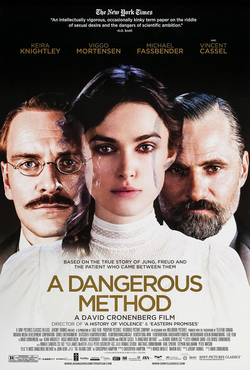
Hello all! Once again, I’ve fallen behind on updating this post, largely from working too much followed by quickly doing too many arts and entertainment-related things to have time to write about them! I’m hoping to catch you all up shortly on what’s been going on A&E wise (because work-wise would just be dull J). To that end, here’s the first of several overdue posts, this one about the 2011 film, A Dangerous Mind, starring Michael Fassbender, Keira Knightley, and Viggo Mortensen.

Set in the early 1900s, A Dangerous Method begins with a relatively young C.G. Jung (Fassbender) studying Sabina Spielrein (Knightley), a patient suffering from hysteria. Over time, Jung and Sabina move from the doctor-patient relationship to that of lovers. Already a relationship set up for disaster, it is further taut by Jung’s marriage with children on the way and Spielrein’s sporadic healing and studying to become a psychiatrist herself but not necessarily always embracing Jung’s methods.

Concurrent with all this drama, Jung is also developing – and struggling in – a relationship with renown psychoanalyst Sigmund Freud (Mortensen). Freud clearly wants to pass the mantle down to the younger doctor, but Jung does not buy all the emphasis Freud puts on sexuality as the base of so many psychological problems. Freud, meanwhile, begins to mistrust Jung’s interest in mysticism.

Some time back, I had seen one trailer for A Dangerous Method, didn’t think much of it either way, and then never heard anything about it again. That is, until on a recent flight home from vacation when it was an option to watch. There wasn’t anything else that sounded even remotely appealing on the plane’s menu, and the psychological aspect of this film intrigued me, having once been a psychology major.

That being said, I was a bit disappointed with the film from a psychological angle. The story between Freud and Jung did seem to be grounded in fact (i.e., Jung was indeed doubtful about Freud’s obsession with the sexual aspects of psychoanalysis and was critical of Freud for refusing to ever be analyzed himself), and I noted somewhere in the credits that the film referenced actual letters between the psychoanalysts where possible. In addition, the film is based on a play, which is in turn based on a nonfiction book, so somebody did their homework somewhere along the line. I knew nothing about Sabina before this film, despite having studied about both Freud and Jung in numerous classes, so her character was a welcome introduction, which allows me to do some more research on her on my own. However, I felt like the movie did not explain her psychological problems in depth and very much glossed over her (somewhat spotty) recovery. This included quickly brushing over Jung’s psychoanalytic methods, which had seemed to me to be at the heart of the film’s premise as I understood it going into the movie (not so much, it would appear).

Part of this may be due to the disjointed nature of the film. Frequently, several years would pass by from one scene to the next. I found this very disorienting, particularly with a character like Sabina who could go from stark raving mad in one scene to a perfectly polished young lady in the next. (It is possible that some of this may be due to the airline’s formatting and editing of the film, although I should point out I watched Sherlock Holmes: A Game of Shadows on the same airline a week earlier and didn’t note any appreciable differences between the airline’s version and the one I had seen in theaters. Also, I doubt the airline would remove any substantive scenes, although it is possible that they removed/limited some of the sex scenes from this particular title.) These jumps made it difficult to really ever feel like the movie was telling a logical story or for me as the viewer to become fully immersed in the story. That is not to say that I didn’t find the movie engrossing, it’s just that it never took away the feeling that this was a movie. Does that make sense? What I’m trying to say is that the movie was indeed riveting, but it didn’t sweep me up so fully in its world that I forgot I was watching something purposely built up to be viewed by outsiders, namely moviegoers.

It is also possible that other viewers got the exact opposite feeling – perhaps there was too much psychoanalytic history and terminology for a lay audience. (One reviewer refers to it as being full of “shop talk.”) Having studied psychology in an academic setting for more than four years and on my own for even longer, I can’t really say at this point. To me, it could have delved much further into the psychoanalytic methods used by Freud and Jung, but then again, I could see how this could alienate many viewers.

The movie ended on a peculiar note, which is about as much as I’m going to say on that so I don’t give anything away. I felt very much like I have at the end of some other quirky, independent movies (i.e., Lost in Translation) where I’m not really sure what to make of the ending or indeed anything that came before it. As I alluded to earlier, there wasn’t really an overarching story throughout that would culminate in a conclusion of some sort, so it just sort of felt more like it ended because two hours had passed. Like with many biopic or historical films, the viewer is given a brief synopsis of what happened to these characters later in life. Sabina’s life story ended so tragically as to leave a distinctly odd and futile feeling to the whole film.

A high note of the film was the superb acting by all, but particularly by Fassbender and Knightley. I’ve yet to see Fassbender disappoint in any role, and he plays the complicated Jung well and with nuance. Knightley throws her all into playing the insanity stricken young Sabina and then transforms perfectly into the studious, well-mannered older Sabina. Her Russian accent is perhaps not pitch perfect, but it suffices (and is more than either Fassbender or Mortensen put into their roles, as oddly enough they both do not attempt at an accent). The settings were sumptuous, the score is haunting and an absolutely perfect fit, and the cinematography was excellent. But none of this makes up for a plot that felt a bit watery. I might recommend A Dangerous Method to a handful of people that I think would enjoy this type of movie more than most, but I’m not leaping over the moon about it. I'm still kind of scratching my head about it, trying to figure out what to make of the film.

Friday, January 6, 2012

Foodie Movies Redux

As I’ve mentioned on this blog, several months ago a friend and I had a food-themed movie night. We ambitiously culled a long list of food-related movies, of which we only managed to watch a handful. Since that night, I’ve been able to add a handful more of these movies to my already-watched list. Now checked off the list, so to speak, are Tortilla Soup, Nina’s Heavenly Delights, Eat Pray Love, Mildred Pierce, and Julie & Julia. (These are listed not alphabetically, as I am usually wont to do, but in the order in which I viewed them.) Below are some of my thoughts about these movies; feel free to join the conversation by adding to the comments section!

Tortilla Soup

Note: This is the Mexican-American version of the earlier, Ang Lee-directed movie, Eat Drink Man Woman.

Restaurant owner and chef Martin (Hector Elizondo) is a widower with three grown daughters who live with him. Leticia (Elizabeth Pena), the oldest, is an uber-religious chemistry teacher who fills almost every stereotype of the spinster schoolmarm, right down to her rigid buttoned-up attire. Carmen (Jacqueline Obradors) is a successful businesswoman who is less successful at personal relationships and who secretly (or perhaps not so secretly at times) wishes her father would let her become a chef like him - only that instead of being a purist like him, she likes to make “mutt” creations that blend the culinary tastes of several cultures. Maribel (Tamara Mello), the youngest, has a carefree spirit but the sense that she is constantly ignored by her family and sometimes even by herself. Their elaborate family dinners are sometimes attended by the girls’ love interests and by family friend Yolanda, a newly divorced single mother, and Yolanda’s family - daughter April and mother Hortensia.

I went into this movie expecting a good performance from Hector Elizondo, whose character of Dr. Bell on Monk was top-notch, and was not disappointed. Indeed, all the cast excelled at really inhabiting their roles fully and making me feel like these were real people. Raquel Welch as Hortensia was a wonderfully funny character, in line with a character you’d expect to see out of Dickens or Austen, with an over-the-top performance as a woman ridiculously bent on trying to snag Martin as a husband but unawares that she is not in the least bit subtle in doing so. And, for the Veronica Mars fans out there, look out for a small role played by Ken Marino aka “Vinnie Van Lowe.”

The movie is rife with funny moments as well as touching ones, and I’d bet money that you won’t find at least one of Martin’s (and Carmen’s) many elaborate dishes mouth-watering. There’s a little something for everyone between the comedy, the family drama, the romance, etc. Without giving away too many spoilers, I was personally happy that the ending was one of those ones where not everything is tied up neatly in a bow but you’re also not left scratching your head wondering what on earth that bizarre open-ended conclusion meant. And likewise, I was happy to see that not every woman’s happy ending saw her happily married off. Overall, I was very pleased with this movie and would recommend it.

Nina’s Heavenly Delights

After her father’s sudden death, Nina (Shelley Conn) returns to her Indian-Scottish family in their home city of Glasgow after three years spent in London where she ran to when her parents tried to arrange her marriage to Sanjay (Raji James). She has hardly any time to grieve before she learns that her father used his beloved restaurant, the New Taj, as collateral in a gambling bet and now half the restaurant belongs to Lisa (Laura Fraser), her younger brother Kary’s girlfriend. Lisa and Kary are ready to sell the restaurant to an eager buyer - Raj, the owner of a competing restaurant and father of Sanjay. But Nina also discovers that her father entered the restaurant into a prestigious televised cooking competition and made it into the final round. She manages to convince Lisa to hold off selling the restaurant until after they make a go for the trophy. As Nina teaches everything her father taught her about cooking to Lisa, she finds herself falling head over heels for Lisa.

I was a little hesitant about this movie because it was labeled a “romance;” I’m not the hugest fan of romances as a genre - either in literature or movies - although there are notable exceptions. Mostly, I think I can like a romance if there’s more to it than just the romance - for instance, a historical backdrop or witty characters. With Nina’s Heavenly Delights, there is certainly more to the story. There’s the very nature of love, death and grief, the pull of family obligations versus the need to be one’s self, and, of course, cooking itself. I felt as though the movie were more about family and the competition, with a side of meaningful glances between Nina and Lisa to remind you that, oh yeah, this is movie about these two falling in love.

Overall, I was really engaged with this movie and rooting for the New Taj to succeed in the competition. The scenes of Glasgow (and the Scottish accents) were an added bonus. For the most part, the filming of the cooking and food scenes was top-notch. There was even a vibe of sexual tension between two women via working in the kitchen in Nina’s first lesson to Lisa about mixing spices - “it’s all about the chemistry, and the chemistry has to be right.” It’s not quite the food fighting scene in Fried Green Tomatoes, but you clearly get the point - one that Lisa makes earlier “The couple that cooks together stays together.” However, there was one scene of cooking where for some reason the director decided to add an overlay of words labeling the ingredients in the dish. It was only done this one time, which I think added to the oddness of doing so. A much more elegant scene was one where the shots of food bubbling were interspersed with shots of pages turning in Nina’s cookbook of award-winning recipes, handed down from her father.

Nina’s drag friend, Bobbi, was a little too over the top for me, although I must acknowledge that he made a good foil to Nina in that he clearly wasn’t hiding his sexuality. Still, I would have been okay with fewer scenes of him and his “chutney queens.” On the other hand, Auntie Mamie was a delightful minor character who I would have liked to see more of as she added humor to every scene she was in, no matter how briefly.

As I already mentioned, I liked this movie overall, but it did feel like it could have been a little longer and more fleshed out. There was some aspects (i.e., the decisions made by Nina’s brother Kary) that could have used a little more explanation. There also needed to be more time for growth in some of the characters so that their actions seemed more realistic and less scripted. For instance, I have a hard time believing that Nina’s mother, who three years earlier was so traditional as to arrange a marriage for her daughter, is suddenly so accepting of her children’s decisions to be so modern and Scottish. I also couldn’t see Lisa putting Nina to the test at such a crucial moment. While I enjoyed the movie and would recommend it, it didn’t feel “real” like Tortilla Soup.

Eat Pray Love

Based on the best-selling memoir by Elizabeth Gilbert, Eat Pray Love tells Liz’s story as she copes with her messy divorce by taking a year off to visit Italy, India, and Indonesia. I enjoyed the book when I read it several years ago but didn’t really have any interest in the movie as I didn’t feel like it was the kind of the book that would transfer well to the screen. Essentially the story is about Liz and her transformation and it isn’t exactly plot heavy, so nothing about that screams Hollywood. But I ended up receiving the DVD as a present from someone who knew I liked the book, so I gave it a shot.

Besides the feeling that this wasn’t a story to be told cinematically, this movie had one other huge handicap against its favor: Julia Roberts. I don’t care that she’s an awarding-winner actor, I can’t stand her in general and specifically in this role. For starters, she’s just wrong for the part physically - she was a tad too old for the role but, even more so, she’s too stick thin for anyone to legitimately believe a) her having a “muffin top” from eating too much in Italy and b) Felipe saying she is the perfect kind of woman who looks thin from a distance but has something to hold on to up close. But even if I could overlook that she doesn’t physically fit the part, I’ve never seen her in a movie where she convinces me for more than a minute that she’s anyone other than Julia Roberts. She doesn’t ever inhabit her roles and her characters all come across as behaving the same way. Tackling Liz is even harder because she’s not a character; she’s a real and complex person, and a person who has shared intimate details about herself to the world through her book. And Julia Roberts did not deliver. To be honest, it wasn’t just her either; despite some other big names in this movie, no one stood out as acting particularly splendidly, excepting the actor who played Balinese medicine man Ketut, who I just loved, and the actor playing Tulsi, the young Indian girl Liz befriends who is forced into an arranged marriage against her wishes. A minor pet peeve, but it was annoying to find that Richard from Texas didn’t have a Texan accent nor did Sofi from Sweden have a Swedish accent. Come on, people, at least *try* to convince me that you’re the person you’re pretending to be.

Like I said earlier, the book isn’t full of plot devices but mostly Liz’s internal struggles, so this makes it a hard movie to make. So much had to be specifically narrated (an okay technique when needed, but if half your movie needs to be narrated, maybe you should left well enough alone with the book) or conveyed through expressions and looks (which Julia Roberts always seemed to get wrong; she was smiling broadly when she shouldn’t be happy and looking apprehensive when she should be happy, she barely reacted at all throughout Richard’s long and moving history, and she’s apparently incapable of making it through a movie without pitching a screaming fit). The movie also invented a character played by Viola Davis who represented *all* of Gilbert’s family, friends, and co-workers back home and functioned as a sounding-board and “straight man” (if you parody the borrowing of terms for comedies used here for dramas) that Liz could talk about some of her emotions without constantly narrating.

However, the movie was very good for showing us the beautiful scenes of the places Gilbert visited. If there were anything missing from the book, it would be actually seeing the places Liz writes about with such passion. The movie helps you feel like you’ve actually traveled to these places and seen the ruins in Rome, driven through the crowded streets of India, and inhaled the tropical sea breezes in Bali.

A few more pet peeves arose as I watched the movie: it’s been a while since I’ve read the book, so perhaps someone can correct me if I’m wrong, but I don’t recall Gilbert being randomly approached by an elephant in India, Felipe and Liz meeting because he ran her off the road, Felipe’s son coming to visit them in Bali, or, most importantly because the movie makes it a huge dramatic point, Felipe and Liz breaking up right before she’s meant to leave for home.

Let’s just hope Hollywood doesn’t try to take on Eliizabeth Gilbert’s sequel, Committed.

Mildred Pierce

Mildred Pierce (Joan Crawford) is a mother who will do anything for daughters. But eldest daughter Veda (Ann Blyth) is a spoiled brat who always wants more. To have some extra money to buy Veda more and better items, Mildred goes from making cakes and pies for the neighbors, to becoming a waitress and working round the clock, to buying a restaurant, to expanding that to a chain of restaurants. Still, Veda is never happy and wants more money always. To add a bit of mystery to this story of mother-daughter struggle is the fact that is being told in flashbacks as Mildred is held at the police station after being suspected of murder.

This framing device used to tell the story allows the movie start with a shocking murder, but there’s plenty of twists and turns along the way so the viewer isn’t in the know all along. This is film noir/melodrama at its finest – it could easily become ridiculously at any point but does not. I think it part because the whole production holds on to the idea that, despite all its plot points, this is first and foremost a story about these people and what they are like at their cores. Therefore, it is a great character study. To say that Joan Crawford’s acting was excellent would be an understatement as she won an Oscar for this performance and is legendary for this role. Still, it’s worth saying that she is phenomenal as Mildred Pierce and her supporting cast does not disappoint either.

However, that being said, I’m not the hugest fan of Butterfly McQueen as Lottie, Mildred’s maid. While I can’t exactly place my finger on a specific why, something about her whole character feels borderline racist - perhaps it’s just because her character is so silly when everyone else is so serious. (Of course, the character of Ida also provides comic relief, albeit she does it by having sarcastic zingers, rather than just acting like an airhead.) At any rate, McQueen’s squeaky high-pitched voice irritates me in Gone with the Wind and it’s not any better here. That may sound petty, but her voice really does grate on my ears unpleasantly.

As I mentioned earlier, this movie is very much in the film noir style with flashbacks, voiceovers, a femme fatale (of a different sort), and moody black and white filming. Also, there are some fun cinematic shots with the use of mirrors. Overall, it’s visually appealing as well as providing an engaging storyline.

It’s worth noting in a post on food-related movies though that this is one of those movies only tangentially related to food. Unlike in Tortilla Soup where mouth-watering dishes are presented as feasts for the eyes (and temptations for the stomachs), we don’t see much of the food here. However, the movie does have some good lines about its preparation. For instance, in voiceovers Mildred explains, “I felt as though I had been born in a kitchen and lived there all my life, except for the few hours it took to get married.” She later continues this narrative with, “In six weeks, I felt like I'd worked in a restaurant all my life. In three months, I was one of the best waitresses there. I took tips and was glad to get them. And at home I baked pies for the restaurant.” Or there’s this exchange:

Mildred Pierce: “You look down on me because I work for a living, don't you? You always have. All right, I work. I cook food and sell it and make a profit on it, which, I might point out, you're not too proud to share with me.”
Monte Beragon: “Yes, I take money from you, Mildred. But not enough to make me like kitchens or cooks. They smell of grease.”
Mildred Pierce: “I don't notice you shrinking away from a fifty- dollar bill because it smells of grease.”

Interestingly, after watching the original, I found out that there was an HBO miniseries re-make with Kate Winslet, but from the trailer it looks like all they did was sex it up so I’m not sure that I would check it out.

Julie & Julia

This movie promotes itself as having been “based on two true stories” and thus tells dual side-by-side stories of women living in different eras and places. We start with Julia Child (Meryl Streep) in 1949, having just moved to Paris with her husband and trying to find something to do with her spare time. She finally settles on cooking, managing to enroll herself in an all-male professional class at Le Cordon Bleu. From there she moves on to teaching French cooking and writing a cookbook. Meanwhile, in 2002, Julie Powell (Amy Adams) is a tired New Yorker who is emotionally drained by the time she comes home from her job dealing with the aftermath of 9/11. Her tension release at the end of the day is cooking (one stress coping mechanism that she and I apparently share!) and over time she and her husband land upon the idea that she should write a blog in which she attempts to cook all 524 recipes in Julia Child’s seminal cookbook, Mastering the Art of French Cooking, in 365 days.

I have to note from the outset that I did not know very much about Julia Child (and nothing about Julie Powell other than that she had this quest to cook all of Child’s recipes) going into the movie, so I really can’t say if it was historically accurate or not, but it was certainly an engaging movie.

It certainly was an interesting concept to show these two stories, based on books written by each woman, side by side. The two women certainly share some similarities and some ups and downs, and somehow the movie pulls off jumping between two time periods, two continents, and two characters (and their supporting casts) without seeming choppy. An interesting thing I liked about each story was that while the stories were ultimately about the women, both had very supportive husbands who helped them to find their place and succeed at it. While this movie, like any other Nora Ephron movie, will inevitably be seen as a “chick flick” at worst or “women’s movie” at best, I feel like it hits the perfect note of gender equality by portraying stories in which neither men nor women are objectified, demonized, or cast to the sidelines.

All around, the movie is filled with excellent acting, although I have to admit I am a bit puzzled by Amy Adams’ accent (or lack thereof, to my ears at least).Iif her mother is from Texas (and heard over the phone with a drawl) and Julie lives in New York, wouldn’t she have at least one of those accents or some sort of mix of both? It’s a small thing, but Meryl Streep so completely changed her vocal patterns to become more like Julia Child that it stood out to me that I didn’t hear that as much in Amy Adams as Julie Powell. Both women, however, did change their appearances a lot to fit their roles.

While food is certainly a large part of this movie, I don’t feel that it was as much in the centerpiece of filming as in some of these other foodie movies like again, Tortilla Soup. Also noting my own preferences for more grains and vegetables than meats (especially red meat), the particular dishes that were shown did not exactly shout drool-worthiness to me, even though I’ve been a huge fan of every recipe I’ve tried from my own French cookbook (and pretty much everything I’ve eaten while in France). The scenes of Paris, however, do make me long to visit that city again....

The only downside to Julie & Julia was the ending. Without giving away any spoilers, I wasn’t 100 percent in love with the movie’s conclusion although I’m not quite sure why. I think I would have liked to see a *little* bit more of both Julia’s and Julie’s successes.

To sum up this lengthy post (if you’re still with me here), if I were a film critic apt to give grades to movies, Tortilla Soup would get an A, Nina’s Heavenly Delights a B, Eat Pray Love a C-, Mildred Pierce an A+, and Julie & Julia an A.