Showing posts with label crime drama. Show all posts

Tuesday, September 3, 2019

Jackie Robinson, or The Meaning of Life the Universe and Everything

Despite the pretentious title, this blog post actually has nothing to do with baseball or The Hitchhiker's Guide to the Galaxy. But the two things both tie in with the number 42, which is a component of this entry's content.

Several months ago, I decided that I should finally hunker down and start making an effort to watch all the movies on the American Film Institute's list of "the 100 greatest American movies of all time" (hereafter referred to by me simply as "AFI's Top 100"). In the past I would occasionally give the list a once over and see how many I had seen and how many more I had NOT seen, but it didn't get much further than that. Realizing that method meant I still had seen less than half of them (a dismal 38 in total), I made it a goal to start watching them in earnest and am now up to a whopping 42 in total. Hey, progress is progress, no matter how slow it is...

Since one of my problems with the list is that for some of the movies, I cannot recall if I actually did see them in their entirety or not, I also made a decision to write up a quick review of each movie after watching it and will be posting those here, probably in batches of three or four movie reviews at a time.

Without any further ado, here are my random thoughts on the first four movies I've intentionally watched just for being on AFI's Top 100 list. (FYI, there really is no order to the way I am watching the movies from the list; it's whatever happens to be accessible at the time.)

Easy Rider
(released 1969, #88 of 100)

What a start to this project; this movie was practically unwatchable. I know it has its fans, but I am certainly not one of them, nor was my friend who watched it with me. It's as if Kenneth Anger made Fear & Loathing in Las Vegas and then amped up the trippy factor by about a thousand.

This movie opens with dullest drug deal scene ever depicted (and that’s saying a lot) before two guys embark on a road trip across America for Mardi Gras in New Orleans. Along the way, they cross paths with some unusual characters from hippies to bigots to farmers. I would have loved to hear more about the women they encounter and their lives, but this is a "bro" sort of movie so that would never happen.

The movie starts out with some rather weird cinematography choices that only get weirder as the movie progresses (and as the characters get higher from all the cocaine and other drugs they are doing). All along the "plot" is slow moving, the dialogue is mostly rather poor and uninteresting, and there is literally zero character development. On top of that all, the ending is really bizarre to the point that my friend and I were both kind of like 'was that the end? what were they even trying to say with this movie???' This may have been the movie I did the most research on after watching it, because it was absolutely puzzling to me what its purpose was or why it was on AFI's Top 100 list. While I do enjoy when I read or watch something that has so many layers that a critical analysis might help me learn more, a film should stand up well enough on its own that you don't have to see what critics are saying in order to "get it." (And quite frankly, it still doesn't seem like there was much to "get.")

The handful of highlights were good music to fill the soundtrack while the guys ride along the highways and byways, which then of course included some nice shots of American landscapes (mostly deserts but also some small towns in Louisiana). The very earnest definition of the slang version of the word "dude" (I guess it was still new enough in 1969?) was humorous. And finally, the real star of the movie was a very young Jack Nicholson, who put in a stellar performance as the day-drunk ACLU lawyer, a role fittingly quirky enough for him. I have to agree with The New York Times critic whose review of the movie at its release noted, "Nicholson is so good, in fact, that 'Easy Rider' never quite recovers from his loss." I am resigned to the fact that I will never understand why this movie is on AFI's Top 100 list.


The Third Man
(released 1950, #57 of 100)

Thankfully, AFI's Top 100 list quickly redeemed itself with this selection. This is the kind of movie that I really enjoy -- an older noir film that immediately grabs you and is compelling from start to finish.

This movie takes place in Vienna after World War II, with the main character looking into the mystery of a friend's death, supposedly an accident but surrounded by a few pesky details that just don't add up -- including the rumor of a third man at the site of the accident but not listed in the official report. There is definitely a lot of intrigue, with every character having some piece of the mystery but refusing to reveal more.

The ambiance of the film throughout is wonderful. Filmed in black and white, it plays with lighting and shadows. There are long shots, unusual angles, and other cinematography reminiscent of Citizen Kane (not surprising, considering Orson Welles was associated with both projects). The dark lighting and unusual camera angles add to the sense of unease the film is trying to portray for its main character, especially when coupled with some dialogue in untranslated German (unless you happen to understand German, it further solidifies your sense of unknowing). There are several scenes of characters running around Vienna's cobblestone streets, complete with echoey footsteps, which further adds to the mysterious tone.

But the movie isn't all seriousness at all times. There are little jokes here and there, and throughout the movie, a jaunty jazzy tune plays its soundtrack. This fun instrumental music is all played on the zither, which is an unique choice that made a distinct impact. The storyline also has a romantic subplot underneath all the mystery and intrigue. Joseph Cotton as the protagonist put in an A+ performance. Alida Valli as Anna was also excellent as were some of the supporting cast (some others of the supporting cast were a little too campy, e.g., the fellow with the dog).

Overall, this was definitely an enjoyable film and I could see why it was on the list. (A fun side note -- there is actually a small curiosity museum in Vienna dedicated specifically to this film.) Those who like film noir mysteries and/or spy-type thrillers would probably enjoy this one.


The Apartment 
(released 1960, #93 of 100)

Like The Third Man, this movie is one I'm surprised I hadn't watched before actually, given it's up my alley of movies from the late 40s to early 60s. Once the opening credits showed Billy Wilder's name, I knew I was in for a treat; there’s a reason he was referred to as "the world's greatest movie director."

The Apartment has many similarities with Wilder's other movies, including elements such as:

  • a voice-over introduction (but further narration is never heard),
  • a New York City setting,
  • a perfectly fitting instrumental soundtrack,
  • snappy dialogue,
  • black and white filming despite color being available,
  • an overall comic tone but serious at turns, and
  • issues like infidelity and suicide that can't exactly be shown on the screen (in 1960) but which are nevertheless artfully portrayed.

However, this movie has a rather different storyline from the other Wilder films I've seen in the past. A hard-working, ambitious accountant nicknamed Bud wants to succeed at his corporate life insurance job and therefore finds himself trying to curry favors with the higher-up suits. Unfortunately, the favor these men want the most from him is use of his apartment to carry on their extramarital trysts. Things only devolve further when the top boss finds out about this and wants to meet his mistress there -- a woman whom Bud has secretly had a crush on himself.

The late 50s/60s corporate culture highlighted in this film might make it of interest to fans of Mad Men, with similar explorations of gender, sex, power, and money, although with a far less serious tone. This movie has excellent performances from Jack Lemmon (indeed, he carries many scenes where it’s just him puttering around the apartment alone with no dialogue or only some mutterings to himself) as well as from Shirley MacLaine and Fred MacMurray. The happy ending feels a little tacked on / rushed, but otherwise this was an engaging watch. This wasn't my favorite movie of all time (it's not even my favorite Billy Wilder comedy; Sabrina tops that list, followed by Some Like It Hot) but it's a solid addition to AFI's Top 100 list.


Fargo 
(released 1996; #84 of 100)

This movie I went into expecting NOT to like, especially because I disliked the only other two Coen brothers' movies I had previously seen (The Big Lebowski and Intolerable Cruelty). While quirky movies hold a special place in my heart, the Coen brothers tend to operate in a zone of oddness that just isn't my cup of tea. However, this movie turned out to be weird in an acceptable sort of way for me.

The movie takes place in the dead of winter in Minnesota and North Dakota, where a car salesman with ambition pays a couple of criminals to kidnap his wife so that his wealthy father-in-law will pay the ransom. The trio assume no one will be the wiser and they will all walk away a little richer. But, of course, Murphy's law comes into play and things quickly escalate from bad to worse.

Despite the film's opening screen-cap claiming to be "based on true story," this is a work of fiction. But it is not outside the realm of possibility, which does give the film's absurdity a ring of truth. The actors in the movie -- from the leads to the supports -- are all excellent in their roles. The repartee between the two criminals, played by Steve Buscemi and Peter Stormare, is definitely a highlight of the film, along with Frances McDormand's award-winning performance as the police chief working to catch them. And, William H. Macy is almost *too* good as the slimy salesman, convincing me 100 percent to hate that character.

Despite the violence at the heart of the movie, it really isn't overly gory (especially in light of what's considered acceptable in film and television today). Also, McDormand's character is a refreshingly independent and strong woman, which had been missing in the other three films reviewed above. (The Third Man and The Apartment get points for at least featuring women more so than Easy Rider, but they're not exactly going to be held up as feminist standards. I'm not doing the statistical breakdown because that's more effort than I want to put into this project, but I wouldn't be surprised to see if a great number of the movies on AFI's Top 100 list are unable to pass the Bechdel Test.) Also, the one Asian character seen in the movie is surprisingly not just stereotype after stereotype, which is sadly saying a lot for 1996. (Unfortunately, the one American Indian character in the movie doesn't quite pass the same low bar. His character is way too much the strong, silent, proud 'native' stereotype -- his last name is even Proudfoot.)

That all being said, I cannot see this being a movie I would purposefully view again, nor do I have any interest in watching the new series of the same name. However, I do understand why it made the list, if for no other reason than that it's a movie that is often referenced in pop culture.

***

Well, that's all for now folks. Catch up with you again when I have a few more movie reviews to add.

Saturday, July 16, 2016

Who Murdered Laura?

Recently I read The Feminist Press's re-issue of the mystery novel Laura by Vera Caspary. I greatly enjoyed reading the book, including the editor's afterword that discussed Caspary's life and successes. Among those successes was having her novels and screenplays adapted into Hollywood flicks, with Laura being notable on that list. I decided to track down the film version of the story and found that easy to do with it being right on Netflix for instant streaming.

Laura is the story of a young socialite who is murdered in her apartment late one night, just days before her upcoming wedding. In the wake of this event, her friends and acquaintances are shocked while her fiancé starts acting a bit suspicious. Added into the mix is a tough, street-smart detective who is determined to find Laura's murderer and won't be belittled by her society crowd. He soon finds himself obsessed with the dead woman.

The afterword of the novel primed me for the possibility of significant changes between the book and the film by noting that Caspary was appreciative of some of the changes made by Otto Preminger, the film's director, and critical of others -- to the point of getting in a shouting match with Preminger at a restaurant. With that being said though, the changes were actually not hugely dramatic in the end. Those changes include:
  • The viewer gets to see a glimpse of what Laura's life was like with the party scene that was absent in the book but added to the movie. This is undoubtedly a bonus.
  • There is a significant change in the murder weapon from novel to film, which Caspary apparently objected to greatly and lost that battle. The symbolism therefore changes, but in the end, I don't think this was a huge detractor to the story being told.
  • Lydecker is vividly described in the book as an overweight man with a van Dyck beard and a walking cane (which is most likely just an affectation). This person is transformed into a svelte, mustachioed gentleman. Classic Hollywood for you -- everyone has to be pretty, even if they are specifically described as otherwise.
Why?? At least keep the van Dyck beard, if nothing else...

  • Lydecker has a radio program rather than a column. This is quite fitting with the audio-visual medium and is thus a logical change. It also makes for a very haunting scene towards the end when we hear Lydecker's spoken essay on love voiced over a very dramatic moment.
  • Laura's aunt is less of an invalid and more of a fiancé snatcher. She seriously throws herself at Shelby way too much; it's rather disturbing how blithe she is about telling her niece that she's no good for her own fiancé who would be better off with her instead. (Side note: How strange is it to think of Vincent Price as "leading man" material instead of the king of horror??)
Unexpected but ultimately believable --
Vincent Price as old money, handsome "keeper" Shelby
The biggest change, which is the hardest to exactly point how or why it's different, is in the character of Laura herself. She seems like more a damsel in distress or naïve ingénue than the driven and successful career woman of the novel. Again, it's hard to place a finger on exactly what's wrong or different, but there's a je ne sais quoi about Gene Tierney's performance as the titular character that is just off a little. A reviewer for The New York Times back in 1944 says it best:

"Yes, you get the idea that this Laura must have been something truly wonderful. Now, at the risk of being unchivalrous, we venture to say that when the lady herself appears upon the scene via a flashback of events leading up to the tragedy, she is a disappointment. For Gene Tierney simply doesn't measure up to the word-portrait of her character. Pretty, indeed, but hardly the type of girl we had expected to meet. For Miss Tierney plays at being a brilliant and sophisticated advertising executive with the wild-eyed innocence of a college junior." (emphasis mine)

All in all, this is a solid adaptation of the novel that gets the basic story right and has a fantastic noir look to all its scenes, including the ominous black-and-white shadows present in numerous moments. Indeed, all of the lighting works to create beautiful effects. In addition, the moody atmospheric music seals the noir feel, even the romantic titular song written by Johnny Mercer for the movie. But unfortunately the characters are just a *little* wrong, which detracted somewhat from the viewing after readering the book. I'd recommend the novel over the film, unless you're the type who prefers movie watching to book reading. However, it's worth pointing out that, as always, this is just my opinion -- the novel has faded in to relative obscurity while the movie has been put on numerous "best of" lists and important histories of film.

Thursday, June 16, 2016

CSI: Pemberley

Please be aware of some spoilers with this review.

After being disappointed with the book Death Comes to Pemberley by P.D. James and finding it a bit tedious to get through at points, you'd think I wouldn't want to seek out the miniseries based on it, right? Wrong. Why would I do such a thing? There's a simple two-word answer: Matthew Goode. Over time and many viewings, I've come to respect this actor so much, whether he's the morally ambiguous Ozymandis (my views on his portrayal have changed since re-watching Watchmen a few times) or the sweet and charming Mr. Brooke Burgess of He Knew He Was Right. Heck, I even tried a bad romantic comedy for his sake (well, his sake and Amy Adams's sake). So I was going to check out the BBC version of Death Comes to Pemberley no matter which role he played in it, although I was glad to find that he played the dashing and devilish Wickham -- perfect casting in my opinion.


Death Comes to Pemberley the miniseries closely follows the book Death Comes to Pemberley in that all the elements of that story are presented here. However, those elements are often in a divergent order from the book, with a different character revealing certain points or with more spectacle given to a specific moment. All in all, each change from the book to the miniseries is clearly meant to heightened the suspense and drama of the storytelling -- something I wish James had done all along so that the book would have been more successful as the murder mystery it purports to be. In fact, viewing this miniseries just exemplified for me the importance of a good editor -- the intrigue and drama were there all along in Death Comes to Pemberley if only someone had the good sense to cut down on the redundancies and work on the pacing a bit more.

With the miniseries, repetition is not really an issue, even with the two different hearings/trials for Wickham. The mystery unfolds over time instead of coming in with a bang at the end; here we see the mystery woman in the woods almost immediately at the start of the story and we learn early on about Louisa's illegitimate child, for just two examples. Of course, we don't learn the significance of either of these events until much later on, with the latter giving rise to a subtle suspicion on Elizabeth's part that perhaps Darcy has not been faithful to her rather than being thought of as an issue connected to the murder right away.

Speaking of Elizabeth and Darcy, the miniseries does a much better job of portraying these characters than the book, keeping much more in line with Jane Austen's original characters. Yes, we do lose some insights into Darcy's inner thoughts, but Matthew Rhys's Darcy is the quiet, reserved Darcy of Pride and Prejudice and, while Elizabeth is perhaps not quite as spunky as the original, she's a huge improvement over the practically lifeless character of the Death Comes to Pemeberly novel. The casting of Anna Maxwell Martin as Elizabeth was genius as she is perfect as portraying a well-mannered woman who also willing and eager to speak her mind. She is also given a lot more to do than in the novel -- some critics have pointed out how the actor seems to still be playing her role from Bletchley Circle, gathering up clues and using them to solve smaller mysteries until she discovers the final reveal. I am perfectly fine with this change; indeed, I'm happy to see Elizabeth being active again instead of just a bystander. Her wit and humor is largely on the back burner, but you can get a sense that she has the capacity for it when not facing down a crisis, which is not at all the impression you get from P.D. James's Elizabeth.

The relationship between the Darcys is also far more interesting here. In the book, their love is a unshakable foundation, or so we are repeatedly told, but we hardly ever see them together. Here, there is rather a different story. There is a great deal of tension between the two, especially as they argue over various points, such as whether it is right for Georgiana to marry for affection or for position (more on this below). Darcy's insistence that his sister marry with an eye toward her family duties makes Elizabeth worry if he is doubting his own decision to marry for love instead. She also laments that her marriage to him has brought him to this horrid situation of being brother-in-law to a possible murderer and, as aforementioned, seems to question whether he has been carrying on an affair with Louisa. But all's well that ends well and, in a very un-Austen-like turn, there's even a steamy sex scene between the two. Necessary? Maybe not, but it sure beats the practically nil interactions between the couple that the reader of Death Comes to Pemberley gets.

Another bit of heightened drama in the miniseries is that the love triangle between Georgiana Darcy, Colonel Fitzwilliam, and Henry Alveston is actually more of a complicated affair, rather than a two-page possibility of an issue that is quickly dismissed. You can see the pathos as Georgiana attempts to decide between honor and romance, between following the wishes of her beloved brother and staying true to her own heart. In a particularly heartbreaking scene, she sobs openly in front of stiff servants as she struggles with trying to do what is right. Also kudos to the acting chops of Mr. James Norton, who so thoroughly inhabited the despicable, slimy rapist and kidnapper of Happy Valley that I barely recognized him here as he played the sweet and amiable Alveston.

The miniseries version of Death Comes to Pemberley also plays up the possibility of Wickham's death much more so than in the book. With a capital crime, this should have been more of a looming shadow in the book, but it really wasn't. Here, however, the gallows are frequently close at hand, forever reminding the viewer of the deadly consequences that are so near if Wickham is not acquitted. The story of the young boy hanged when Darcy and Wickham were just children is also used to more dramatic effect here, with the two being scarred by this visual at a tender age and both remembering or referencing it at times throughout the trial.

Minor characters were played to great advantage here as well. Jenna Coleman was divine as Lydia -- offsetting her perfectly ridiculous and ostentatious hysterics with a few rare moments of actual depth and sincerity of emotion that allow viewers to pity her even as they dislike her. The equally ridiculous Mrs. Bennet was also a breath of fresh air in terms of comedic effect -- having her descend on Pemberley after the tragedy of Denny's death instead of the kind and gentle Jane was no doubt more burdensome for the characters but far more fun for the viewers. Although she's on the screen but briefly, Lady Catherine is also great for moments of social satire. Louisa and her family can perhaps be a tad melodramatic at times and Mrs. Younge is too much of a viper, but overall I believe the casting was well done and the characters were well played.

Another thing done well with the miniseries was that rather than introducing this myriad of characters and their various histories right away in a compact, arguably rushed prologue, the writers went instead with the flashback route. At different points throughout the TV series, we see the characters' past meetings and interactions in these flashbacks, which allows the rich back stories to gently unfurl and give the viewers time to settle in and digest each new piece of information.

I'm not sure that I'd call this "must-see" TV, but I would definitely, without a doubt, unequivocally recommend watching this miniseries over reading the book of the same name. You'll thank me later.

Sunday, June 21, 2015

Detective Jackson Brodie Investigates in Case Histories

Recently, I've gotten into author Kate Atkinson's works and have been making my way through two of her book series. The first of these is her Jackson Brodie series, which contains the following four books to date:

- Case Histories;
- One Good Turn;
- When Will There Be Good News?; and
- Started Early, Took My Dog.

So far I've read the first three and have enjoyed the high-brow mystery novels that Atkinson presents. Somewhere along in this reading process, I heard that a TV miniseries had been created based on the books, but I wasn't much interested. That is, until I wandered over to Atkinson's website and saw that Jason Isaacs plays the lead role in the series. After loving his portrayal of Detective Michael Britten on Awake, I just knew Isaacs would be perfect as Brodie.

Isaacs as Brodie in Case Histories
The TV series is a product of BBC Scotland, is simply named Case Histories after the first book, and has two seasons to date (or "series" as they say in the U.K.). The first season covers the events of the first three books and consists of six episodes of roughly one hour in length each, with two episodes dedicated per book. The second season follows the fourth book and is made up of three episodes. Since I've only read the first three books so far, I've only watched the first season, but I'm pleased with what I've seen.

In the essence of time, Case Histories the TV show truncates the books a great deal. We have far less musing about random things and fewer direct insights into character's thought processes. Backstories are significantly shortened. The time between the cases goes from years to months, and basically everything takes place in Edinburgh rather than having Brodie moving about Europe frequently. And Brodie never leaves his private investigating career for greener pastures (before ultimately being sucked back into mysterious circumstance after mysterious circumstance). While purists may object to these liberties, they make sense to me given the medium change.

Other big changes in the transition from book to television come in the way of the characters. Some characters - like Deborah Arnold - are given bigger roles to play, while others - like Joanna Hunter - are given far less screen time. Meanwhile, some characters - like David Lastingham - don't make it into the show at all. Julia becomes a far more sympathetic character while Marcus is made less likable. Several characters end up with happier - or at least more optimistic - conclusions than they did in the books, particularly Martin Canning and Amelia Land.

As I surmised, Isaacs makes a wonderful Jackson Brodie. In an interview, Kate Atkinson admitted that her readers seemed more enamored with Jackson than she was, and while I enjoyed the books, I can't say it was because I was in love with Jackson. However, Isaacs gives Brodie a charm that isn't there in the books while tamping down his overprotectiveness a bit so that it comes off more endearing and less machismo. Also, without giving away any spoilers, TV's Brodie doesn't do the something in book two that is inexcusable and unforgivable to me, so that's a big plus.

Likewise, Amanda Abbington was amazing as Louise Munroe. Even though Munroe was easily one of my favorite characters in the novels, her rough exterior could come off abrasive without the benefit of her inner dialogue that we get in the text. But Abbington was able to keep Munroe snappy on the job and antagonistic toward Jackson while maintaining a je ne sais quoi that allows viewers to realize she's not entirely serious about her tough talk and there's a marshmallow soul beneath that all.

Other castings that I found just perfect are:
- Gwyneth Keyworth as Reggie - wonderfully fitting the part of a teenaged girl who looks much longer, while also bringing forth so much of Reggie's pathos, even with the reduced screen time to explore Reggie's past and present woes; and
- Fenella Woolgar as Amelia - such lovely casting, as I enjoyed Woolgar's bit role in BBC's production of He Knew He Was Right and I'm currently being very impressed with Woolgar's reading of the audiobook version of Atkinson's Life After Life.

The remaining characters are mostly well cast, although I can't help but be befuddled by the choice for Theo Wyre. He's a fine enough actor for getting the characterization of a kind but obsessively grieving father across, but the book makes such a fuss of repeatedly noting how obese he is - to the point of his doctor and his daughter worrying over his health, of his having his groceries delivered to his home because he doesn't want others to judge his food choices; of his being winded after walking up a flight of stairs; of his constantly being concerned about others' perception of him because of his weight. Philip Davis as Theo barely has a "spare tire" physique, yet alone a largeness that's going to turn heads in astonishment. I don't know why that small detail bugged me so much, but it did. On the other hand, I was pleasantly surprised to see that casting had managed to add in a few minority characters so that the show would be a little diverse. (It could still use more, but I guess there's only so much you can do with the source material... )

As I mentioned earlier, the events of the novels are greatly truncated and fused, resulting in a faster pacing, fewer tangents, and more of Brodie tying up loose ends all on his own genius (rather than the sometimes happenstance way that the readers find out the conclusion of a mystery in the books). The show seems sometimes to take a more light-hearted approach to the grimness of Brodie's world, with elements like the more flirty banter between Jackson and Louise and the oddly upbeat musical interludes that often scatter throughout scenes (when of course we're not being "treated" to Brodie's favorite country Western songs). Again, this is one of the issues that arises with converting a book to the screen - the book found its humor in little funny random thoughts in characters' minds or in Atkinson's literary references, neither of which really can find their way into a television script.

All in all, this TV series is a solid attempt at translating the text into film. While there's nothing particularly spectacular about it, I also don't think there's much to offend fans of those books in the changes that were made. And for those who don't have the time or inclination to tackle the book series, this is a perfectly adequate substitution for some entertainment with considerably less gore than many other crime dramas and with interesting characters and plotlines. On that note, despite knowing how the mysteries resolved in the book, there was still a bit of suspense in how they would be solved or end in the TV series, given the revisions. Although this show isn't an instant favorite of mine by any stretch, it's appealing enough that I'll probably try to track down Season 2 once I finish reading the fourth book.

Sunday, February 1, 2015

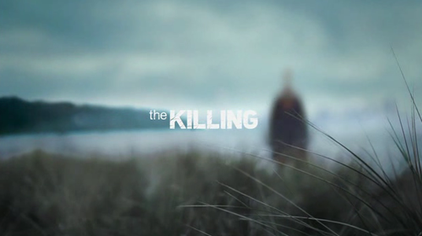
The Killing's Intensely Focused, Dark Drama

Some time ago, a member of my book club recommended the show The Killing to me, guessing that I would like it given its slower pace and psychological focus after I talked about how much I enjoyed the first season of BBC's The Fall. On her suggestion, I began watching the show and was immediately absorbed in its world.


Rather than the usual procedural TV show wherein a new case is tackled each week, The Killing's first two seasons are focused on a single mystery: the murder of 17-year-old Rosie Larsen. The daughter of a working-class family, Rosie's drowning death doesn't seem like a high-profile case but various leads soon (possibly) connect her murder to terrorism, city politics, and organized crime. As the investigation delves deeper, Rosie's death incites family tension, hate-based racial violence, and political corruption. This one case certainly has more than enough to grip the viewer for week after week with a total of 26 episodes devoted to the Larsen files.

While the case itself is plenty interesting, it's not the only thing holding the viewer's attention: that task falls on our leads. The Larsen case first appears on the desk of Sarah Linden, a veteran homicide detective who is about to retire when some of Rosie's effects show up in an empty field, and the police force must begin looking for a missing girl. Linden is joined by Stephen Holder, her soon-to-be replacement, who has just been promoted from County Narcotics to City Homicide. Holder, a former undercover cop who ended up getting hooked on meth, is willing to play hard and fast a little with the regular police rules and protocols, having no problem with roughing up a suspect or witness some or using rather indelicate language (to put it lightly) during interrogations. Detective Holder also seems to be channeling Breaking Bad's Jesse Pinkman to some degree, slumming about in hoodies and jeans, employing colorful ghettoized speech patterns, and in general belying his intelligence behind the charade of a stereotypical junkie.

Linden herself is another minefield of emotional and psychological depth. She's a single mother who is willing to do anything for her 13-year-old son Jack ... except put his well-being above her relentless pursuit of solving her latest case. In general, Linden seems to be hellbent on getting in the way of her own happiness. When the show opens, it is her last day of work before she heads down to Sonoma, where she and Jack will meet up with her fiance and presumably have a "happily ever after" life in sunny California. Rosie Larsen's murder changes her plans a little bit when her boss asks her to stay on an extra 24 hours to help Holder jump start the case. But soon it is Linden who is repeatedly missing her flights to California and choosing to stay for just a few more hours or days so that she can wrap up the case, despite her fiance's repeated protestations that there will always be another case, so she needs to learn to let go already. There are repeated hints from the fiance and others that a past case slammed Linden hard, and she suffered a huge emotional toll as a result. The unraveling of that mystery is another piece that keeps the viewer entirely absorbed in the show and wondering if Linden will get too involved in this case as well.

While Linden isn't the feminist icon that many see in The Fall's Stella Gibson, I found her to be an exceptional female lead in a crime drama. Linden's presence is so unlike characters in some TV shows where it feels like the female detective there is only to be a looker or simply to fill a quota (even though she does appear to be the only woman in the Seattle police force, though luckily not the only woman of substance on the show). She doesn't fall into traditional depictions of she's a good detective because she uses her female intuition and/or because she's more in tune with the emotions of the victims. Nor do the creators/writers swing to the other extreme and make her such a badass, almost despite her femininity (e.g., Ziva David on CBS's NCIS). Linden's characterization does fall a little bit into the stereotypical trap of she's a career woman so she doesn't have any other life, but to be honest this seems to be largely true of Holder as well. At any rate, Linden is not in any way one-dimensional nor does anything about her seem to be a reflection of her gender, any more than anything about Holder is a reflection of his gender. They come across as complex characters with complicated backstories and motivations trying to do their best in a troubling world.

Holder and Linden are both interesting characters in their own right but adding them together makes for an infinitely more compelling show. The pair in many ways seem like opposites to being with - beyond obvious physicalities (e.g., female v. male, short v. tall), Sarah is quiet and withdrawn while Holder is nonstop with the verbal diarrhea and seems to open up pretty quickly; Linden seems to initially have her life in order while Holder is a little more in flux; and so on. But these somewhat superficial details hide what the two do have in common: painful secrets in their past, abandonment issues, and feelings of inferiority and worthlessness. It's these deeper selves that allow Linden and Holder to find kindred spirits in each other, even if they butt heads often and occasionally lose sight of the trust they have in each other. In many respects, the two have a Scully and Mulder-type relationship that is endearing, with the way they look out for one another and each puts their trust fully in the other when no one else can be trusted. To go back to physicalities for a moment, they even look a little like Scully and Mulder with a short, red-headed female officer paired with a lanky male officer. And, of course, there's enough tension around the main characters to give plenty of fodder for shippers, who just can't have a man and a woman both be in a show without wanting something romantic to come out of it.

Besides the two leads, the show spends a lot of time focusing in on Rosie's family as they deal with the painful reality of losing a daughter/sister/niece. In your typical crime procedural, there's a maybe a minute or two where you get to see the family react to hearing the news of their loss. They cry, they wonder who would want to hurt their wife/child/aunt/brother/father/etc., and they provide one useful clue that the fearless crime fighters use to track down the killer. With The Killing, the Larsens are fully developed characters in their own right, who are layered with complex backstories and emotional epiphanies. While the Larsens aren't perfect, I really enjoyed getting to know all the family members and seeing how each chose to deal with their grief. This could change alternately from person to person (and day to day) from abandoning everything, expressing rage and violence, bargaining, revenge-seeking, questioning, and overcompensating trying to make everything wonderful for Rosie's younger brothers. Seeing the Larsens and how they tried to move forward with their lives from the day the teenaged Rosie disappeared was a huge part of what made The Killing's first two seasons such a success for me.

In addition to the police and the family, The Killing also spends a lot of time with the first good suspect that the police have. Rosie's body is found in the trunk of a car belonging to the mayoral campaign of Seattle City Council's president Darren Richmond. Even though it's quickly ascertained that the car was previously reported stolen, from this point on, we become intimately involved with Richmond and close members of his campaign staff. The politics of the race for Seattle's next mayor become inextricably interwoven into the fabric of the show and become one more reason to be invested in the series. These campaign characters are also given involved back stories and complex motivations, which are constantly causing the viewers to re-evaluate their opinions about them.

Although many were unhappy that the murder of Rosie Lawson was not solved by the end of the first season, I for one thought it was appropriate to extend that mystery and let the writers fully delve the deep of all those characters and the various plotlines that were presented throughout the course of the case. When the mystery was finally solved, I have to admit to being entirely shocked at finding out the identity of Rosie's killer. It was such an emotional rollercoaster all along and the ultimate reveal was like a gut punch on top of that all. A few loose ends are tied up with the remaining characters as we see everyone move forward after this traumatic murder. The show could have ended there on a high note and been a short-lived but fantastic drama.

But unfortunately, it didn't do that. Sometimes quitting while you're ahead is not understood by TV creators/writers/execs. The Killing went on for another two seasons, with each worse than the previous one. Season 3 starts out reasonably enough, with a year having past between Rosie's murder and the current events, giving Linden and Holder enough time to get a handle on their lives. Holder is in a serious relationship and doing well in the homicide department paired with a new partner. Linden has left the force and settled into a quiet job, has a new home, and is in a romantic relationship of her own. This all changes when a series of murders start occurring with links to a past homicide investigated by Linden. Of course, she has to get involved and once again becomes completely absorbed in her work to the point of losing everything she gained in the last year.

Season 3 lost a lot of the charm of the previous two seasons. The Larsens are gone as are all the members of the Richmond campaign. While this makes sense, I had been so invested in these characters and come to enjoy their part of the show so much that it was disappointing to hear nothing of them again. (We do have one brief cameo of Richmond eventually, but it would have been nice to have been given a few more Easter eggs, like a Larsen moving van in the background on the street somewhere at the very least.) This season presented new characters, but I didn't find them as compelling, complex, or interesting. For starters, there's the significant others of Linden and Holder, although Linden's would-be lover is hardly even given the time of day in terms of characterization. Holder's girlfriend is a little more involved in terms of characterization, although it's hard to see the attraction between the two of them without fully exploring her past. On the police home front, we meet Holder's new partner, the seemingly chump-like Carl Reddick who has manages to have quite the nose for investigations once his suspicions are aroused, as well as a new boss in James Skinner, who Linden apparently had an affair with years ago, although it's somewhat hard to buy the supposed chemistry between them.

Meanwhile, the original similar case that Linden had worked on had resulted in a conviction with a death row sentence, which seems a rather unlikely result to a case of spousal murder. The show spends a long time lingering on the wrongly convicted man's time in jail on the death row watch, including spiraling off to learn more about the prison wardens and their personal lives. It was interesting to see how the show could go off on these divergent storylines again and still keep the viewer gripped. However, it once again didn't work as well. While well played by Peter Sarsgaard, the character of Ray Seward, the man accused of brutally murdering his wife, was such an arrogant bastard in jail that you could only rarely sympathize with him. This may have been an effort to keep the viewer guessing as to whether his wife's death was truly part of the serial murders occurring now or not, but the end result was spending a lot of time with a character that just wasn't as compelling as those we had seen in the first two seasons. In addition, some je ne sais quoi about these long prison sequences often felt like they belonged to an entirely different show.

The serial murders are largely of young teenagers living on the streets, so we start to meet a number of homeless youth in this season, including characters with names like Bullet, Lyric, and Twitch. While it would seem like this would be a fertile ground for creating characters even more complex than those we saw in the first two seasons, this turned out not to be the case. Lyric and Twitch were largely one-note characters caught up in their personal teenaged angst dramas and occasionally remembering to be afraid of the serial killer prowling in their area. Bullet was more developed than the others and yet still somehow lacking. For myself, I think it would have been more interesting to learn more about how and why these kids ended up in the streets to begin with than in, say, needlessly having Bullet raped and seeing her react to that only briefly before acting like nothing happened.

By following the lives of these teens, the show took on an even darker underbelly of the city than that seen in the first season, introducing us to abusive/neglectful parents, drug dens, and child pornographers/rapists. While it was certainly disconcerting, there was nothing surprising about this. Youth with no support systems are taken advantage of in horrible ways; we see this play out across the globe in the real world every day. It's doesn't have the unexpected twists that the Rosie Larsen case took and it's just a reminder of how awful the world can be toward those that are considered easy prey. When the murderer was revealed for this mystery, not only was I not surprised, but I had pretty much predicted it early on in the season.

Season 4 picks up with the fallout of Linden shooting the unarmed murderer of the homeless teenagers and Holder deciding to help her cover it up. This was probably the weakest of the storylines as I just couldn't buy it. It seemed to me like they could have explained away the shooting (i.e., claimed that the murderer was in fact armed at the time) and moved on without it becoming a huge thing they needed to hide. The cover-up resulted in the two characters becoming so paranoid that they started mistrusting one another and turning their backs on each other. As the relationship between the two of them was such a vital part of the show previously, this development was incredibly frustrating. At this point, the show was becoming like the proverbial train wreck - horrible to see but somehow you just had to keep looking at it to see how it all plays out.

Even with all this going on, the creators/writers decided to also introduce yet another mystery - that of the murder of a wealthy family in which only the teenaged son survives. This story was so half-baked that it really was not only uninteresting, but it was also entirely bizarre, and yet the conclusion was so obvious that it was hardly worth calling it a mystery. This would not be a bad thing if the characters were interesting, but all of the new characters introduced were so lacking in any depth that they're wasn't anything worth noting about them. Add in that Holder and Linden were a mess, and there really wasn't anything redeemable about this season.

And, now that the show moved off of cable and on to a streaming format solely, the creators/writers decided to let lose with the language. As I've said before, I'm not a fan of when shows decide that the best way to push the envelope is to throw in a bunch of choice four-letter words. I'm not a prude, I'm not a saint, and I certainly don't have any beef with the occasional foul language. The Killing presents a dark world that is constantly full of abandonment and brutality, so it's reasonable that Linden, Holder, and others would spew out invectives some of the time. But when your finely tuned writing turns into scenes in which literally the two main characters just hurl "f--- you"s at each other, it's hard to argue that the quality of the show has improved by the lack of inhibition.

After everything shakes out with the season four cases, we get a flash forward to five years in the future, and the show ends with a tacked-on happy ending, which is so out of touch with the rest of the series that it's almost comical. Sure, it's nice to have the characters you've come to care about have a ending has some uplifting potential. But that would have been appropriate at the end of season 2 when there was more hope to spread around amongst the various characters. But by this time, so much more has gone on and happened between the lead characters that it doesn't seem in the least bit realistic, a damning charge for a show that was built on being tough, gritty, and no holds barred. It's almost like an element of magical realism being added in at the last minute.

In conclusion, watch the first two seasons of The Killing if you're interested in a tightly wound mystery packed into divergent storylines, replete with complicated, compelling, and deeply human characters. Then do yourself a favor and leave well enough alone but not wasting your time with the latter two seasons. You'll thank me later.

A Look at the Darkest Side of Humanity with BBC's The Fall

The Fall is a powerful, intense, challenging, and disturbing show that is most definitely worth the watch. In a world where there seems to be a police procedural and/or crime drama on every night on every station, it may seem redundant to have yet another show about a serial killer and the police search to capture him. And while boiled down this is exactly what The Fall is about, the show is far more artistic and serious than the many more sensationalist cookie cutter criminal-based programs out there already.


To step back a moment, The Fall is a BBC-produced drama taking place in recent years in Belfast, Northern Ireland. When the daughter of a prominent (and wealthy) businessman is brutally murdered, the local police launch a ramped-up investigation to catch her killer. To head up this task force, they bring in Stella Gibson, a detective inspector from London with a stellar (couldn't resist the pun!) track record for understanding and thus bringing in criminals. Gibson almost immediately sees a link between this murder and those of other women in Belfast who share similar characteristics (although, alas, the rest don't have the moneyed fame so their deaths weren't originally given the same high status treatment). Behavioral profiling of the murderer, painstakingly intensive forensic studies, and round-the-clock monitoring of tip lines and potential suspects' movements consume the task force's time as they pursue the serial killings.

Meanwhile, the viewers are given the position of knowing far more than the police as we soon enter into the world of the killer himself. A grief counselor with a wife and two young children, Paul Spector is mundane enough for most people to not notice him or suspect him of being guilty of anything more egregious than perhaps a speeding ticket. But underneath this calm demeanor lies a troubled psyche that finds fulfillment in others' misery and feels powerful only by destroying lives. Besides his unrepentant need to stalk and murder pretty women, Spector has a host of various other problems to deal with in his life, ranging from fairly typical parenting issues to a teenaged babysitter who is infatuated with him to a client case in which an extremely violent man is abusing his wife.

This last issue brings up an important part about what makes The Fall such a fascinating show. The cat-and-mouse between the police and the killer makes for plot-driven suspense and, as always for me, well-developed characters finish the job of sucking the viewer into the drama. But The Fall goes a step further by looking into a major cultural issue of times - and one that is sadly, often rather divisive - that of gender roles and gender equality/inequality. The issue of violence against women in particular is a large part of The Fall, and the show explores it in a number of ways, while also examining women's implicit and explicit roles in combating both crime and cultural stereotypes about their gender.

The Fall starts with presenting a female main character that is a wonderful example of a feminist hero. Stella Gibson is certainly not perfect and she's not necessarily "kick ass" in a superhero sort of way (although you wouldn't want to get on her wrong side either), but she's tough, smart, and confident. Her personality at first appears a bit cold because she isn't passionate in terms of raising up a fuss or otherwise getting bowled over by her emotions. But it's soon obvious that Gibson does indeed feel strongly at appropriate moments and while she is guided mainly by her intellect and sense of morality, her emotions also play a role in why she does what she does. She feels deep empathy for the victims and their families and is remorseful when she fears she's made a mistake that comprises a woman's safety.

Just like she is not devoid of emotion, she is also not a nun despite not being in a traditional relationship. Gibson has no problem clearly and plainly putting out her intentions when she finds someone of sexual interest - and when she does not. No part of Gibson's personality is tied up in any particular man or even in proving herself in a workplace historically populated by men. The show thankfully does not fall into the trap of turning Gibson into a "bitch" because she is a woman in a supervisory capacity or of making strong assertions about how Gibson has chosen being a career woman rather than a wife or mother, as thought it always needs to be an either/or choice. Clearly, the creators/writers here were not interested in presenting a stereotypical "women's intuition" type of female police detective who will inevitably end up in a long-term romantic relationship with her male partner. Gibson is simply living her life - sometimes making mistakes, sometimes shining (again, can't resist the puns based on her first name!) with insights not picked up by anyone else.

While The Fall certainly isn't alone in presenting a female lead - or even a strong female lead at that, the show doesn't just stop there. Gibson isn't a lone voice in the wilderness; the Belfast police and their attendant associates have a fairly equal amount of male and female employees. Even though she has a previous relationship with Assistant Chief Constable Jim Burns, on reaching Belfast, Gibson quickly aligns herself with two other women in particular - Dani Ferrington, a beat cop who becomes the right-hand woman to Gibson, and Professor Reed Smith, a pathologist who reports various insights to Gibson. In the world outside of the police force, we also get to know an array of female characters of various importance (and ensuing screen time) from Spector's wife to his victims to victims' family members and so on. The Fall presents women of all kinds: from the fiercely tough and professional detective constable Gail McNally to the busy and rather clueless (and thus, in a way, very sympathetic) Sally-Ann Spector to the clearly emotionally needy/disturbed young babysitter for the Spectors. With the exception of the babysitter Katie, who is a little one-note in terms of her motivations, all of the women - and indeed, all of the characters - are believable, well-rounded characters who have their individuals highs and lows.

But The Fall does more than simply present strong and believable female characters (not to say that isn't an accomplishment enough in a world where plenty of other shows and films struggle to have even a fair number of women in prominent roles). It also delves deep into a variety of issues surrounding women and how our culture treats women. It touches on how women are objectified, thus dehumanizing them to predators, specifically stating this through Gibson's words, but also showing it in other ways (i.e., using the visual medium of TV well to make the point). At one point when Spector tapes the torture of a victim, he ends his homemade video by asking why it's being watched. It's an uncomfortable moment of pointing out the viewer's own voyeurism and implicit role in this cultural problem of allowing women's rapes and murders to become lazy plot points to propel forward male heroes.

Nevertheless, the show is not without its detractors who criticize it for being misogynistic because of the female murder victims and for seeing from the killer's point of view. While I see their point about how displaying the corpses of dead women is troubling (it's something I felt with other crime shows), I don't find that to be the case here. Even though we see from the killer's eyes frequently, at no point are his actions condoned or held up as something to model/mimic. Meanwhile, there is so much empathy put out for the victims, the families, and even the community at large, that I don't feel like the dead women are simply props held up for their shocking entertainment value.

(Speaking of sensationalist shock value entertainment, I could not help thinking about the upcoming Fifty Shades of Grey movie, which stars Jamie Dornan as the BDSM-loving protagonist Christian Grey. I'm not sure how anyone could watch Jamie Dornan as Paul Spector subjecting a teenaged girl to bondage and other "grooming" acts, stalking women in his neighborhood, holding a woman hostage, violently murdering women, etc. and still come away thinking that a book series/movie about a dominant wealthy businessman introducing a young, naïve college student to sadomasochism is romantic.)

The Fall also has gained some critics because of its pacing; the show is certainly slow moving and lingers where other shows rush full speed ahead. Unlike the myriad of procedural shows on the air that fill up 20-plus episodes a year with largely one-off mysteries with sometimes poorly explained motivations, The Fall has chosen to focus the first two seasons (a total of 11 episodes) to this one case. Viewers come to intimately know all the characters and see the continuing effects of the crime on the police members tracking the killer, the killer's family, the surviving victims, and the victims' families. While there are still some motivations that could be more fully explored (e.g., the babysitter), it's a good change of pace to be reminded of the humanity (and lack of it in the killer's case) behind crimes rather than just the next thrilling plot move. For me (and many other viewers), the slower pace was not an impairment to appreciating in the show; in fact, it in many ways made it a more suspenseful watch. As a viewer, you care much more about the fate of a character once you've become invested in that person's life.

The breadcrumbs thrown out about whether nature or nurture created the psychopathic killer is another interesting component to the show. As the story develops and we learn more about Spector's troubled past, there are plenty of opportunities to reflect on how and why this man became a narcissistic sociopath turned violent offender, even if the script doesn't always explicitly state his motivations. And while there are certainly many references to Spector and his deeds as monstrous, the show through Gibson often reminds viewers how life exists on a continuum and everyone has elements of good and bad in them. In one scene I found particularly poignant in this regard, Gibson takes Burns to task for trying to weasel his way into her bed after she repeatedly says no. While she does make certain to maintain a distinction between him and the killer, she still manages to remind Burns (and the audience) that the treatment of women as mere sex objects is an easy trap to fall into that quickly becomes a slippery slope.

Like any TV show or other artistic expression, The Fall is of course not perfect. There is a secondary plot about police corruption that almost entirely fades in the background of the serial killing storyline. At times, there are scenes that feel unnecessary or not fully explained. On occasion, the police seem woefully behind the serial killer despite the tremendous amount of money and effort being spent on this case, including some scenes that just seemed ridiculous in how slow the police were responding, which hurt some of the credibility of the show. But overall, I found the first two seasons of the show to be fully engaging and thought-provoking in terms of plot and themes. They were also all extremely well acted, with an array of interesting, complex characters being presented and explored. The end of the season two finale was a bit bizarre in my opinion (and I am not alone), but I'm hoping that the third season slated for release in fall 2015 will help to smooth over those ragged edges and provide a satisfying conclusion to this thoroughly captivating show.