Showing posts with label fairy tales. Show all posts

Wednesday, December 11, 2019

Reading Harder in 2019

So at the end of last year, I said I probably wouldn't continue on with the 2019 "Read Harder" challenge from Book Riot because I wasn't that thrilled with the guideposts set for this year. However, very quickly into the first week of January, I realized I was already reading books that fit some of the categories. Well, once the game was afoot like that, I knew I was hooked. Every time I thought I was out, they pulled me back in. (Okay, I'm done with random book/movie quotes now.)

I still maintain that some of this year's prompts are just plain dumb (Goodreads reviews are meaningless to me, for example), but some of them are interesting. Being a voracious reader of all types of books over many years, I think I have managed to read something that fits each of these categories before, but it's still fun to try out a challenge for the year.

Once again, my book tastes include children's, YA, graphic, and audio book titles. Every one of those is a valid reading choice, and I have no interest in those who want to argue otherwise. As always, I link to my LibraryThing reviews of each book; click on the titles for more on my thoughts and feelings for each title. Just because I include a title here does not mean I enjoyed it and/or recommend it.

Some titles would fit into multiple categories but I tried as much as possible to contain them to one "best fit" category. However, I did put multiple titles under some challenges if they fit the category and were not used elsewhere.

In the end, I was able to meet all 24 of the 24 categories, which is the first time I've hit every mark with this challenge. And with time to spare! Helps to start early, me thinks.

Without any further ado, here are the 24 challenges and the titles I read to meet them in 2019.

1. An epistolary novel or collection of letters

2. An alternate history novel
An alternate World War II is in both books, although it's a smaller subplot within the latter as opposed to being the whole basis for the former. 


3. A book by a woman and/or AOC (Author of Color) that won a literary award in 2018

4. A humor book
North by Northwest is not actually a book but a recording of a stand-up routine. However, I found it my library's audiobook collection and, hey, what are books but storytelling anyway? I'm counting it. Especially because Does This Beach Make Me Look Fat? was supposedly a humor book, but wasn't actually funny! Feminasty was a humor book but is one of those 'laughing-so-we-don't-cry' types of comedy. 


5. A book by a journalist or about journalism

By a journalist, and about journalism. 


6. A book by an AOC set in or about space
This is one of those "streeeetch" books. The main character is obsessed with astronomy and rocket science in particular. He does go to a rocket festival and meet folks with similar interests. He even has a dog named Carl Sagan, named after the person he repeatedly refers to as his "hero." However, it takes place here on Earth and is about a lot of down-to-earth problems.


7. An #ownvoices book set in Mexico or Central America

The book never really specifies where it's set beyond "the city." I presumed that references Mexico City, where the author was born and currently lives.


8. An #ownvoices book set in Oceania
This book is set primarily in New Zealand, with brief forays into Australia and Papua New Guinea.


9. A book published prior to January 1, 2019, with fewer than 100 reviews on Goodreads

I get that the idea is to the read an under-the-radar book instead of a buzzed about one (pardon my mixed metaphors), but I still think this is a dumb “challenge.” Who cares about Goodreads reviews?

In the end, I included one book just to tick this challenge off, but it was literally the one and only book I read this year that I bothered to look at the Goodreads number for (and I merely glanced at the number of reviews, didn't bother to read any). I was reading this book anyway at the time I decided to look at the Goodreads number, so it's not like this prompt actually challenged me in any way, shape, or form. What a waste of a "challenge."

And, for all I know, plenty of other books I read this year would have fit into this non-challenge. I just didn't care enough to look up any other titles via Goodreads.


10. A translated book written by and/or translated by a woman
Written by a woman, and translated by a woman.


11. A book of manga
A manga series I actually like! Who knew? Not me, if I hadn't done this challenge!


12. A book in which an animal or inanimate object is a point-of-view character
Yup, I'm using the same series for two categories. Oh well. At least I am using different volumes. Chi is an adorable kitten who is the protagonist of this manga series.

Fox 8 was on Book Riot's list of recommended titles for this challenge and it sounded interesting to me, but it's worth noting that it's actually a short story, not a full-length book or even a novella. 


13. A book by or about someone that identifies as neurodiverse

In his memoir, Eddie Izzard discusses his dyslexia, amongst many other topics. As a nice compare and contrast, Fish in a Tree is a fictional account of a schoolgirl with dyslexia, written by an author was says "my own life inspired the story. Although I’ve never been tested for dyslexia, I have been suspicious that I have at least a touch of it. I was in the lowest reading group in grades one through six."

The Kiss Quotient is a romance novel with a protagonist who has Asperger syndrome; the author is also on the autism spectrum. Superstar is a middle-grade novel about a child on the autism spectrum; Rules also features a child with a diagnosis of autism, although he is the protagonist's younger brother.


14. A cozy mystery

15. A book of mythology or folklore


16. An historical romance by an AOC


17. A business book
I would not have thought of this as a "business book" (my mind conjured up tomes about how to run a corporation), but I'm glad that Book Riot had it on their suggested list because I loved it and told many other folks about the story it contained. 


18. A novel by a trans or nonbinary author

Technically, it's a book of short stories, rather than a novel. But it's still fiction, so I think it's close enough for this challenge.


19. A book of nonviolent true crime

I would not have thought of this book as a "true crime" book if I had picked it up independently, but Book Riot listed it as a suggestion for this prompt. It sounded interesting -- and it was!


20. A book written in prison
This was a bit of a stretch because she was out of prison when it was written, but she does discuss her time there, so I'm counting it as a close enough.


21. A comic by an LGBTQIA creator


22. A children’s or middle grade book (not YA) that has won a diversity award since 2009

  • Fish in a Tree by Lynda Mullaly Hunt (2016 Schneider Family Book Award Winner)
  • A Moon for Moe and Mo by Jane Breskin Zalben (2018 Sydney Taylor Book Award Honor Book for Younger Readers)

23. A self-published book


24. A collection of poetry published since 2014

This children's poetry anthology was published in 2018.


Here's to happy reading ahead in 2020!


*Begun in 2018 but finished in 2019.

Sunday, February 23, 2014

It Came in the Night, Night, Night: Rabbit's Moon

All of the talk this past month about the Chinese lunar rover Jade Rabbit has been making me think about Rabbit's Moon, a brief avant-garde film from boundary-pushing filmmaker Kenneth Anger. I first came across this short several years ago at an "Art After Hours" event at the Zimmerli Art Museum, which featured a screening of several of Anger's films as part of the evening's showcase. The other two films (Fireworks and Scorpio Rising) were so full of sadomasochism that it's difficult for me to say I "enjoyed" them, and I also think they took these dark elements a bit too far to be truly good films. But Rabbit's Moon has stuck with me over the years, with its punchy yet haunting soundtrack and cheesy but effective visuals. Filmed under a blue filter, the other worldly quality of the images also leave a lasting impression.

From the outset of this post, I should note that Kenneth Anger played around with Rabbit's Moon several times over a nearly 30-year period, editing it for length and changing the background music. The version which I prefer over all others is the final cut from 1979, and that is the one I will focus on here. It happens to be the shortest of all the versions (boiled down from 16 minutes with the original 1950 version to just under seven minutes); I think the reduction of the source material to its core elements makes it more emotionally resonating. Sometimes less really is more. The 1950 and 1972 versions boast a soundtrack consisting mostly of 1950s popular love ballads such as "I Only Have Eyes for You" and "Oh, What a Night." In contrast, the 1979 version features the more obscure 1976 glam rock song "It Came in the Night" by A Raincoat, which plays twice in a row in order to accompany the entirety of the film. This song is addictively catchy, and I also thinks it mirrors the film's content in a supplementary way rather than some of the too obvious choices in the original version (i.e., "There's a Moon Out Tonight"). Also, it appears that Anger sped up some of the character's actions to fit the faster paced music; I'm thinking particularly of the final dance sequence on the makeshift stage but it's apparent in other scenes as well.

With Rabbit's Moon, Kenneth Anger plays around with common myths that continue to permeate over the years as well as elements of various cultures, choosing a mix of Western and Eastern influences to populate his film. For starters, he uses a combination of Italian commedia dell'arte, French mime, and Japanese kabuki theater techniques in the staging and choreography of his short. The title itself refers to a legend about a rabbit that lives in the moon - a mythical creature that appears in both East Asian folklore and tribal North American storytelling. In Rabbit's Moon, we see images of both a beautiful white rabbit and a glowing white full moon, with Anger perhaps over handedly ensuring that we make the connection between the two. The main character's repeatedly reaching for and missing the moon symbolizes the illusory nature of chasing after such myths and fairy tales.

Speaking of the characters, Anger draws his characters from the classic rotation of archetypes found in commedia dell'arte. In Rabbit's Moon, Anger features Pierrot as the main character with strong supporting roles from Harlequin and Columbine. In traditional commedia dell'arte, Pierrot is a pitiable, foolish character who loves Columbine, who in turn will almost always leave him eventually for Harlequin. Anger gives us the traditional Pierrot with a twist - he never seems to have Columbine from the outset, although of course he remains in his role of pining for her once he sets eyes on her. Nevertheless, Pierrot is still the "sad clown" stereotype here that he usually is, with his yearning and grasping for a moon that is never in his reach anymore than Columbine is. Harlequin is typically known as the prankster who is willing to go to any lengths to dupe Pierrot and win Columbine's affections, and that's basically the role he plays here as well. And Columbine ... well, she's pretty much just the eye candy in this case. Unlike her traditional role of cheating on Pierrot with Harlequin, she doesn't work here to actively deceive Pierrot being as she isn't committed to him at any point. It is perhaps worth noting that the famous characters from commedia dell'arte, especially Pierrot, have been elevated to the level of myth themselves. (One of my favorite Pierrot-based tidbits is that Charlie Chaplin's own famous character of the Little Tramp is modeled on the Pierrot and was declared by fellow actor Harry Baur to be "the brother of Pierrot.") The characters being legendary ones themselves serves this film by further solidifying its place in playing with the role of myths in our lives.

When discussing the history of the commedia dell'arte, Wikipedia declares that "Audiences came to see the performers, with plot lines becoming secondary to the performance." The same can arguably be said of Rabbit's Moon, which is light in terms of plotting. The first half of the short shows a particularly down and out Pierrot, who is literally mooning over the moon as he tries to jump up and reach it but repeatedly misses. Nothing seems to make him happy and on repeated occasions, he simply lays himself down on the ground in the fetal position, signifying his unhappiness and seeming despair. As the soundtrack circles back to "It Came in the Night" for the second time with its ghoulish opening laugh, Harlequin appears on the scene attempting to entertain Pierrot with various antics, showing off his traditional attributes of agility and energy. Harlequin's finale includes showing the beautiful and ethereal Columbine to Pierrot, but then he steps in the way of Pierrot contacting Columbine. Harlequin and Columbine disappear, a lunar eclipse occurs, and Pierrot is once again left reaching for the moon unsuccessfully, eventually collapsing prostrate once more as the entire sequence ends.

But what happens - or doesn't happen as the case may be - in Rabbit's Moon is less important than the film's ability to broadcast universal emotions and touch upon important themes. Who amongst us cannot see ourselves in Pierrot's melancholic state at some point in our lives? Our fears and concerns may seem as foolish to an outsider as Pierrot reaching for the moon only to be disappointed over and over again. Pierrot may be pitiable but he is also identifiable in his grief. In the first half of the short, the main character's penchant for hanging his head despondently while holding his arms straight out horizontally creates a visual image reminiscent of the crucifixion of Jesus Christ. Here again Kenneth Anger shows that he's willing to play with iconic cultural references and is once more touching on the inability of myths to create fulfillment for certain people. This imagery has a historical root as well; the Wikipedia entry for Pierrot notes that in the late 19th century, "the Symbolists saw him as a lonely fellow-sufferer, crucified upon the rood of soulful sensitivity, his only friend the distant moon" and that this interpretation of the character led to a portrayal of a "Christ-like victim of the martyrdom that is Art." Indeed, the Symbolist movement seem to adopt Pierrot as their mascot, "[seeing] him as an emblem of suffering, with only the moon for a friend. Naturally, as Pierrot’s association with the moon (and thus, the night) deepened, it was easy to emphasize his darker qualities; eventually artists gave him a literally bleeding heart ... Since his sadness often caused his words to fail him, Pierrot is seen as the father of mime." These aspects of Pierrot's nature and legendary status are all - with the exception of the bloody heart - ones that Anger touches upon and tweaks as he presents the Pierrot of Rabbit's Moon.

In the second half of Rabbit's Moon it seems that with myths being unable to cause joy, Pierrot (and the viewer with him) turns to entertainment as a source of temporary happiness. Pierrot is indeed at least momentarily distracted by the show put on by Harlequin. But this is also seen to be illusory and unfulfilling. Harlequin has only two physical props - a lamp projector and a slapstick. (According to the Oxford Encyclopedia of Theatre and Performance, Harlequin's slapstick is a kind of magic wand that allows him to change the scenery so that the characters appear in a new locale as well as providing a way for him to make objects into different ones.) His other entertainments are pantomimed, with Harlequin hypnotizing and delighting Pierrot using an imaginary balance beam, juggling with nothing, and other parlor tricks reenacted out of thin air. The pantomime can be seen literally, for the vast majority of Rabbit's Moon action is done in exaggerated choreography, but I think it can also be viewed metaphorically. Harlequin's antics are empty actions, simple illusions used to pull the wool over Pierrot's eyes yet again, as these two characters are destined to fulfill their roles of prankster/cheat and fool/cuckold respectively over and over throughout time.

The lamp projector also serves to metaphorically bring these characters forward into the modern day (or at least the modern day of the 1950s-70s). Harlequin uses the projector to shine a light onto Columbine as she dances on a makeshift stage, performing a simple ballet for Pierrot's enjoyment. In a way, the lamp projector can be seen as a stand-in for the movie projector and thus becomes a way to use the film to comment on films themselves. Pierrot approaches the stage and stands just at its brink, dancing as he watches Columbine dance, but his movements do not exactly mimic hers nor do the two ever physically interact. They literally dance around each other rather than with one another. Pierrot also tries once more to get the moon and to show off its wonders to Columbine, but she does not seem to quite grasp the significance of his interest in the full moon. Pierrot seemingly worships Columbine, literally falling to his knees before her, while she views him with disdain, waving a nonchalant hand at him and putting her nose up in the air. To me, this scene seems to comment on how no matter how much we as viewers may get amazed by and invested in our favorite characters on the stage/screen (and in some cases, the actors who portray them), we will always be just outside the realm of their world - perhaps thinking that we are interacting with them as we shadow their movements but never actually engaging with them. Once again, the theme of illusions - and their subsequent disappointments - emerges through the imagery of Rabbit's Moon.

The lamp projector spotlighting Columbine, with Pierrot gasping in delighted wonder as he views her for the first time. I love his expression in this scene and the fact that he literally gets bowled over with amazement seconds after this.
As I mentioned earlier, in this film it doesn't seem that Pierrot and Columbine are the ones to have the prior relationship with Harlequin coming in to steal her away, as is typical in the traditional story of these three characters. Pierrot seems to be viewing Columbine for the first time ever and his joy and wonder at that first glimpse are uncontainable. But as Pierrot becomes more and more fascinated with Columbine and her dance, Harlequin becomes like a strip club owner protective of his employees - you can look but you can't touch being the refrain. A popular theme for the commedia dell'arte stories is jealousy and it seems that Harlequin is the one to catch the green-eyed monster here, rather than Pierrot for a change. He goes from laughing at Pierrot's sad attempts to catch Columbine's affections to jumping in between the two of them to stake his claim on Columbine once again, guarding her from Pierrot's influence, and then whisking her away just before the lunar eclipse begins. The lunar eclipse can be seen as symbolic of Pierrot's further despair as the one bright spot in his life so far (Columbine) is taken away from him. Entertainment and distractions such as physical attraction are but brief flashes of momentary joys that end far too soon. They are bound to disappoint and depending on them for lasting happiness is as fruitless as trying to pull the moon down from the sky.

An interesting thought to consider is how several versions of the traditional legend of the moon rabbit note that the creature's immortalization upon the lunar surface is due to its self sacrifice. Love is a concept rooted in sacrificing one's self to another, of sublimating one's desires in order to promote the well-being of the loved one, of indeed subsuming one's very identity to become one with another human being. Thus, the moon that Pierrot is so desperately trying to reach can symbolize how this lonely person in the forest is seeking an all-fulfilling connection, an all-consuming loving relationship with another human being. The presence of Columbine further reinforces this, as she is the one meant to be Pierrot's partner in the traditional commedia dell'arte lore. Of course, as I've already mentioned several times, she is the one who will ultimately betray Pierrot's affections by leaving him for another man. Again, disappointment abounds in the landscape of Rabbit's Moon, and love is just one more thing that appears to disillusion Pierrot. To pull from Wikipedia's fountain of information on the Pierrot character again, that entry notes that in late 19th century pantomimes, Pierrot incarnations "would appear [as] sensitive moon-mad souls duped into criminality—usually by love of a fickle Columbine—and so inevitably marked for destruction." The self-sacrificing character aligned with the rabbit moon legend is Pierrot, but this sacrifice is not reciprocated nor does it gain him any reward as it does for the mythic rabbit. For a character who is seen almost always as a naïve fool, Pierrot is perhaps a warning to all of us when we view how myth, religion, entertainment, and love ultimately leave him abandoned to a wooded glen, once again alone in the world.

One thing I haven't touched upon yet is the appearance of the wood's children. Two small children emerge from the forest and onto the clearing twice during the film. I'm not quite sure what to make of the children or their place in the film. They appear from behind and underneath Pierrot's outstretched arms, suggesting that he somehow "births" them, but they are not recognizable characters to me. The first time they appear is during the first half of the film when Pierrot is flopping about sadly and all alone. One child holds a mirror to Pierrot and he turns away in disgust. The other child holds a shiny stringed instrument, which neither he nor Pierrot makes any attempt to play. Later when Columbine dances on the stage, the two children make a second appearance with the same props. They kneel where the footlights of the stage would be if it had any, and Columbine briefly admires herself in the mirror; the instrument again remains unused by anyone. The next cut back to the stage finds the children gone. Like I said earlier, I'm unsure of the significance of the children's appearance beyond that they indicate further in the first half how Pierrot won't be made happy by just anything and that in the second half they bolster Columbine's self-preening and vanity. It's also worth noting that in the longer original version, they appear a third time to entice Pierrot into a mystical place that becomes his ultimate undoing.

A final thing that I've neglected to mention up until this point is the introduction to the film. It opens with Pierrot lying on the ground in the forest's clearing as though sleeping. Indeed, it appears at first as though he is waking up and is unsure as to where he is and/or what is going on around him. As he arises and steps about gingerly, he seems to notice the moon for the first time and hence his fascination begins. Again, I'm not quite sure what to make of Pierrot seemingly dumped off in the woods by unknown forces and awakening to confusion followed by longing for the unattainable. It almost seems more explainable that Pierrot would go out seeking a way to get closer to the moon, but it could be argued that he is brought here by forces outside his control, symbolizing how life often brings us to unexpected places. Then again, it could also be argued that Pierrot picking himself up off the ground (where he lays at the end of the film after exhausting himself with his attempts to grasp illusions) is simply a cycle beginning all over again. We may think we are seeing Pierrot set his gaze upon the moon for the first time, but he may have simply been through this whole pantomime (literally and metaphorically) once or even many times before. Again, I think this is also symbolic of film itself. Anyone viewing a movie (well, a well-done movie) for the first time has fresh insights and feels like they are stumbling upon something raw and real; however, all they are seeing is something that was rehashed over and over again as the cast/crew made the finish product and as other audiences watched it in the past.

At any rate, those are my interpretations of the film's characters and scenes. Of course, as with all works of art, there can be many different schools of thought on the meaning. Indeed, one of the things I love about Rabbit's Moon is that despite its short length, I always catch something new in it upon re-viewing. To borrow from Wikipedia again in regards to the myriad interpretations of the Pierrot character over the years, one incarnation is "the narcissistic dreamer clutching at the moon, which could symbolize many things, from spiritual perfection to death." Perhaps my interpretation is completely off base and instead the moral takeaway of Rabbit's Moon is not a solemn dirge to make note of all life's disappointments but a celebratory melody of a character awakening to spiritual perfection by casting away previous distractions. Take a gander at Rabbit's Moon. Mull it over. What do you think Kenneth Anger is trying to say? Is your interpretation as bleak as mine?

Sunday, February 16, 2014

All Good Stories Start with "Once Upon a Time ... "

After finishing up my blog series on comedic podcasts, I'd be remiss if I didn't also write up something about the fourth and final podcast to which I've been listening. (This one is not a comedy-based podcast so I did not include it in the four-part series I wrote.) That podcast is titled Storybrooke Ending and is the result of a collaboration between a friend of mine and her cousin. The duo began this podcast to discuss their thoughts and feelings about the ABC television show Once Upon a Time.

Full confession: I don't actually watch Once Upon a Time nor do I intend to start doing so at any point. (I do have to admit to being slightly intrigued by its spin-off Once Upon a Time in Wonderland, but that's mostly only because I'm obsessed with all things Alice in Wonderland-inspired.) While I find the idea of playing around with various traditional fairy tales and mixing them up an interesting concept, I've never really been a huge fan of fairy tales and hence am neither a fan of fractured fairy tales. So I give kudos to the creators of the show for having a clever premise, but I'm not giving them my viewing time.

That being said, I wanted to give the Storybrooke Ending podcast a listen to be a supportive friend, and I found myself oddly compelled to keep listening on for thoughts and comments about a show I don't watch. Nicole and Sam dedicate one podcast episode to each television episode, and they start each podcast episode with a recap of what happened on the latest TV episode. For that reason, I don't really feel lost about the particulars of what they discuss, although the podcast did begin with season three so any references to what occurred in the previous two seasons are over my head. The duo provide commentary on the show's convoluted plot and rich characters while also making predictions of what else might occur in future storylines on Once Upon a Time. The two often make references to Buffy and Lost as they discuss various elements of the show, which are probably logical comparisons but I've never watch either of those shows to know any better. All of this is done in an easy conversational tone, making it sound both like you are sitting down with a friend to discuss your new favorite show and like a fun podcast to work on.

On the podcast, Nicole and Sam also rate each Once Upon a Time episode on a scale of one to five, using a five-part metric. The key elements they choose to focus on rating for each episode are important ones: plot, storyline continuity, emotional impact, character development, and their own personal enjoyment (to capture that je ne sais quoi that encapsulates each episode). Their website for the podcast includes a page for each episode, which provides the highlights of the TV episode and some of the questions that remain for them about the future of the storylines and character backstories/interactions introduced in that episode. If you're a fan of Once Upon a Time and can't get enough of the show, this is a good podcast for you to listen to and recap some of your favorite moments of each episode, perhaps gaining new perspective and insight as you do so.

Sunday, November 4, 2012

Brave Enough to Say No


I’ve been a huge fan of Disney and Pixar movies in the past, even the princess movies that rankle many. Yes, as a feminist I understand the many problems inherent in these movies with their troubling portrayals of women, but I grew up on them and they hold nostalgic memories for me. I am not pining away, waiting for my prince to come and make my happily ever after come true, but I still enjoy the music, animation, and cinematography of these movies.

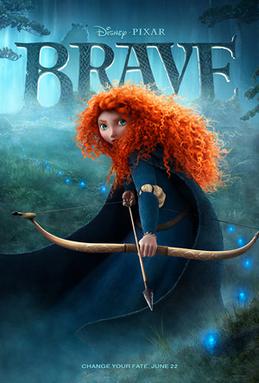
So when Disney/Pixar started advertising its latest princess offering, Brave, there was a good chance I was going to check it out. And then when I read this article detailing the co-director’s inspiration for the movie and describing how this film with a strong female lead came into being, I was hooked. Last month I finally got the chance to sit down and watch this movie – while I was on a plane and this was luckily one of the choices. (It might be worth noting that I wasn’t the only childless adult watching this movie; I even noticed a couple of adult men picking this movie out of the many options available. So much for Disney’s concerns that only young girls will view princess movies.)

Brave tells the story of Merida, a Scottish princess who loves archery and horseback riding but is often forced indoors by her mother to practice the etiquette of being royalty. Merida dislikes this but does as she told – until one day her parents tell her it is time to be wed and three princes arrive to contest each other for her hand. Merida rebels and runs off into the woods, where she stumbles upon a witch who concocts a potion that will help Merida change her mother. Well, change her it does – right from a human being into a giant grizzly bear. Now Merida has even bigger problems on her hands than just convincing her mother not to marry her off – will she be able to hide her mother from her bear-hunting father long enough to reverse the spell?

There were a lot of things to like about Brave. Of course, as we’ve come to expect from Disney and Pixar, the animation is top-notch. As in many other Disney/Pixar movies, the movie includes a few sweet songs as sung by Merida, which are quite nice and I’d probably listen to just as regular songs without the context of a movie. Personally, hearing the Scottish accent of all the characters was a fun change of pace from the non-accent of most Hollywood casts, even when the movie is supposedly set outside of the California hills. The movie is also good at putting forth some moral lessons without being overly didactic.

Furthermore, this is a very female-centric movie, which sadly cannot actually be said about all princess movies. There is the strong mother-daughter relationship, unlike in many fairy tale-based movies where the mother is absent and/or the mother figure is evil. In fact, what we have here is rare in many Disney/Pixar movies – an entire intact family of mother, father, daughter, and two sons. (This may be a bit ironic – or something – that Disney finally releases a movie with a traditional family of two parents and 2.5 children when the traditional family is morphing into something else altogether.) One thing I really enjoyed about the movie focusing not just on Merida but also on her mother was that it gave the opportunity to show two kinds of female strength. Merida is portrayed as strong and brave in part because she is something of a tomboy, who prefers archery and traditional male hobbies. But – and this is more subtle – her mother is also portrayed as strong in a more traditional female role. She is able to subdue a room full of rowdy men with her stately and elegant appearance combined with a calming speech.

And, I really appreciate that the movie is actually an anti-romance – given the movie’s target audience of young children, I think that is quite appropriate for a change. Merida does not give up on the idea of marriage entirely or denigrate it at all, but she simply refuses to get married at a time in which she is not ready to a person who is not of her own choosing. Spoiler alert!: The film does not end with her falling for one of the three princes or meeting a fourth prince who sweeps her off her feet, but it is open-ended enough that the viewer can believe Merida will eventually fall in love and marry or that she will remain single and happy that way. I had been concerned that the movie would go the route of Aladdin where Princess Jasmine refuses all her potential suitors but then changes her mind eventually when Aladdin arrives on the scene. That’s a fine storyline also as it introduces the idea of choosing one’s own path rather than having it chosen by others, but I’m glad that this movie took it one step further to suggest that Merida might still live happily ever after even without a husband on the horizon.

Like with many other Disney/Pixar films, there is a lot of humor is the movie. I’m sure kids in particular will find the many slapstick moments hysterical, especially the antics of Merida’s two younger brothers who can’t seem to keep themselves out of trouble. But a lot of the humor comes at the expense of the male characters, and this is the only real fault I find with the movie. For the most part, the male characters are seen as little more than barbarians – they are none of them particularly intelligent, and it takes little to have them all begin fighting with one another. If they are not fighting one another, then they are all mindlessly chasing down a bear that only one character has sensed or trying to show off their physical prowess is some other way. Albeit, the king does have some better moments, and it is clear that he is loving husband and doting father. But for the most part, this movie doesn’t give the best impression of men as a whole, especially when a lot of them are put together in the same room. As a feminist, I rankle at this portrayal also – it’s a misconception that feminism believes or seeks to make women superior to men; most feminists simply wish us women to be on the same playing field as men and to stand there being treated equally and fairly, not judged to be either inferior or superior based solely on the existence of a second X chromosome. It’s harmful to everyone – but probably most especially children – to portray one sex as somehow inferior to another in any aspect.

Still, all and all, I enjoyed this movie and appreciated this twist on the traditional princess movie. For that reason, I highly recommend it for all of us who grew up on princess movies because I think we would most appreciate its subversion of the genre. Of course, I’d also recommend it for its target audience of young children but with the caveat that parents co-view with their kids and point out some of the harmful representations of male characters in addition to pointing out the helpful representations of female characters.

Sunday, January 15, 2012

From Russia with Love: Swan Lake

While many have speculated whether the success of the movie Black Swan would contribute to more spectators of the Swan Lake ballet, I have neither seen nor particularly wish to see Black Swan. I have just wanted to see Swan Lake for some time now, so I was intrigued when I saw The State Theatre would be live broadcasting a production of the Swan Lake from The Bolshoi Ballet in Moscow, Russia. A friend and I decided to check out this performance, with this far more friendly commuting option!

Very loosely, here’s the basic plot: Swan Lake opens with a birthday celebration for Prince Siegfried. Later that evening, the prince stumbles onto an enchanted lake. It appears to be populated with swans, but they are really young woman who are under a spell and only become their true selves at night. The prince spies Odette (the “white swan”), the most beautiful of these women, and immediately falls in love with her. The next day the queen presents various princesses from other countries to the prince, hoping he’ll pick a bride amongst them, but Siegfried is loyal to Odette. However, that’s when the evil Rothbart appears with his daughter Odile (the “black swan”) who looks remarkably like Odette and tricks the prince into believing that she is indeed Odette. From here, different productions diverge on the storyline so I won’t provide any more details or give away any spoilers.

The story of Swan Lake, like most fairy tales, is a bit silly. (If you don’t know this about me already, I’ll note for the record that I am not much of a fan of fairy tales). But the story is somewhat secondary here - the plot is just some weak glue to hold together a bunch of otherwise unrelated dance sequences. While many critics of musicals charge that the songs are unnecessary, they generally do help to further the plot, even if they make it more long drawn out and flowery. Here, however, many of the dance sequences do nothing to further the story along. Sure, it makes sense for Odette and Siegfried to have a clingy romantic dance together to indicate that they are attracted to one another. But everyone else in the story has their moment of dance also, even when they don’t seem to say anything more about the story. The black swans, the white swans, the courtiers, the prospective brides and their attendants, and so on, all have long dances to execute that don’t push the action forward. This is not a criticism of the ballet; this is just a statement. If you like strong plots, you will probably not like this ballet (and perhaps not any others). If you like to see beautiful dancers dancing beautiful, you will more than likely enjoy seeing this ballet performed.

Before I go into specifics about this particular production we saw, I should note that I’m treading into unknown waters here. Unlike art or theater, where I feel I have at least some background to bring to any critique or appreciation of a particular work, I have hardly any knowledge about ballet. I’ve only seen two other full ballet productions – The Nutcracker at a local dance studio and The Swineherd at the Tivoli Gardens in Copenhagen. I have very little awareness of what kind of training and work goes into a great ballet performance, let alone specific knowledge of technique. So, short of a dancer falling flat on his or her face, I’d be completely unaware of a performer’s flub. Also, because I am unaware of what is a more difficult move comparatively, I am awed by flashy, quick moves – which may or may not be the most difficult ones if you were to ask the ballet dancers.

That brings me to my one and only criticism of this production of Swan Lake – I was not overly impressed by the performance of the prince. For instance, he often appeared to be playing second fiddle to Odette/Odile. No doubt there’s tons of physical effort and talent on both parties’ parts whenever a lift is involved, but it looks far more difficult and interesting to the viewer to see a ballerina balancing on one leg mid-air than it does to see the man just holding her there. Again, this may be an issue with me not knowing what are the more complex steps, but I found the court jester to be a far more entertaining dancer to watch. His leaps, jumps, and quick successive pirouettes looked far more difficult and, as I said, more interesting to the spectator than anything from the prince. Indeed, I found the jester to be more impressive than either of the nominal male leads, although at least with Rothbart I got the impression that this was a very talented performer but the role did not call for an excess of stunning moves. That being said, overall I was mesmerized by the dancers and their skill. The visual feast is further spread with lavish scenery and costumes. I particularly liked the costumes for the white swans – basically the standard leotard and tutu in white but with a soft, fluffiness to them that really evoked the image of a swan’s down. A modest feathered headdress completed the look. And, the music, originally composed by Tchaikovsky, is absolutely stunning and fits perfectly with each and every dance step.

Watching the ballet on the big screen was an interesting experience and, as I mentioned somewhat flippantly earlier, is a good way to see a ballet you would not otherwise be able to see due to geographic distance. Another plus to see the ballet this way was that you could very clearly see the performers up close. Even if you were stuck in a back row, you’d still be able to see the expressions on the dancers’ faces. There were also a few behind the scenes moments, such as when we could see the orchestra in the pit warming up for an act or when the dancer performing as Rothbart was interviewed during the intermission. The only down side with this way of seeing the ballet was that you saw only what the videographer allowed you to see. There was a good mix of shots of the whole troupe versus panning into a lead character, but it’s different than being able to take in the stage in its entirety and choosing where you want to focus at each moment.

Before the ballet started, The State Theatre also provided a brief “Pre-Performance Insight” with Douglas Martin, who is a member of the American Repertory Ballet and has danced Siegfried to his wife’s Odette/Odile in a previous production of Swan Lake. Unfortunately, the pre-performance part made it a bit tricky as people kept piling into the theater looking for their seats prior to the ballet beginning and making quite a bit of noise in the process. Those already trying to listen to Mr. Martin and shushing the newcomers didn’t actually do much to help the auditory problem. However, all and all, this was an interesting talk, which really did provide some insights. Martin discussed the history of Swan Lake, illustrated some frequently used pantomimes that we might see in the production, and explained some of the very difficult training that went into his wife’s performance of Odette/Odile. This made me really appreciate even more the performance I saw later of this dual role. As he pointed out, the ballerina has to play very different personas in this one ballet – sweet, innocent Odette has soft, delicate movements that are sometimes skitterish like a nervous bird while cunning, duplicitous Odile has sharper, quicker movements that are determined. But Odile is also attempting to mimic Odette’s movements, so you see that as well. It is certainly quite an undertaking, and, as I mentioned, I appreciated the ballerina’s every movement all the more after Martin described how painstakingly his wife practiced and perfected every detail, down to every hand flutter. No doubt Mariya Aleksandrova, who played Odette/Odile in this production, did the same, for it showed in her performance.

While Swan Lake was only available to see at The State Theatre today, their broadcasts continue with three other ballets and three operas over the next few months, so there’s a good chance you might find something you’ll like. Already, my friend and I have decided to go back to see La Boheme there, so stay tuned here for more updates…

Tuesday, January 3, 2012

Looking Back ... The Play's The Thing

As I’ve mentioned before, I really dislike winter. If I were the type to believe in past lives, I would be convinced that in a past life I was a grizzly bear or some other creature that hibernates all winter long. December is mostly bearable because it has all the holiday rush to make me forget somewhat that winter is coming/here. (This year had the added bonus of actually not being cold most days so it certainly could have been worse than it’s been.) But January, February, and March are the real terrible months with nothing to look forward to but miserably cold, dark, and snowy days. So instead of looking ahead to those dismal days, I’m choosing to look back with this post and talk about some plays that I saw in 2011 prior to when I started this blog. As my co-worker points out that today is one of the most depressing days of the year, hopefully this will bring some cheer to you also!

Crimes of the Heart

The McCarter Theatre in Princeton put on a production of this Beth Henley play, which has also been made into a movie apparently. This darkly humorous play introduces us to three sisters who are all home at their grandfather’s Mississippi house and facing different crises – Lenny has just turned 30 and doesn’t feel like she’s done anything with her life, Meg is trying to make it big as a singer, and Babe has just shot her husband under the weirdest of circumstances. While this sounds like a serious set-up (and indeed there are dramatic moments, such as when the women contemplate their mother’s suicide years earlier), it is mostly a madcap comedy with the unlikeliest of scenarios continuing to play out.

The first thing I noticed about this production was the great scenery, including props that were authentic. As we sat waiting for the play to start, I recognized a few 1960s items that I have at home after being passed down from my grandmother. The second thing I noticed was that, yes, there is such a thing as being too close to the stage, as we learned. Having ordered the tickets the day before the show, we were in the first row, which was very, very close to the stage. It was an interesting experience though to get to see that the actors, who appear to be looking right at you when you in the center of the audience, are actually looking over the audiences’ heads. It could also make for an awkward viewing experience being uncomfortably close to the actors, particularly when they did things like undress and change costumes right on the stage. Speaking of actors, everyone involved in this production was top-notch. Overall, this was a great play and, barring the ability to see it again any time soon, I might rent the movie to re-visit these wonderful characters and hilarious plot.

Sleeping Beauty Wakes

This was another production at the McCarter Theatre that was also funny in a dark humor kind of way, although it certainly had very serious moments as well. In this Rachel Sheinkin play, a heartbroken father brings his seemingly comatose daughter to a sleep disorder clinic, claiming that she’s been sleeping for centuries. In this setting, an orderly suffering from narcolepsy starts to fall for the mysterious beauty, while the four other patients reflect on their own sleeping and dreaming patterns since the young woman arrived. When “Sleeping Beauty” wakes up about half-way through the play, things become even more unpredictable.

In my opinion, the first half of this play was the more interesting part with a little bit in the second half starting drag, but overall, it was a good play. (I should also note that I ended up waking up incredibly sick the day I went to this play so perhaps any thing that felt like dragging could have been in part because I was resisting the urge to sleep off whatever sickness I had.) As a musical, this play had phenomenal music – both lyrically and instrumentally – and spectacular choreography to match it. The actors were all great at every aspect of their jobs – singing and dancing as well as believably portraying their individual roles. The use of fairy tale imagery in a contemporary setting and story was an interesting twist and one I think that speaks to modern sensibilities (and our building on previous generations, especially when it comes to common knowledge amongst people of different backgrounds).

Compared to Crimes of the Heart, this production had a set that looked underwhelming at first glance – just a line of austere beds for the patients and an office desk for the doctor – but these were in constant motion depending on the scene. There was also an artistic use of lighting depending on the context, making for a visual treat. Furthermore, the production made use of film images on the screens behind the beds, with these images containing things such as what the patients were supposed to be dreaming of at the time. As you might have gleaned by this point, this was a very different sort of play than the standard character-driven or even plot-driven one. For a sample of what it was like, you should check out the trailer available here. While I generally prefer things that are more character driven (such as Crimes of the Heart), I appreciated the different-ness of this musical as a change of pace and a truly artful experience.

A Midsummer Night’s Dream

Appropriately, The Shakespeare Theatre of New Jersey put on this production during the summer. (Okay, for you loyal readers who might point this out, I did actually see this play after I started this blog, but with family visiting from out of state, I didn’t have the leisure to write about it at the time.) I don’t think I need to provide a synopsis of this well-known Shakespeare play, but I will note that this is one of my favorite Shakespeare plays and my absolute favorite out of his comedies. (My other favorite is the drama Hamlet, from which I pulled the quote for this post’s title.)

Like with Crimes of the Heart, the first thing I that struck me with this production was the beautiful set. This play was performed at the outdoor amphitheater, and even though it was unbearably hot out of doors in July (ah, remember being too hot? it seems a luxury unheard of now), it was a really cool (no pun intended) experience to be at an outdoor play. Also, it gave the theater the opportunity of handing us all paper fans imprinted with the play’s design. The set itself was really beautiful (see the picture below for some idea of what a portion of the set looked like, although alas my photography skills aren’t very good and it was much better to see in person). The production also made good use of the set’s space, including having the Athenians sit down amongst the audience when watching the players put on the play within the play, Pyramus and Thisbe. Another great example was when Puck came out into the crowd to look for a man wearing “weeds of Athens” (per Oberon’s advice) by checking the tags on everyone’s clothes and saying to himself things like “The Gap, no, Old Navy, no, Tommy Hilfiger, no” until finally going up to the actor portraying the sleeping Lysander and looking at his clothing tag and saying “oh here, weeds of Athens.”

One thing I never quite understand is when Shakespeare’s plays are set in the modern day but the language is the original old English; here it was a bit unclear just when it was meant to be taking place. The fantasy world of the fairies helps in that it is timeless, but the original play also takes place in ancient Athens, which calls for an established time and place. In this production, the actors were clearly not clad in costumes authentic to either ancient Greece or Elizabethan England. However, they weren’t exactly toting the most modern of apparel either, but rather wearing clothes that were funky outfits you wouldn’t see on any ol’ person walking down the street. (I wish I had a better description but I’m lacking a good way to explain just how it looked.) Some scenes also employed the use of water guns, which a quick Google search tells me is not unique to this particular production. Go figure.

The cast was exceptional with a host of good actors, some in multiple roles. The only notable exception was the actor portraying Hippolyta and Titania, who always wore a look of confusion on her face even when she was supposed to be angry or defeated or in love. A special shout-out goes to those in the roles of the players (Bottom, Flute, Starveling, Snout, and Snug) as they were incredibly funny, really evoking the clownishness of these characters. They probably received the most laughs from the crowd watching this incredibly humorous and absurd comedy.

Now that I’m stuck indoors and won’t be seeing any other live, outdoors plays (although perhaps some live, indoor plays), I’m thinking about pulling out some printed copies of plays and reading them (or in some cases, re-reading them). Also, as winter progresses, you might see some other themed posts looking back....