Monday, January 28, 2013

Jane Austen, Meet the 80s

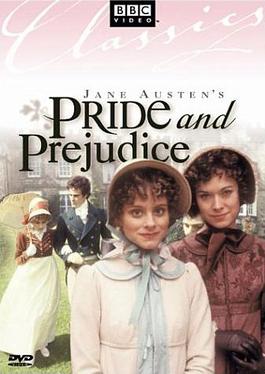
As many of you may know, today marks the 200th anniversary of the publication of Jane Austen's classic novel Pride and Prejudice. Therefore, it only seems fitting to write up today a post I've been thinking about for some time. If you guessed that this post would be about Pride and Prejudice, you would be right. But you'd also be wrong. For this post is going to address two BBC miniseries that came in the 1980s - the first one is 1980's Pride and Prejudice and the second is 1983's Mansfield Park.

The BBC's 1980 miniseries of Pride and Prejudice seems to be one adaptation of the novel that has been largely forgotten. I hardly ever hear about it, for Austen fans seem to flock either to a feature film version - generally more watered down but also an easier thing to digest, especially in one sitting - or to A&E's 1995 miniseries, which seems to have positioned itself as the screen version of the Pride and Prejudice story. However, this miniseries does a pretty good job at adapting the novel, even if it is now overshadowed by the one starring Jennifer Ehle and Colin Firth.

If you don't know the story of Pride and Prejudice, that can only be because you haven't read the book and you should do so immediately! :) But here are the basics for those of you who aren't well-versed in Austen's novel: In Regency England, there lives a family consisting of Mr. and Mrs. Bennet and their five daughters. Because the law at the time would not leave estates to women and working was an unheard of thing for gentrified ladies, the five young women will be hard off, to put it lightly, when their father dies. That is, unless they can marry well. Enter their village's latest resident, the wealthy Mr. Bingley who comes accompanied by his good friend, the even wealthier Mr. Darcy. Bingley is immediately charmed by the eldest Bennet daughter, Jane, while Darcy snubs his nose at her sister Elizabeth. But as Shakespeare says, the course true love never did run smooth, and these first impressions aren't everything. We're taken on a roller coaster year as the Bennet sisters search for happiness and love.

The casting of the 1980 Pride and Prejudice miniseries is for the most part quite spectacular. In particular, Sabina Franklyn as Jane Bennet looks and acts exactly like the darling sweetheart you except her to be, and it may be heretical for me to say, but I actually preferred David Rintoul as Mr. Darcy over Colin Firth in the role. Some criticize Rintoul as too wooden and stiff in this miniseries but quite frankly, that's who Mr. Darcy is. He is someone who has a tough time letting his hair down, so to speak, and enjoy himself in the society of others, especially at large gatherings. (Come to think of it, Mr. Darcy is pretty much the definition of an introvert, even though everyone else around him decides his manners show an air of superiority and too much pride in himself.)  I really enjoyed that the actor playing Lady Catherine de Bourgh was much younger than ones I've seen in the role previously; I think that helped to make her feel less like a bitter old maid and more like the ridiculously snobbish person who she is.

When Elizabeth Garvie first appeared on the screen as Elizabeth Bennet, I wasn't so sure I would like her, but she grew on me pretty quickly and I came to enjoy her performance, with a few exceptions (more about that later). The rest of the Bennet sisters looked and played their parts quite well, but I was somewhat disappointed in their parents. This particular rendition of Mrs. Bennet was a little too over the top for me at times while Mr. Bennet came across as rather cold. Some of that may be more in the scripting than the acting, but I'm inclined to think it was a combination of both. I was a bit disappointed in the casting of George Wickham, as I generally am, for most versions don't seem to find someone so very attractive and dashing as to woo the whole town as Wickham does. Some of the seductive qualities might have been lost in the scripting as well as the acting, but I'm once again inclined to think both are at work here, if not more so the latter. Nearly all the rest of the characters, including Mr. Bingley, Miss Bingley, Charlotte Lucas, Mr. Collins, and so on, were very convincing in their roles.

Because it was 1980 and this was a made-for-TV production, this miniseries doesn't have the fine veneer of polish that we're accustomed to these days. Sometimes the production quality is quite low, with overwhelming lighting that washes people out and the outdoor noises of feet crunching on gravel or birds chirping that are overly loud. Better editing could have been used to tighten up some scenes, such as the opening one in which we watch Mary run from the front door to the path and back again in what seems like an interminably long time to be watching something so dull and out of focus. There were also sometimes quick cuts from scene to scene, seemingly popping the viewer out of one conversation into an entirely different one with no warning. Most likely due to the poor production values, whenever there was a large party scene, characters that were not the main focus only pretend spoke (i.e., you could see them moving their lips and acting like they were very interested in one another but no words were actually being spoken), which was actually rather distracting at times. Only going through the motions like this gave the feeling the viewer was watching a high school theater performance rather than a professionally done television show.

The adaptation of the novel to screen format itself was for the most part successfully done. With a long miniseries rather than a shorter feature film length, the screenwriters did not have to cut any major parts of the story out, forced to reduce it to just main highlights. Instead, we get all the balls and trips and so on that we see in the novel. The dialogue is largely straight out the book, although occasionally lines were given to different characters in the miniseries than in the novel, which seemed rather odd. This sometimes lead to rather awkward seeming conversations, where the actor seemed to be just reading the line rather than really getting into it. (This could also just be a result of me knowing these lines so well myself now that they don't sound fresh and unrehearsed.) There seemed to be few new lines of dialogue given in this production so if Jane Austen didn't supply a suitable next line word for word, we just jumped to the next scene in that rather quick and jerky way that I mentioned above. At times though, newly introduced monologues for Elizabeth were given as voice-overs, which became rather tedious as the series progressed. Her thoughts seemed rather dithering instead of the lively ones we would come to imagine from the feisty Lizzie. Of all of Austen's female protagonists, Elizabeth seems the least suited for long internal monologues as she is the most outspoken, excepting maybe Marianne Dashwood or possibly Emma Woodhouse. These bouts of introspection seem far more suited to Fanny Price, Anne Eliot, or even Elinor Dashwood.

One good point I will give this adaptation is that it seemed to grasp the humor of Austen's novel a little more than others, which seem to focus more on the dramatic aspects of the book. It was also nice, as always with these adaptations, to see these characters come to life and in particular to see their costumes, dancing, and fine manor houses with lovely grounds. All in all, I enjoyed this adaptation and could even be induced to watch it again. But like many others, I'm still considering the 1995 A&E version of Pride and Prejudice to be favorite my screen adaptation.

Now on to Mansfield Park, which was aired by the BBC just three years later in 1983 (a very good year). This Austen novel is generally not a fan favorite (although I love it), nor is its heroine (but I feel sympathetic toward her). So it has not been adapted near as many times as Pride and Prejudice, with just this miniseries and two movie versions in 1999 and 2007, neither of which I find entirely satisfactory. (Okay, I'll admit it, I basically detest the 1999 version; I'm pretty partial to the 2007 one, but it has a fair share of faults also, including the greatly condensed timeline.) So when this one came up in conversation recently, I thought I had to find it and watch it. When I found it on Netflix, I saw that I had rated this movie and then realized that I had already seen it before. I'm not sure the most glowing recommendation of a miniseries is to discover that one had invested five or six hours to it and didn't recall its existence, even when prompted. But I decided to watch it again and see what I thought of it (again).

To back up, here's the brief description of Mansfield Park for anyone who hasn't read the novel. Young Fanny Price, one of many children in a family of limited means, is sent to live with her wealthy aunt and uncle at their estate, the titular Mansfield Park. Sir and Lady Bertram, her uncle and aunt, have four children of their own - Tom, Edmund, Maria and Julia - who are mainly standoffish toward their young cousin, except Edmund who is always sweet and kind to her. As they grow, Fanny comes to love Edmund as more than a cousin, but he is completely oblivious to this. Meanwhile, Maria is courted by the wealthy but bumbling Mr. Rushworth and Tom spends his life rather frivolously wasting money. Their little world is rather shaken by the introduction into their society of Mr. Henry Crawford and his sister Mary Crawford. Edmund's heart is almost immediately captured by Mary, to Fanny's dismay, and Henry manages to enamor himself to Julia - and the engaged Maria. It's a recipe for a disaster, and hijinks do indeed ensue at Mansfield Park.

Like the 1980 version of Pride and Prejudice, the miniseries of Mansfield Park allows for all the ins and outs of the novel, rather than completely neglecting some parts to force a nearly 500-page novel to fit into an hour and a half long movie. So this version wins points for allowing us to see all that. But while it remains true to the action of the book, we see so little of Fanny's inner thoughts that it loses something. It occurs to me now that while I was well aware of Fanny's feelings the whole time because of my knowledge of Mansfield Park, to the uninitiated it was probably unclear that Fanny was in love with Edmund and felt Mary Crawford was not good enough for him. Unlike Elizabeth Bennet, Fanny so rarely gets to speak her mind that a little narration would be helpful to understand her character and her emotions. It is worth noting that her underlying motivations were so unclear in this film because Sylvestra Le Touzel actually played Fanny the way she was meant to be played - quiet and gentle and meek. So I leave no fault at Ms. Le Touzel's feet but wish that those internal monologues that were so popular in the BBC production of Pride and Prejudice were employed here instead.

In addition to Le Touzel, the rest of the casting was very well done with a few notable exceptions. I had not recalled that the Honourable Mr. Yates was meant to be such a fop, so he seemed over the top to me but perhaps I am remembering his character incorrectly. I was not particularly fond of Nicholas Farrell as Edmund Bertram for he came across as far too smug and self-righteous for my taste. And Jackie Smith-Wood was a travesty as Mary Crawford. For starters, in every scene she was in, I was completely distracted by her short, short hair, which seemed counter to every picture of Regency hairstyles I've ever seen, although apparently some rather daringly fashionable women did have cropped bobs. As Miss Crawford is meant to sporting the latest fashions from London, I could perhaps think the hair and costume department were going for this, but her clothes in many scenes were duller and plainer than those of Maria and Julia. And, the actor herself is not particular attractive and seems a bit old for the part. I know these complaints sound rather superficial and in other circumstances, I would not make them. But recall the source material! Mary Crawford is meant to be so stunningly beautiful and charming that she nearly makes Edmund abandon his high moral ground (and arguably is successful in this on some fronts, such as the play acting or hogging Fanny's pony) and that she is looked up to by Maria and Julia because of her London fashion and air. Ms. Smith-Wood is not capable of fulfilling that role, plain and simple. She does do a pretty decent job at having a lively and pert manner, but I can hardly believe the BBC couldn't find another person who could do that also. Or at the very least give Smith-Wood a more interesting hairstyle and wardrobe.

Despite these few objections (although Edmund and Mary are large parts so not liking these actors was a big deal), I did enjoy the casting choices, as I've mentioned. In particular, I thought Lady Bertram, Tom Bertram, Henry Crawford, Mr. Rushworth, and Susan Price were particularly well suited to their roles. These actors seemed born to play these parts and I'll probably picture them in these roles the next time I read the novel. The Bertram sisters, along with their father and their aunt Norris, also were played by fitting actors. (I do have to note that I found Sir Bertram's badly adjusted wig distracting also, but not as much so as Miss Crawford super short hairdo.) A fun fact is that Jonny Lee Miller has a small part as one of Fanny's younger siblings - not only do I adore Jonny Lee Miller as an actor, but he went on to star as Edmund Bertram in the 1999 film version of Mansfield Park. However, while the casting and acting was overall well done, there were a few moments when the characterizations were a bit overblown. In particular, I'm thinking of the scene in which Fanny Price works herself up into complete hysterics over the idea of marrying Henry Crawford and the one or two scenes where Lady Bertram is not only dozing stupidly on her couch but also sucking her thumb while doing so. Both mannerisms were taking the characters a bit too far into the extreme possibilities for their personalities.

Also similar to the Pride and Prejudice miniseries from the 80s, the production values in 1983's Mansfield Park leave something to be desired. The shaky camera for the conversations within carriages particularly bothered me, although the microphones picking up some sounds more so than dialogue was also irritating at times. This was more of an issue to me here in Mansfield Park than in Pride and Prejudice because for some reason, BBC did not feel the need to include closed captioning for this miniseries. If I really couldn't catch a line of dialogue in Pride and Prejudice, I could rewind and hastily slap on the captions feature to get it but there was no such recourse here. (As I grow harder of hearing all the time, the lack of closed captioning on certain films and TV shows displeases more and more.) At least in this movie, however, they managed to figure out how to allow some background noise in larger party scenes so the actors off to the side could actually murmur to one another rather than doing the peculiar silent lip movement thing they did in Pride and Prejudice. The abrupt scene shift was not really an issue here, except when a particular episode ended. The working model seemed to be to cut the episode off at exactly 52 minutes regardless of where the story might be at that point. There were no good "hooks" so to speak to keep the viewer wanting to come back for the next episode, let alone any sort of satisfying conclusion. One episode ended so abruptly in the middle of a conversation between Henry and Mary Crawford that for a moment I thought the picture froze ... until of course I saw the credits start to roll. I suppose many Austen fans didn't need the extra something to compel them to come back for another episode, but other viewers might have and an episode conclusion that felt at least like the end of a conversation instead of the middle of it wouldn't be an absurd request.

While this version of Mansfield Park is adept at presenting the book in a fairly complete and favorable adaptation and I did enjoy it this time around as well as the first time, I still prefer the 2007 movie as the best available version at this time.

To all those Janeites out there celebrating Pride and Prejudice's big 2-0-0 today, I wish you joy! And I leave you with some questions: What do you think about the BBC's 1980s versions of Austen's novels? Which are your favorite adaptations of Austen's works?

Sunday, January 27, 2013

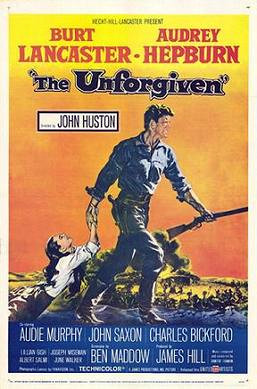
The Unforgiven: A Thoughtful Western with a Big Finish

In The Unforgiven, Ben heads up the Zachary clan made up of his mother, his two younger brothers Cash and Andy, and his sister Rachel, a foundling that the family brought up as their own. The Zachary family lives an idyllic country Western life with a nice ranch and a cattle partnership covering the basics, and a camaraderie (and occasional courtship) with their neighbors the Rawlins to fill their social needs. That is, until a one-eyed, gray-haired man bearing a saber comes into town and starts rumors that Rachel is actually an Indian, raising all kinds of trouble in this small community.

Despite having Burt Lancaster and Audrey Hepburn in starring roles (as Ben and Rachel, respectively) and John Huston at the helm as director, it seems like this movie hasn't survived the years as well as some other classic films. Note "seems" is the operative word in that sentence. I could be completely off base and it could remain very popular, but I only heard about it when I watched a biography of Audie Murphy, who played Cash in the film. However, both Hepburn and Huston had reasons for distancing themselves from this movie, which I'll talk about below, with Huston reportedly saying it was the only one of his films that he found dissatisfying.

Right off the bat, I should say that I'm not really a huge fan of Westerns. There are some notable exceptions but for the most part I find them rather dull. (The only time I ever fell asleep in a movie theater was while watching 3:10 to Yuma, a movie which pretty much epitomizes everything I dislike about badly done Westerns.) But this movie was very different. Like Marlon Brando's One-Eyed Jacks, this movie was more of a drama that happens to be set in the Wild West and concerns itself more with the pathos of the story and characters than with stereotypical Western machismo and shootouts. However, there was some of the latter in this movie (and in One-Eyed Jacks as well), as I'll discuss later on in this blog post.

One reason this movie was more dramatic than some other Westerns was because Huston, a veteran film director of critical acclaim (and incidentally, the father of actor Anjelica Huston), wanted to make a movie to explore racism in America - a very noble goal. Indeed, the movie is based on a book of the same name by Alan Le May, in which the author apparently discussed white America's hatred of its native people at length. However, the movie's producers were purportedly more interested in profit and desired a more traditional - and less controversial - Western. I presume this is the reason behind the movie definitely being interesting for beginning to shine a light on racism in America - specifically Caucasian Americans' fear and hatred of American Indians - yet leaving the viewer with the feeling that it didn't dig deep enough. It also seemed to undermine its own points at times by containing some rather stereotypical portrayals of the Kiowa tribe.

Nevertheless, I really enjoyed that this movie wasn't just surface level plotting but also contained numerous deeper themes. Besides examining racism and prejudices and their causes, the film is a thoughtful exploration of the meaning of family and family values (i.e., blood vs. adopted family, standing by one's family despite difficult truths, etc.). It also pits community and togetherness versus the questionable ideal of rugged American individualism, a quintessential Western standby. The movie portrays kangaroo courts and the idea of taking justice into one's own hands, which is also a frequently referenced thing in Westerns. And, The Unforgiven also pits against each other two different gender stereotypes: the hyper-masculine response of resorting to violence and death instead of letting quarrels die out naturally versus the nurturing feminine reaction of sheltering a baby and raising her despite past rivalries. It's worth noting that these two "gendered" reactions are not always exclusively the abode of the corresponding sex. Pa Zachary, when he was still alive, was initially the one to take Rachel in to the family fold, and her brothers, especially Ben and Andy, love her unconditionally. And as we see as the movie progresses, Ma Zachary will take her vengeance and is more than capable of handling a gun. (Fun fact: Lillian Gish, the actor playing Ma Zachary, was apparently a remarkable markswoman, more so than the men involved in the project.) Spoiler! Even Rachel totes a gun by the end of the movie and chooses her place alongside her adopted brothers by killing her biological brother in cold blood. All of these themes are presented not in a hit-you-over-the-head kind of way, but in an understated manner throughout the unraveling of the plot.

Likewise, a lot of the character development is unfolded quietly and over time in most cases. The romance between Ben and Rachel was a bit odd considering how they were raised as siblings, but the simmering chemistry between Lancaster and Hepburn was undeniable. And this romance didn't feel entirely tacked on, like in some movies where the hero and the heroine getting together just feels like the cherry on top that came out of the blue, if you pardon the mixed metaphors. Again, it was understated and slowly built over time. It started out innocently enough with Rachel seemingly especially excited by seeing Ben after his return from a long journey to Wichita and back, but the viewer might brush that off as simply a particularly close pair of siblings. The idea of such a romance then is brought up by and laughed off by Rachel and Ben when she says, "I could marry that handsome, winsome Charlie or that baby Jude. I could even marry you. ... Well, why not? We're not cousins. We're not even relatives." to which Ben retorts, "We're not even friends." in a joking manner. Things become more serious when the cattle hand Johnny Portugal reaches up to pull a nettle out from Rachel's hair and Ben's reacts with uncharacteristic anger, leaving the rest of the crowd to mutter that he sure is protective of his sister. The tension is palpable at points like this one.

The characters of Rachel and Ben were particularly compelling as Hepburn and Lancaster displayed excellent acting in this film. Hepburn developed Rachel from a carefree, joyful young girl to a burdened woman filled with pathos and self-sacrificial leanings, making this transformation completely believable along the way. Of course, she sounded more like Holly Golightly than the adopted daughter of a Texas cattle rancher and she seems far too fair-skinned to have anyone question her lineage as being native to the American West, but those things are what they are and the viewer soon gets pulled into the movie enough to overlook them. Like Hepburn, Lancaster expertly took Ben from a joking and loving brother, somewhat burdened by being the family patriarch and main breadwinner, to a torn man making tough decisions with heavy consequences. At the risk of overusing the word, pathos best describes the audience's feeling toward Ben and his actions by the end of the movie. Occasionally, Lancaster mumbled a bit and was thus difficult to understand - especially with his zingers in the beginning of the movie - but this also wasn't enough of a problem to seriously hinder my enjoyment of the film.

As Ben and Rachel were the main focus on the movie, their characters got to be the most fully developed but other characters also had their share of growth as well as a sometimes unclear set of motivations, making them three-dimensional beings. Cash, who started out as the most blatantly racist character of all, gets his chance for redemption and to look beyond his own fears and prejudices. Ma Zachary is a complicated character, as I've already mentioned, who can go from entirely sweet and nurturing to tough as tacks and violent at a moment's notice. She holds the family secret for a long time, managing to lie to her younger children for years in a way that still makes her seem loving and redeemable. (I say her younger children because it's more than obvious that Rachel's past in a complete mystery to Cash, Andy and Rachel herself. But it's unclear how much Ben knew all along; sometimes it seems like he knows all and other times it's possible he was in the dark as well.) Even Abe Kelsey, the saber-toting "villain" of the movie, has a tragic back story that leaves the viewer feeling somewhat sympathetic towards him.

Then, of course, there are times when the movie completely fails at character development. Most notably, there's the absolutely ridiculous character of Georgia Rawlins who all put throws herself at Cash's feet in her efforts to get married to him because that is her one and only goal in life. The other members of the Rawlins family are not well defined, and the relationship between Rachel and Charlie Rawlins never felt like something to be taken seriously as we knew so little about Charlie. His existence seemed more like a way to push the plot forward than anything else. And, as I've mentioned earlier in this post, the characterization of the Kiowa tribe members was anything but fleshed out or three-dimensional. They come in peace but briefly and are otherwise the "savages" of any other stereotypical Western movie.

Still, the movie's promising parts outweigh its flaws. One thing I can't stand is a Western that doesn't take the time to bother showing off the amazing landscapes of the American West. The Unforgiven, while studying complex characters and exploring deep themes, also stops to show off the beauty of the land with sweeping panoramas of gorgeous Western vistas. And, it's not just breathtaking beautiful scenery for its own sake -- the imagery is there to help tell the story in Huston's cinematography. For instance, there is one particularly poignant scene in which we stop and watch an abandoned piano set against a desolate backdrop of dusty land littered with dead bodies. It's an incredibly powerful image and gets to those deeper themes of culture and family versus violence and being alone. I will admit there were a few scenes of cattle and horses that seemed to go on a little longer that I would prefer, but they were also there to help further the story and its characters. In addition, they served to show off the various talents of the actors and extras, although they ended up leading to some personal injuries. While filming, Hepburn broke her back after being thrown from a horse and it's possible this injury later led to a miscarriage. Art has its casualties, too, and it's not pretty.

Being a Hollywood Western film, it's not enough for The Unforgiven to simmer with chemistry and fester with racism. It's almost obligatory that a Western end with a bang - quite literally - and thus we get the climactic ending to this movie. So if extended sequences of gun battles are not your thing, it's at this point that you might want to jump ship on this movie. Spoilers! Granted, this big finale of a final stand-off between the Zacharys and the Kiowa tribe allows for all the family members to show their true colors. But it also leaves all the tribal members dead, which is hardly the ending one would hope for in a movie designed to examine why American settlers and native tribes can't just get along. Considering that the Zacharys' bigger gripe seems to be with the community that refuses to accept Rachel now that they know the truth of her genetics, it seems odd that the family would be forced to fight off the tribe rather than their former friends. The latter might have been the truly controversial end to get audiences in 1960 to start thinking long and hard about prejudices. But instead we have a pretty much stereotypical ending to a Western movie, which is a bit of a letdown after everything else this film has offered.

Still, all in all, I was really rather riveted by this movie and quite enjoyed it. It definitely provides some food for thought, and those are the best kinds of movies in my opinion. (Even if an occasional light-hearted piece is necessary after a long and/or bad day.) I'm now considering watching John Ford's The Searchers, another Western film based on an Alan Le May novel concerning itself with prejudices directed at American Indian tribal members. But meanwhile I will simply say The Unforgiven is a movie that may have gotten dusty on the shelves over the years, but it should definitely be revisited and given a proper place in Hollywood history.

Good clean fun with Sherlock Jr.

Many of you may not know this as my entertainment choices have mostly lay elsewhere during the past year or so that I've been writing this blog, but I LOVE old movies. Not crappy 80s movies or trippy 70s movies, but mainly golden era 1940s-1950s movies, with a little crossover into the early 60s or late 30s. Too far into the 60s and things get too "groovy" while too early in the 30s and the production values are horrific, so I generally avoid these. One major exception to these general rules though is anything by Buster Keaton.

I hope I don't have to school anyone on the screen icon Buster Keaton, but just in case here's the basics about him: Buster Keaton was a film actor ala Charlie Chaplin, full of slapstick physical comedy in silent movies (although he did appear in some talkies later in his career, notably Sunset Boulevard and In the Good Old Summertime). Although he didn't have the typical "leading man" qualities of being stunningly handsome and dashing, Keaton always landed a starring role, often in film endeavors in which he also wrote and/or directed. While it's inevitable that he will be compared to Charlie Chaplin (just as I did above), when it comes to physical comedy, Buster Keaton has my vote as the absolute best, bar none. (When we look at their later films outside the silent era, however, Chaplin's dark humor absolutely steals the show for me. Seriously. Go watch Limelight, Monsieur Verdoux, and/or The Great Dictator and then tell me Chaplin wasn't a genius.) What astounds me about Keaton's physical comedy isn't just how purely good it is, but the risks he took to get a laugh. Potential - and actual - injury to himself didn't stop Keaton from any gag that would entertain. And did I mention just how good his comedy is? I'm not usually a fan of the slapstick - I generally find it puerile and often crass. And, some comedic actors will beat a dead horse, with a particular running gag continuing on for so long that it ceases to be funny. But Keaton had perfect timing and acts of physicality that could not help but produce a laugh. His The Cameraman is one of the funniest films I have ever seen, and the public pool scene is perhaps the most hilarious example of physical comedy out there, although Keaton and a monkey filming a shootout in Chinatown together in that same movie is a close contender. And while the physical comedy and slapstick routines are the hallmarks of any Buster Keaton movie from the 1920s, his films don't forget about storytelling and provide a sustainable and interesting storyline (usually a romantic plot), which is no small feat for a silent movie.


What I'm trying to say with that very long introduction is that today I had the pleasure of watching a new-to-me Buster Keaton movie called Sherlock Jr. Like many a Buster Keaton film, it stars him as a down-on-his-luck, sort of clueless but incredibly kind man who is head over heels in love with a pretty young woman who another more polished man tries to woo. In Sherlock Jr., Keaton's nameless protagonist wants to become a detective but currently works as a projectionist in a movie theater. When he falls asleep there one day while a movie plays in the background, he dreams himself into the movie. The movie-within-the-movie is called Hearts and Pearls and involves a woman's pearl necklace being stolen by a pair of thieves, one of whom is pretending to court her. Keaton's character arrives on the scene as famed criminologist Sherlock Jr. whose trusty sidekick is a fellow named Gillette. Sherlock Jr. and Gillette elude the criminals' attacks and manage to save the pearls and the girl by the end of the film-within-the-film. Of course, this being a Buster Keaton movie, all of this happens with numerous ridiculous - but funny - gags along the way, including a cross-dressing Keaton, a driver-less motorcycle, and a booby-trapped house.

Meanwhile, in the real world, Keaton's character is barely scrapping together enough money to present gifts for his girlfriend and is eventually accused of a theft he didn't commit. The initial evidence is against him, but his intrepid girlfriend figuratively takes a page out of his detective's handbook and tracks down additional evidence to clear his name. And, of course, this second plot includes some running jokes involving a sticky newspaper, a slippery banana peel, and one lost dollar that several people try to claim, to name a few.

All in all, Sherlock Jr. has so many different jokes and comedic situations that it's bound to hit the mark with the audience at least some of the time. There were a few gags, like the sticky newspaper, that fell a little flat for me, but mostly I was thoroughly entertained by this movie. It didn't reach The Cameraman heights of ridiculously hysterical, laugh-out-loud funny, but it was more than capable of producing plenty of laughs.

The movie is also notable for its use of special effects. As per usual with Buster Keaton, many of the gags ran the risk of physical injury and apparently Keaton actually broke his neck in the production of this film during one of his physical comedy routines. Some other scenes also left me feeling a bit squirmy, worried about the actor's safety. (However, the fact that this actor is long dead and that I knew he survived the silent film era allowed me to enjoy the physical comedy rather than be made too uncomfortable.) But even more notable to me were the scenes involving Keaton's movie-within-the-movie. This sequence starts off with us seeing Keaton's character asleep in the projectionist's booth and then we watch his dream self rise up out of his body, put on his hat, and head out the door. Did I mention this movie came out in 1924?! I had no idea the kind of technology needed for such a scene was available. (C'mon, they couldn't figure out how to add sound to movies yet.) After this amazing feat, we watch his character travel down the movie theater aisle and up on to the stage before walking into the screen itself. Again, this in in 1924. Keaton, who directed this movie as well as starred in it, was apparently not only a comedic genius but also incredibly talented at making movie magic.

I'm not sure if I've emphasized enough yet that this movie was made in 1924. ;) While the humor certainly transcends the time period, there were so many elements that made this movie feel almost stereotypically old-timey. The movie-within-the-movie's female lead has flapper fashion chic, the men's everyday wear includes cravats and spats, steam engine locomotives seem almost ubiquitous in the background, and Tin Lizzies rattle by on the streets. At one point there's even gangsters standing on the car's sideboards, hanging on to the "speeding" car while trying to shoot down the protagonist ahead of them, in what feels like a classic old-fashioned movie scene.

All in all, Sherlock Jr. is a great movie for good clean humor, a sweet romantic story, old-timey fun, and mind-boggling special effects given the time period. And all this is just under 45 minutes. Did I mention that Buster Keaton was a genius?

Sunday, January 20, 2013

Best Books of 2012


Sadly, I haven’t been updating this blog as much as I would like lately, although I’ve been doing plenty of arts and entertainment things I would love to tell you all about … someday.

Last year, I managed to be on time for a change and got in under the wire with my end-of-the-year roundup of everything I had been reading. This year, however,  I have been particular neglectful of this blog and even though I was keeping notes on what I thought were the best books I read this year, I’m only just now finally culling that list.

Let it be noted that while I’m calling this the best books of 2012, most – if not all – of these books were written prior to that time period. It’s just that I finally got around to reading these books during 2012.

Unlike last year, I read very few young adult novels this year, so I collapsed children’s and YA books into one category, listed here underneath the adult books I read. Graphic novels and nonfiction books are indicated by these symbols respectively: ^ and **. Any books that I was re-visiting for a second read are marked with a (2) after the title.

Hopefully anyone reading this blog and looking to tackle that next read can glean some new titles from this list. Each title is hyperlinked to my review of it on LibraryThing for anyone looking for more information on that particular book.

Adult books

1984 (2) by George Orwell
The Adventures of Sherlock Holmes by Sir Arthur Conan Doyle
Batman: The Long Halloween^ by Jeph Loeb and Tim Sale
Batman: Year One by Frank Miller and David Mazzucchelli
Cranford (2) by Elizabeth Gaskell
The Collected Poems by Sylvia Plath
Frankfurt Pocket Guide** by Thomas Cook Publishing
The Hypnotist by Lars Kepler
A Little Bit Wicked: Life, Love, and Faith in Stages** by Kristin Chenoweth with Joni Rodgers
Psych: Mind Over Magic by William Rabkin
The Question: Pipeline^ by Greg Rucka and Cully Hamner
Sleeper: Season 1^ by Ed Brubaker and Sean Phillips
Sleeper: Season 2^ by Ed Brubaker and Sean Phillips
Winter Trees by Sylvia Plath
What I Did by Chris Wakling

Children’s/YA books

Being Teddy Roosevelt by Claudia Mills and R.W. Alley
Biblioburro: A True Story from Colombia** by Jeanette Winter
A Boy Called Dickens** by Deborah Hopkinson and John Hendrix
Boys of Steel: The Creators of Superman** by Marc Tyler Nobleman
Chicka Chicka Boom Boom by Bill Martin, Jr. and John Archambault
Library Lily by Gillian Shields and Francesca Chessa
A Little Princess (2) by Frances Hodgson Burnett
Mice and Beans by Pam Munoz Ryan and Joe Cepeda
The Penny Pot by Stuart J. Murphy and Lynne Woodcock Cravath
Tickle Time! by Sandra Boynton
Where Is Baby’s Birthday Cake? by Karen Katz
Where the Wild Things Are (2) by Maurice Sendak

** = nonfiction
(2) = re-read
^ = graphic novel

Friday, November 23, 2012

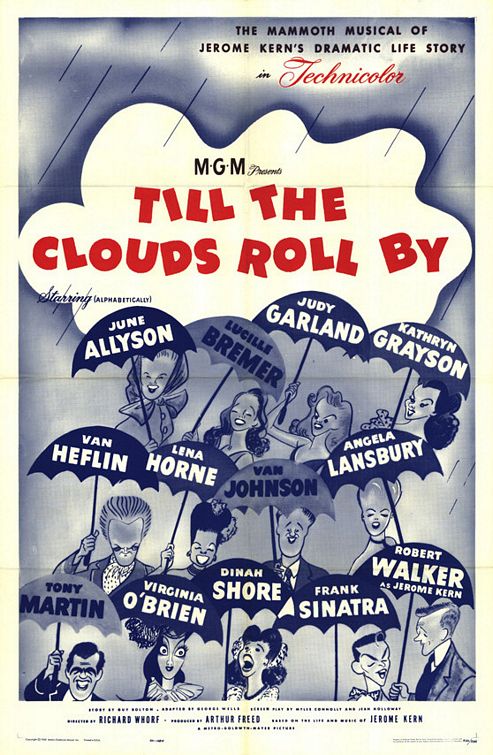
The Sweeping Symphonies of Till the Clouds Roll By

The first time I watched Till the Clouds Roll By, I was sitting in my grandparents’ kitchen with them, just enjoying a lazy Sunday afternoon/evening. I can vividly recall the smells, sights, and sounds of that day, so this movie is a bit sentimental to me as a result. When I saw that it was available on Hulu, I knew I’d have to watch again. And what better time to sit down with a feel-good, nostalgic movie than when everyone else is out there going crazy for a good deal on Black Friday? I can’t think of any.


Till the Clouds Roll By is a 1946 biopic tribute to composer Jerome Kern, who had passed away the year before this movie was released in theaters. While the movie is purportedly telling the story of Kern’s life, it also serves as a vehicle for large musical numbers, showcasing the hit songs from throughout Kern’s career. The end result is a film light on details of Kern’s life and strong on staging, costumes, swelling orchestral numbers, and so forth. I knew basically nothing about Kern before viewing this movie the first time, so I certainly did learn something from the movie about him – but then also had to verify a lot afterwards and saw how much was left out. For instance, Kern was apparently well-known for his horn-rimmed glasses yet Robert Walker as Jerome Kern is never once seen wearing a pair of any kind of spectacles; presumably the Hollywood of the 1940s would never think a leading man in glasses would be dashing enough for the audience. Some details are simply out of chronological order or slightly altered to fit the story being told in this movie, such as Hammerstein contacting Kerns about making a musical based on the book Showboat rather than the other way around as it actually happened. In real life, Kern had a daughter, but in the movie, he and his wife Eva dote only on his “niece” Sally, the child of his friend and musical arranger, Jim Hessler. The Hesslers play a huge role in this movie -- despite the fact that they never existed, although the character of Jim Hessler is supposedly based on a real-life associate of Kern’s.

The facts that Hollywood eschewed are replaced with a compelling story though and one that pulls on the viewer's heartstrings. I loved the story of how Kern becomes like family to the Hesslers and the easy repartee between him and Jim, especially in their early days as bachelor workaholics. The love story between Kern and Eva was also sweet, albeit rushed. Furthermore, the actors play the story of Kern's life well and do a convincing job of growing old and subtly changing as a result. Walker is always compelling to watch, whether he’s being charming, funny, torn, heartbroken, or feeling old and resigned, as the situation calls. The other actors in the domestic drama – Van Heflin as Jim, Dorothy Patrick as Eva, Lucille Bremer as the adult Sally, and Joan Wells as the young Sally – all play their parts perfectly as well.

But the real star power of this movie was in the music and dance, with acts that could almost be described as over the top unless you’ve happened to watch a lot of musicals from this era. The cast of Till the Clouds Roll By reads like a who’s who of Golden Age Hollywood elite, including Judy Garland, Van Johnson, June Allyson, Lena Horne, and Frank Sinatra, just to name a few. With so many heavy hitters, the producers didn’t even bother with first billing and just listed all the stars’ names alphabetically in the opening credits. While a few of the numbers in this movie were forgettable in my opinion, most of them were lavish spectacles worth viewing more than once.

For starters, Judy Garland as Marilyn Miller was one of the highlights in my book. Special guest director Vincent Minnelli (then married to Garland) was brought in to direct her musical scenes. The story goes that Garland was pregnant with her daughter Liza Minnelli at the time so when it came to staging her rendition of “Look for the Silver Lining,” Minnelli chose to put Garland behind a stage kitchen sink the whole time. Garland’s stunning voice carries the scene, even if it isn’t as action-filled as the other numbers. But despite her pregnancy, Garland is seen more active in her later musical numbers – dancing about to “Who?” and jumping onto a bareback horse in “Sunny,” with a sequence that I really, really hope is done by a stunt double. The choreography throughout the movie is excellent, but a particular favorite scene of mine is when Lucille Bremer and Van Johnson dance to “I Won’t Dance” in the Club Elite. Another one worth noting is the titular “Till the Clouds Roll By,” performed by June Allyson and Ray McDonald.

The movie both opens and ends with extended sequences acting as a review of some of Kern’s more famous songs, particularly with an emphasis on Showboat. The final song – and scene - of the movie is a young Frank Sinatra’s rendition of “Old Man River.” This choice rankles some contemporary viewers who feel that the song should be sung by an African-American man, embodying the working black man the song is meant to portray, rather than by a Caucasian-American man in spotless white tuxedo on a white pedestal. While I understand their frustration, I’d like to point out that:

1) This movie was made in 1946.

and

2) This movie was made in 1946!

The 1940s were hardly a time of racial equality in any sense of the word. Nor was Hollywood at the time a bastion of cultural sensitivity – this was the same entertainment machine that just 10 years earlier gave us Fred Astaire in black face as a “tribute” to Bill “Bojangles” Robinson. And that’s hardly an anomaly during that era. Furthermore, this movie was already filmed in such a way that Lena Horne’s solo performance could be removed when the movie was shipped out to Southern states who would refuse to air a sympathetic portrayal of an African-American woman singing on screen. It’s not pretty, but you can see why the film’s director and producers wouldn’t risk having their big finale stripped from the movie in a large number of states.

A few other points to make on this topic: 1) In the opening of the movie, “Old Man River” is also featured with African-American singer/actor Caleb Peterson singing the song, so the movie did give a small nod to the song’s origins there; 2) Italian-Americans like Sinatra were not exactly beloved at the time (another not pretty but true fact); and 3) Sinatra was a big enough name already to be a selling point, and at the end of the day, Hollywood is about making money. And, on the note about the ridiculousness of the dazzling white tuxedo and setting for this number, it's worth pointing out that this song comes at the end of a review of songs all featuring singers dressed in pure white settings. I don’t know why this is, perhaps to make some kind of point about the pure/innocent/ethereal/eternal/transcendent/pick-your-adjective quality of Kern’s works, but I do know that it would be odd if after all those numbers increasingly ascending in an “into-the-clouds” feel, the final song was done in a realistic style. One commentator makes the analysis that this whole grand finale was meant to be an ironic look at how Kern’s songs were going to be overblown and taken out of context by Hollywood and while this is an interesting theory, I just don’t think 1940s Hollywood was that was self-aware and tongue-in-cheek about itself. That’s my two cents.

All in all, my point is that you have to take a movie – or any other artistic work for that matter – as part and parcel of its time period and cultural milieu. If this movie came out today, I could understand that outrage more and would be right there with these commentators. Not just on the whitewashing of “Old Man River,” but also on the highly offensive “Cleopatterer” and some of the portrayals of women, such as Eva’s rules for what a lady can and cannot do or the fact that not a single woman in this movie ever wears pants (only skirts and dresses). These things are all a product of the times, and it is what it is. If you can take it with a grain of salt, this is a great movie from the Hollywood golden era of musicals. Fabulous performances in music, choreography, and acting will steal the show.

Monday, November 5, 2012

An Action-Packed Angelina Day

A while back, a friend and I decided to do a comic book themed movie night, and among the movies on the table that night were Wanted and Salt. (Yes, I know this latter one isn’t actually based on a comic book, but it felt in line enough with the other movies we’d selected to seem appropriate, plus it helped even out the balance of male protagonists versus female protagonists just a little bit.) We didn’t have time for these two movies (and I suspect my friend, being not much of a fan of Angelina Jolie, did not have them high on her list) but with my cable and Internet out for a couple of days due to Hurricane Sandy, I decided to finally watch these two DVDs. The basic plot of each, along with my thoughts on the movie, is below.

Wanted

Basic plot: Wesley Gibbons (James McAvoy) hates his life: his low-level job with a terrible supervisor, his dwindling bank account, his cheating girlfriend, and his best friend who is party to this affair all leave him feeling used and useless. But this all changes when a routine trip to the pharmacy ends up becoming a gun fight between a Cross (Thomas Kretschmann), a man trying to kill him and Fox (Angelina Jolie), a woman trying to save him. After a narrow escape, Fox takes Wesley to meet Sloan (Morgan Freeman) who explains the situation: Wesley is the son of an assassin for an organization known as the Fraternity. Wesley’s father has in turn been assassinated when Cross left the Fraternity and went rogue. Now it is up to Wesley to train to become a world-class assassin as well and revenge his father’s death by going after Cross.

There was just way too much violence, obscenity, and sexuality in this movie for me. As I’ve probably mentioned before, I’m not a prude but I want a story and/or fleshed-out characterizations, not just gratuitous examples of the above. There’s a twist near the end of Wanted that makes the plot a bit more interesting but it’s kind of a case of too little too late. Like many action movies, there’s a lot of ridiculousness in terms of completely unbelievable scenarios – i.e., the hero of the film can single-handedly take out a room fill of armed enemies without getting a scratch, or the hero is shot multiple times but miraculously heals within hours to fight back again. This movie ups the ante but defying gravity with bullets that shoot out of guns on a curved angle instead of straight and cars that flip over gracefully without missing a beat or harming a single passenger. It also features Jolie’s character in heels and a dress in the first fight scene, which is such a you-got-to-be-kidding-me moment (but sadly not that unusual for many action flicks). Later, she’s more appropriately dressed for the most part although she’s still sometimes seen roaming around in cutoff tees.

There’s very little in terms of characterizations to make any character feel realistic in any sense. Fox is given a bit of a back story that helps explains her and her motivations, but nearly everyone else has no history. Indeed, many members of the Fraternity remain completely nameless while others are simply known by code names such as “The Repairman” and “The Gunsmith.” Even though he is the main character, Wesley does not have much in terms of a full range of characterization either. His motivations to join the Fraternity are pretty slim: He’s unhappy with his current life of being metaphorically kicked around and punched in the face so he goes into a new life of literally being kicked around and punched in the face??? Clearly, that’s a very logical step in the right direction. Wesley’s motivation largely comes from this fixation of becoming like his father and a belief that living in his father’s footsteps is his destiny. This is despite the fact that his father abandoned Wesley when he was just an infant, which wouldn’t seem endear a lot of familial pride for many.

The mystery here is how such talented actors as Angelina Jolie, James McAvoy, and Morgan Freeman were all convinced to make such a shoddy movie. I give props to the film’s creators for being able to snag such a great cast, finding a suitable soundtrack, and using some impressive visual effects. But sadly those ingredients alone aren’t enough to make a good movie. Still, I suppose the movie’s creators must have been doing something right for they obviously made enough profit that they are considering making a Wanted 2.

Salt

Basic plot: Evelyn Salt (Angelina Jolie) is a CIA operative having just another day at work when she goes in to interview a man who claims to be a Russian defector. He tells her a story about a plot for a Russian double agent to assassinate the Russian president while he is on U.S. soil, thus creating conflict between the United States and Russia. He then names the Russian double agent: Evelyn Salt. Salt finds herself being held for questioning, worried about her own future as well as the safety as her husband. She escapes custody and while on the lam engages in a series of events that leaves the audience questioning whether she really is a double agent and where her allegiances lie.

Compared to Wanted, this was a much better movie. There’s still a lot of violence and more action (versus plot) than I generally care for, but there was enough of a story and a mystery (along with characterization, motivation, etc.) to keep it interesting. While it’s not as stylized and heavy on effects as Wanted, the cinematography and visuals are still well done and even at times quite lovely. Like Wanted, it has a good soundtrack that appropriately fits the movie. And, it’s less of a mystery why Jolie took this part, as it allows her to really show off her acting chops. The other actors – particularly Liev Schreiber and Chiwetel Ejiofor as Salt’s CIA co-workers – all do excellent work as well.

One thing I had found interesting about this movie from the outset is that the role of Salt was originally written for Tom Cruise, who was unavailable for filming, thus opening up the role for Jolie instead. So, long before I watched this movie I had been interested to see how a role created for a man became one for a woman and whether this would get us any closer to gender equality in Hollywood representations. For starters, I can say that this movie features a lot less of the running around in tight dresses and heels like other action films with female leads tend to do. Unlike other action films starring Jolie (i.e., Wanted, Lara Croft: Tomb Raider), the obligatory scene of her character coming out the shower was also not present in this movie, providing a breath of fresh air. All in all, there’s nothing about Salt’s character that makes her feel like a stereotypically overly feminine character - or like a character everyone has to point out is atypically tough “for a woman.” Instead, she is just a character that poses a threat for various concerned groups while they are doing their best to try and stay one step ahead of her. This is a movie I would recommend if you are interested in strong female leads, action movies with actual plots and characterizations, and/or a good mystery to try and crack.

Sunday, November 4, 2012

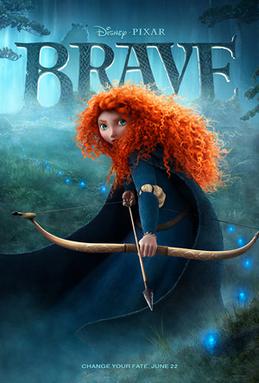
Brave Enough to Say No


I’ve been a huge fan of Disney and Pixar movies in the past, even the princess movies that rankle many. Yes, as a feminist I understand the many problems inherent in these movies with their troubling portrayals of women, but I grew up on them and they hold nostalgic memories for me. I am not pining away, waiting for my prince to come and make my happily ever after come true, but I still enjoy the music, animation, and cinematography of these movies.

So when Disney/Pixar started advertising its latest princess offering, Brave, there was a good chance I was going to check it out. And then when I read this article detailing the co-director’s inspiration for the movie and describing how this film with a strong female lead came into being, I was hooked. Last month I finally got the chance to sit down and watch this movie – while I was on a plane and this was luckily one of the choices. (It might be worth noting that I wasn’t the only childless adult watching this movie; I even noticed a couple of adult men picking this movie out of the many options available. So much for Disney’s concerns that only young girls will view princess movies.)

Brave tells the story of Merida, a Scottish princess who loves archery and horseback riding but is often forced indoors by her mother to practice the etiquette of being royalty. Merida dislikes this but does as she told – until one day her parents tell her it is time to be wed and three princes arrive to contest each other for her hand. Merida rebels and runs off into the woods, where she stumbles upon a witch who concocts a potion that will help Merida change her mother. Well, change her it does – right from a human being into a giant grizzly bear. Now Merida has even bigger problems on her hands than just convincing her mother not to marry her off – will she be able to hide her mother from her bear-hunting father long enough to reverse the spell?

There were a lot of things to like about Brave. Of course, as we’ve come to expect from Disney and Pixar, the animation is top-notch. As in many other Disney/Pixar movies, the movie includes a few sweet songs as sung by Merida, which are quite nice and I’d probably listen to just as regular songs without the context of a movie. Personally, hearing the Scottish accent of all the characters was a fun change of pace from the non-accent of most Hollywood casts, even when the movie is supposedly set outside of the California hills. The movie is also good at putting forth some moral lessons without being overly didactic.

Furthermore, this is a very female-centric movie, which sadly cannot actually be said about all princess movies. There is the strong mother-daughter relationship, unlike in many fairy tale-based movies where the mother is absent and/or the mother figure is evil. In fact, what we have here is rare in many Disney/Pixar movies – an entire intact family of mother, father, daughter, and two sons. (This may be a bit ironic – or something – that Disney finally releases a movie with a traditional family of two parents and 2.5 children when the traditional family is morphing into something else altogether.) One thing I really enjoyed about the movie focusing not just on Merida but also on her mother was that it gave the opportunity to show two kinds of female strength. Merida is portrayed as strong and brave in part because she is something of a tomboy, who prefers archery and traditional male hobbies. But – and this is more subtle – her mother is also portrayed as strong in a more traditional female role. She is able to subdue a room full of rowdy men with her stately and elegant appearance combined with a calming speech.

And, I really appreciate that the movie is actually an anti-romance – given the movie’s target audience of young children, I think that is quite appropriate for a change. Merida does not give up on the idea of marriage entirely or denigrate it at all, but she simply refuses to get married at a time in which she is not ready to a person who is not of her own choosing. Spoiler alert!: The film does not end with her falling for one of the three princes or meeting a fourth prince who sweeps her off her feet, but it is open-ended enough that the viewer can believe Merida will eventually fall in love and marry or that she will remain single and happy that way. I had been concerned that the movie would go the route of Aladdin where Princess Jasmine refuses all her potential suitors but then changes her mind eventually when Aladdin arrives on the scene. That’s a fine storyline also as it introduces the idea of choosing one’s own path rather than having it chosen by others, but I’m glad that this movie took it one step further to suggest that Merida might still live happily ever after even without a husband on the horizon.

Like with many other Disney/Pixar films, there is a lot of humor is the movie. I’m sure kids in particular will find the many slapstick moments hysterical, especially the antics of Merida’s two younger brothers who can’t seem to keep themselves out of trouble. But a lot of the humor comes at the expense of the male characters, and this is the only real fault I find with the movie. For the most part, the male characters are seen as little more than barbarians – they are none of them particularly intelligent, and it takes little to have them all begin fighting with one another. If they are not fighting one another, then they are all mindlessly chasing down a bear that only one character has sensed or trying to show off their physical prowess is some other way. Albeit, the king does have some better moments, and it is clear that he is loving husband and doting father. But for the most part, this movie doesn’t give the best impression of men as a whole, especially when a lot of them are put together in the same room. As a feminist, I rankle at this portrayal also – it’s a misconception that feminism believes or seeks to make women superior to men; most feminists simply wish us women to be on the same playing field as men and to stand there being treated equally and fairly, not judged to be either inferior or superior based solely on the existence of a second X chromosome. It’s harmful to everyone – but probably most especially children – to portray one sex as somehow inferior to another in any aspect.

Still, all and all, I enjoyed this movie and appreciated this twist on the traditional princess movie. For that reason, I highly recommend it for all of us who grew up on princess movies because I think we would most appreciate its subversion of the genre. Of course, I’d also recommend it for its target audience of young children but with the caveat that parents co-view with their kids and point out some of the harmful representations of male characters in addition to pointing out the helpful representations of female characters.

Thursday, November 1, 2012

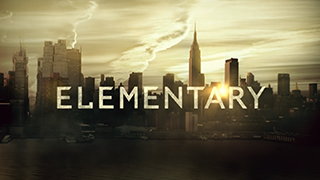
Holmes Set Loose Upon NYC

Earlier this year, I wrote that there were no new compelling TV shows in the fall lineup. Well, I am here now to declare myself a liar. Recently, a friend was telling me about the new CBS show Elementary, which features a modern-day Sherlock Holmes, and how she was enjoying it. Previously I had heard only a little bit about the show and didn’t think I would be interested. After her recommendation though, I decided to give it a try.


Once I watched the pilot of Elementary, I dove right into the rest of the episodes that have aired so far (albeit there’s only been four all together). The show is on Thursday evenings, but since I watch all my TV on the web now, that means I have to wait until Fridays to watch the latest episode. I know many people love to go out on the town on Fridays, declaring it the beginning of the weekend and all kinds of fun, but I’m generally exhausted by then. I like to stay home, do some laundry, catch up other things, and watch something on Hulu or Netflix. So I’m pretty pleased that Elementary will be available to me on Fridays; I’m already sensing it will be become part of my Friday routine.

But less about my dull life and more about the show! Elementary, as I’ve already mentioned, is a modern-day take on Sherlock Holmes. Holmes (Jonny Lee Miller) is a recovering drug addict, having picked up a nasty heroin addiction while in London. In order to stay in his father’s good graces (and thus retain residence in his New York City apartment), Holmes has been assigned a sobriety partner in the person of Joan Watson (Lucy Liu), a former surgeon. Having met police captain Gregson (Aidan Quinn) in the past and wowed him with his powers of deductions, Holmes has managed to secure himself a position as a NYC police consultant, helping with tough-to-crack kidnappings and murders. Rounding out the cast of characters is police detective Marcus Bell (Jon Michael Hill).

First off, let’s start by looking at the characters that make up Elementary. One of the most compelling things – if not the compelling thing – about the show is the character of Holmes. Expertly played by Jonny Lee Miller, who I have loved in the past (excepting the terrible disappointment of Dark Shadows), Elementary’s Holmes is a great new take on a classic character. Sure, A.C. Doyle’s Holmes didn’t require a sobriety partner per se, but he was indeed a habitual drug user. For just one instance of this, in The Adventures of Sherlock Holmes, it is noted that Sherlock spends his time “buried among his old books, and alternating from week to week between cocaine and ambition, the drowsiness of the drug, and the fierce energy of his own keen nature.”

We are first introduced to Holmes in Elementary with a woman departing from his residence; Holmes quickly explains to Watson that he has no interest in relationships but is occasionally driven by his animal nature to seek out sex. While Elementary’s Watson later insists this is because Holmes is afraid of commitment, A.C. Doyle’s Dr. Watson explains of Holmes: “All emotions, and that one [love] particularly, were abhorrent to his cold, precise but admirably balanced mind. He was, I take it, the most perfect reasoning and observing machine that the world has seen, but as a lover he would have placed himself in a false position. He never spoke of the softer passions, save with a gibe and a sneer. They were admirable things for the observer—excellent for drawing the veil from men’s motives and actions. But for the trained reasoner to admit such intrusions into his own delicate and finely adjusted temperament was to introduce a distracting factor which might throw a doubt upon all his mental results. Grit in a sensitive instrument, or a crack in one of his own high-power lenses, would not be more disturbing than a strong emotion in a nature such as his.” Doyle’s frequent references to Sherlock’s cold and reasoning mind have lead some to suspect that he might have Asperser’s syndrome; Jonny Lee Miller plays Holmes in this way also – he is often brusque and unfeeling in his speech to others, particularly potential suspects, witnesses, and even friends and family of victims. At times, he is downright dismissive of Watson, saying things like, “Situations like these cases require my total concentration. I talk to you, never the other way around.” or “For future reference. When I say I agree with you, it means I'm not listening.” But while he’s sometimes irritatingly arrogant, he’s also lovably quirky and endearing.

And, of course, the Sherlock Holmes of Elementary is a stickler for details, observant to a fault, highly knowledgeable, and able to draw large inferences from the slightest thing seemingly off at a crime scene. In this respect, he is very much like his 19th century counterpart, who has famously said such things as, “It has long been an axiom of mine that the little things are infinitely the most important.” But, in line with bringing things into the 21st century, this Holmes also uses Google to make some of his pronouncements and loves the brevity of texting. And while this Holmes does have a superiority complex that allows him to view himself as above the police, he seems to value them more than the original Sherlock and certainly relies upon them more as he does not (as of yet) take in any private consulting cases. This is very unlike Doyle’s Holmes who primarily worked on private cases, which only occasionally called for the assistance of the police.

Elementary’s Watson, however, does not strike me as very similar to her 19th century counterpart. For starters, I think the show’s creators missed a golden opportunity by not making her a veteran like Doyle’s Dr. Watson – it just seems too absurd not to when history has conspired to make it possible to plausibly have a modern-day Watson also be an army surgeon who served in Afghanistan. And wouldn’t it have been delicious for Holmes’s first line when meeting Watson to be, “You have been in Afghanistan, I perceive,” as he pronounced upon their initial acquaintance in A Study in Scarlet? But, I have to admit that Watson’s past, hinted at only briefly so far, as a surgeon who lost a patient under suspicious circumstances could potentially become more interesting and add some depth to her character. (Of course, I could also argue that making her an army vet, perhaps suffering from what she’s seen of war, could provide depth and an interesting back story that continues to surface occasionally.) I do love that the creators decided to make Watson female in this version, showing that these characters can indeed transcend time, place, and even sex.

But, unfortunately, so far I have found Watson to be a fairly dull character. True, I doubt many people would have devoured – and continue to do so – the original Sherlock Holmes canon for Watson alone, but I felt that telling the stories through his eyes always gave the reader a tenderness toward Watson and a feeling that he had a more active role in the cases. Making Watson a sobriety partner rather than a retired army surgeon with times on his hands changes that dynamic very much. Instead of Watson coming along to help unravel a mystery out of his own interest or Holmes’s request for assistance of some sort or another, Watson is merely tagging along out of necessity and frequently standing on the sidelines without engaging at all.

However, there have been a few times already when Watson has provided medical knowledge or has somehow figured into Holmes’s scheming to get information or signal the police for assistance. I hope to see more of this in the future, with Elementary’s Watson taking on an increasing role just as Doyle’s Watson did over time, reaching the point where Holmes could say of his assistant in The Hound of the Baskervilles: “I am bound to say that in all the accounts which you have been so good as to give of my own small achievements you have habitually underrated your own abilities. It may be that you are not yourself luminous, but you are a conductor of light. Some people without possessing genius have a remarkable power of stimulating it. I confess, my dear fellow, that I am very much in your debt.” Perhaps not the praise most of would want to hear, but coming from Sherlock Holmes, that is a very high compliment indeed. Still, the writers of this show aren’t far off from reaching this kind of level between their Holmes and Watson, and the language they use to express it is similar, with Holmes telling Watson, “You know Watson, I take it all back. I'm beginning to find the chat that accompanying your companionship extremely useful. It's like white noise. It puts me in a state where I think and obverse better.”

At this time, I can’t really recall anything else I’ve seen with Lucy Liu in it, but her name is a big enough draw for many viewers I suppose. However, I’ve been a bit disappointed in her performance as Watson. There doesn’t seem to be a whole lot of nuance in her acting, and it hasn’t served to counteract the flatness I currently see in the character, as outlined above.

My bigger concern with Elementary’s Watson though is that she is only contracted to remain Holmes’s sobriety partner for six weeks. With four episodes already passing (generally considered in TV time to be four weeks then), there are only two more weeks where she is required to be Holmes’s constant companion. After that time, what will happen? Will we see Watson no longer? Or will the show’s writers need to come up with some other contrived premise to keep her around to continue to help Holmes in his work?

Similar to Watson but to a greater degree, Captain Gregson and Detective Bell are pretty dull and flat characters. Right now, Gregson’s main purpose seems to be to provide the details of a given case and support Holmes’s seemingly wild deductions based on their past history. Meanwhile, Bell mostly serves as a sounding board for Holmes, always questioning the validity of Holmes’s assertions, only to find out later that Holmes was indeed correct. It would be nice at some point if we got a bit more out of these characters, although I don’t think it’s strictly necessary that they become more fleshed out characters in order for this show to work. Between the show’s four main characters, there’s a fair amount of diversity in terms of age, ethnicity/race, and sex, which I'm always pleased to see on a TV show.

Next off, no discussion of this show would be complete without looking at the cases delved into each week. So far, they have been you standard, run-of-the-mill crime show cases: kidnappings and murders. To that end, there’s a bit of sensationalism in some of the show’s scenes, particularly the opening sequence of the pilot episode. But compared to the many rather gory crime shows on TV now (think Bones, Criminal Minds, NCIS, etc.), the show is focused more on revealing the thought process behind solving a crime than on autopsies and gun fights with suspects. Although the crimes are typical of what you see on other detective shows, the solutions are rather convoluted in order that the writers might show off Sherlock’s prowess in deducting from rather insignificant clues that the obvious solution is in fact not the right one.

While it seems unlikely at this point, I’d like a break from all the violence and murder we see on so many other TV shows. It would be nice to get some cases that involve more mundane – but certainly no less interesting – events. I’m thinking of the many odd cases that A. C. Doyle created for the original Sherlock Holmes, which varied from retrieving a scandalous photograph for a member of royalty to tracking down the mysterious “red-headed league” and reclaiming a member’s dues to determining whether or not a young woman should take an offered role to be a governess for a family out in the countryside. While these may seem insignificant, these cases are always absorbing to read about and usually develop into something larger than they first appear. And, as A.C. Doyle’s Holmes points out, “Singularity is almost invariably a clue. The more featureless and commonplace a crime is, the most difficult it is to bring it home.” Right now, Elementary’s cases are pretty commonplace for TV crime shows and not particularly singular. But because the show’s writers have decided to go the course of having Holmes be a consultant for the police only and taking on no private cases, it’s unlikely we’ll see any mysteries in the vein of the ones seen in the original stories.

On a final note, as this has gone on rather longer than I expected, there’s a few things from the original series that haven’t transferred over to this new show that I really think should have. The first is another golden missed opportunity – wouldn’t it just be fun if Holmes and Watson lived at 221B Baker Street in New York, just like their 19th century counterparts did in London? It seems wrong to have Holmess and not have Baker Street. Maybe that’s just me. The second is that Holmes as written by A.C. Doyle was a master of disguise as suited the purposes of his cases. It would entertaining to see Jonny Lee Miller as Holmes do so also, but again I think the character may be limited by the choice of having Watson as a sobriety companion rather than army vet roommate – Holmes and Watson are not allowed to be apart more than two hours, so unless Watson also joins in the fun and games of dressing up for a case, it would be difficult for Holmes to do an extended undercover ruse requiring a disguise. And, finally, there is Holmes’s archenemy, Moriarty. There are rumors that the show will introduce such a character eventually, and I don’t think it’s necessary for him – or her – to have arrived so quickly into the series so on this particular front, I’m happy with how things stand at the moment.

And, since the power went out while I was beginning this post and didn’t come back on for days, it’s now almost Friday again and I can look forward to the next episode of this show!